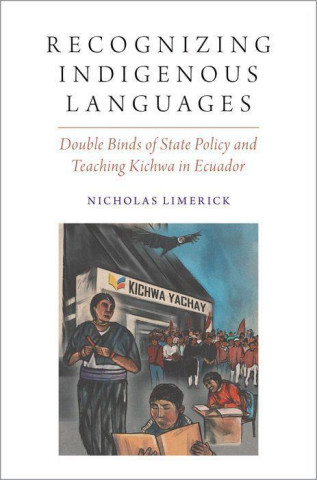
Kód: 43321420
Recognizing Indigenous Languages
Autor Limerick, Nicholas (, Associate Professor of Anthropology and Education at Teachers College, Columbia University)
What follows when state institutions name historically oppressed languages as official? What happens when bilingual education activists gain the right to coordinate schooling from upper-level state offices? The intercultural bilin ... celý popis


- Jazyk:
 Angličtina
 - Vazba: Brožovaná
- Počet stran: 272
Nakladatelství: OXFORD UNIV PR, 2023
- Více informací o knize


Mohlo by se vám také líbit
-

Ward No. 6 and Other Stories, 1892-1895
241 Kč -

Grotesque and Performance in the Art of Aubrey Beardsley
1273 Kč -

Eternal Quest and Other Verse
424 Kč -

Wordsworth's Literary Criticism
4835 Kč -

Pointe polie en cristal de roche - Moyen modèle
484 Kč -

MUJER EN LOS PAISES MUSULMANES, LA
619 Kč -

Aprenda A Orar
496 Kč
Darujte tuto knihu ještě dnes
- Objednejte knihu a zvolte Zaslat jako dárek.
- Obratem obdržíte darovací poukaz na knihu, který můžete ihned předat obdarovanému.
- Knihu zašleme na adresu obdarovaného, o nic se nestaráte.
Více informací o knize Recognizing Indigenous Languages
Nákupem získáte 97 bodů
 Anotace knihy
What follows when state institutions name historically oppressed languages as official? What happens when bilingual education activists gain the right to coordinate schooling from upper-level state offices? The intercultural bilingual school system in Ecuador has been one of the most prominent referents of Indigenous education in the Americas. Since its establishment in 1988, members of Ecuador's pueblos and nationalities have coordinated a second national school system that includes the teaching of Indigenous languages. Based on more than two years of ethnographic research in Ecuador's Ministry of Education, at international and national conferences, in workshops, in schools, and with families, Recognizing Indigenous Languages considers how state agents carry out linguistic and educational politics and policies in eras of greater inclusivity and multiculturalism. This book shows how institutional advances for bilingual education and Indigenous languages have been premised on affirming the equality-and the equivalency-of the linguistic and cultural practices of members of Indigenous pueblos and nationalities with other Ecuadorians. Major responsibilities like serving as national state agents, crafting a standardized variety of the Kichwa language family, translating legal documents to Kichwa, and teaching Indigenous languages in schools have provided vast authority, representation, and visibility for those languages and their speakers. However, the everyday work of directing a school system and making Kichwa a language of the state includes double binds that work against the very goals of autonomous schooling and getting people to speak and write Kichwa.
Parametry knihy
Zařazení knihy Knihy v němčině Sozialwissenschaften, Recht, Wirtschaft Soziologie Soziologische Theorien
966 Kč
- Plný název: Recognizing Indigenous Languages
- Autor: Limerick, Nicholas (, Associate Professor of Anthropology and Education at Teachers College, Columbia University)
- Jazyk: Angličtina
- Vazba: Brožovaná
- Počet stran: 272
- EAN: 9780197559185
- ISBN: 0197559182
- ID: 43321420
- Nakladatelství: OXFORD UNIV PR
- Hmotnost: 394 g
- Datum vydání: 01. September 2023
Oblíbené z jiného soudku
-

Integrating Primitive Reflexes Through Play and Exercise
365 Kč -

Tarot de Marseille
784 Kč -

Integrating Primitive Reflexes Through Play and Exercise
365 Kč -

Generative Coaching Volume 1
490 Kč -

Portugués Já! - Iniciaçao
499 Kč -

Manga Style 01: Peter Straubel
575 Kč -
¿Cómo somos realmente? Experimentos psicológicos
455 Kč -

Stoicism-The Art of Happiness
324 Kč -

Persuasión (Pocket)
315 Kč -

Open to Work
535 Kč -

Dark Academia
412 Kč -

Reflecting on the Names of Allah
756 Kč -

The Conjugate Method: Enhanced Through the Research of Westside Barbell
714 Kč -

Objetivo DELE B2 con licencia digital
873 Kč -

THE COMPLETE KANO JIU-JITSU
526 Kč -

Dao De Jing (Laozi)
525 Kč -

Objetivo DELE C1
1001 Kč -

Instinctive Swimming
444 Kč -

The Golden Book of Chemistry Experiments
947 Kč -

El puente donde habitan las mariposas
496 Kč -
This is Learning Experience Design
645 Kč -

Afropessimism
392 Kč -

Open to Work
467 Kč -

Science and Sanity: An Introduction to Non-Aristotelian Systems and General Semantics Sixth Edition
1064 Kč -

Don Quijote de la Mancha
531 Kč -

Jujutsu Kaisen 10
296 Kč -

The Beatles Discography - The Releases
795 Kč -

Jujutsu Kaisen 12
222 Kč -

English for Medical Purposes
549 Kč -
Ilíada y Odisea
613 Kč -

Assassins of Memory
519 Kč -

What Life Should Mean To You
365 Kč -

Respiratory Mechanical Ventilation
163 Kč -

LA BIBLIA CATOLICA PARA JOVENES EDICION DOS TINTAS JUNIOR
610 Kč -

Land Navigation From Start to Finish
398 Kč -

Neonatal and Pediatric Respiratory Care for Healthcare Providers
179 Kč -
Problems in General Physics
1164 Kč -

Tibulli Elegiae
184 Kč -

La Misa Explicada
267 Kč -

La casa de los espíritus (edición especial 40 aniversario)
600 Kč -

Interlingua ? Instrumento moderne de communication international (English version)
280 Kč -
Grog the Frog
444 Kč -

Practical Book of Pharmacognosy and Phytochemistry II
320 Kč -

Complete Works of Immanuel Kant (Grapevine edition)
1130 Kč -

El verdadero origen del caballo criollo
479 Kč -

Love's Labour's Lost: A Comedy in Five Acts
650 Kč -

Weltschmerz - El pesimismo en la filosofía alemana: 1860-1900
888 Kč -

Tener éxito en trading
804 Kč -

Uechi-Ryu Karate-Do Student Guide and Handbook
899 Kč
Osobní odběr Praha, Brno a 47529 dalších
Copyright ©2008-26 nejlevnejsi-knihy.cz Všechna práva vyhrazenaSoukromíCookies

 Vrácení do měsíce
 571 999 099 (8-15.30h)