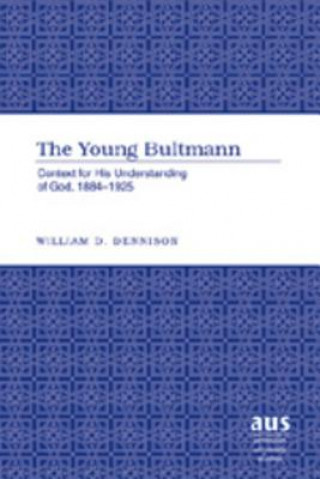
Kód: 10029810
Young Bultmann
Autor William D. Dennison
During his early life (1884-1925), Rudolf Bultmann passionately attempted to unite scholar and laity through his understanding of God, which developed in the context of his home and its love for the common people of the church; th ... celý popis


- Jazyk:
 Angličtina
 - Vazba: Pevná
- Počet stran: 245
Nakladatelství: Peter Lang Publishing Inc, 2008
- Více informací o knize


Mohlo by se vám také líbit
-

Esküdt ellenségek
314 Kč -

InvestiGators: Off the Hook
212 Kč -

Español en marcha 3 - Nueva edición, m. 1 Buch, m. 1 Beilage
769 Kč -

Emil Grunbar und seine Bande
174 Kč -

Brothers and Keepers
226 Kč -

Michelangelo
191 Kč -

Lit-Rock: Literary Capital in Popular Music
940 Kč -

New Grappler Baki - Tome 15 - Perfect Edition
384 Kč -
Diving in the Inner Ocean
316 Kč -

Anti-Fautes Italien
198 Kč -

Wprowadzenie do psychologii
639 Kč -

Civil War Stories
161 Kč -
Rzymskie Pasje
545 Kč -

Integral Christianity: The Spirit's Call to Evolve
441 Kč -
Mental Measurements Year Book
2596 Kč -

INSCRUTABLE AMERICANS THE
496 Kč -

Theatre on Terror
608 Kč -
The Deep Yes: The Lost Art of True Receiving
339 Kč -

Filosofía de andar por casa
352 Kč -

Modes of Religiosity
1203 Kč -

LEYENDAS VIKINGAS CONTADAS PARA NIÑOS
473 Kč -

Von Masken und Wahrheit 2
167 Kč -

Hydraulik der Wasserheizung
844 Kč -

Let's Explore Australia
200 Kč -

Mauvais sorts dans le tregor
288 Kč -

Champagne Babes
617 Kč -

Fabriken Ohne Menschen
1214 Kč -
Essentials of Statistics for the Social and Behavioral Sciences
1176 Kč -
Graphic Unconscious in Early Modern French Writing
3010 Kč -
LES TROIS LIVRES DE PORISMES D'EUCLIDE
1784 Kč -

CRÓNICAS EUROPEAS
429 Kč -
Laser-Strophometry
2357 Kč -

Imaginary Biographies
4193 Kč -

Church, Nation and Race
2585 Kč -

Martin Pleyer der Kreuzfahrer wider Willen
465 Kč -

Avenir Du Secteur de L Automobile
794 Kč -

EIN PRALLES LEBEN AM RAND UND MITTENDRIN
509 Kč -

40 Formas de Aumentar tu Capital: Un libro para mejorar tu patrimonio
961 Kč -

Spine Of God (Relssue)
333 Kč -

Der Denver-Clan. Season.04, 7 DVDs
532 Kč -

Gender-Marketing
572 Kč -

Smart Guide to the Bible
408 Kč -

Trille dimri
244 Kč -

Bemused
835 Kč -

The Golden Fleece: A Book of Jewish Cabalism
445 Kč -

Konkurrenz der Paradigmata.
976 Kč -

Ikc 5 Eighteen Upbuilding Discourses: Eighteen Upbuilding Discourses (H654/Mrc)
1293 Kč -

Trial of Vice-Admiral Byng, at a Court-Martial, Held on Board His Majesty's Ship the St. George, in Portsmouth Harbour. ... Together with the Admiral'
685 Kč -

Aus den Tagen der Hansa
449 Kč -
Electre de Jean Giraudoux (fiche de lecture et analyse complete de l'oeuvre)
267 Kč -

Futile Diplomacy, Volume 2
1548 Kč -

GEORGES MIGOT: 4 NOCTURNES (PIANO SOLO) PIANO
1159 Kč -

New Historicism & Cultural Materialism
851 Kč -
Descubre el Universo: Atlas del Espacio y Astronomía Práctica
455 Kč -
International Perspectives on Youth Media
1416 Kč -

Embedded Mechatronic Systems
2647 Kč -

The Colonial Records of the State of Georgia.
728 Kč -

badischen Gemeindegesetze sammt den dazu gehoerigen Verordnungen
893 Kč -

On Target
533 Kč -
Wearable Electronics Sensors
2357 Kč -
Studies on Greek Law, Oratory and Comedy
5651 Kč -

Dinos Are Forever
165 Kč -

Congratulatory Verses to Edward Biddle, Gent., Occasioned by His Poem on the Birth of the Young Prince. with Some Remarks Critical, Hypercritical, Sat
287 Kč
Darujte tuto knihu ještě dnes
- Objednejte knihu a zvolte Zaslat jako dárek.
- Obratem obdržíte darovací poukaz na knihu, který můžete ihned předat obdarovanému.
- Knihu zašleme na adresu obdarovaného, o nic se nestaráte.
Více informací o knize Young Bultmann
Nákupem získáte 205 bodů
 Anotace knihy
During his early life (1884-1925), Rudolf Bultmann passionately attempted to unite scholar and laity through his understanding of God, which developed in the context of his home and its love for the common people of the church; the legacy of Schleiermacher; Marburg Lutheran neo-Kantianism; the eschatological perspective of the History of Religion School; dialectical theology; and Heidegger's philosophy of existence. Bultmann always insisted that God reflected the inner forces of life within each human being. Over the years, however, Bultmann came to hold that Lutheran neo-Kantianism provided the basic structure by which to analyze, critique, and strengthen his understanding of God. In light of this neo-Kantian structure, Bultmann insisted that God could not be the formulation of any scientific, ethical, or artistic construction. In other words God could not be the object or manifestation of human reason in any form since God transcended human reason. Hence in 1925, through the assistance of the dialectical theologians and Heidegger, Bultmann presented his purest formulation of a neo-Kantian understanding of God: God as the spontaneous moment of encountering the dialectical forces within our existential being.
Parametry knihy
Zařazení knihy Knihy v angličtině Humanities Philosophy History of Western philosophy
2047 Kč
- Plný název: Young Bultmann
- Autor: William D. Dennison
- Jazyk: Angličtina
- Vazba: Pevná
- Počet stran: 245
- EAN: 9780820481135
- ISBN: 9780820481135
- ID: 10029810
- Nakladatelství: Peter Lang Publishing Inc
- Hmotnost: 572 g
- Rozměry: 158 × 235 × 23 mm
- Datum vydání: 05. February 2008
Oblíbené z jiného soudku
-

Meditations
195 Kč -

Nausea
248 Kč -

The Myth of Sisyphus
187 Kč -
The Republic
305 Kč -

Beyond Good and Evil
256 Kč -

Ride the Tiger
412 Kč -
Letters from a Stoic
231 Kč -

Phenomenology of Spirit
396 Kč -

Why I Am so Clever
94 Kč -
Discourses and Selected Writings
238 Kč -
Thus Spoke Zarathustra: A Book for Everyone and No One
235 Kč -
Simulacra and Simulation
495 Kč -
The Symposium
209 Kč -

Fear and Trembling
248 Kč -
Gay Science
257 Kč -

Existentialism Is a Humanism
224 Kč -
The Nicomachean Ethics
235 Kč -
Leviathan
164 Kč -
Anti-Oedipus
381 Kč -
Socrates' Defence
95 Kč -
Plato: Five Dialogues
382 Kč -

Essays and Aphorisms
304 Kč -
Twilight of Idols and Anti-Christ
248 Kč -

On the Shortness of Life
178 Kč -
Critique of Pure Reason
365 Kč -
Nicomachean Ethics
204 Kč -

Twilight of the Idols with The Antichrist and Ecce Homo
153 Kč -
Joyous Science
272 Kč -
Intellectual Life
380 Kč -
Nicomachean Ethics
155 Kč -

At The Existentialist Cafe
276 Kč -

Aquinas
229 Kč -
Meditations
425 Kč -

Beyond Good and Evil
358 Kč -

Concept of Anxiety
302 Kč -

Candide and Other Stories
147 Kč -

Politics
243 Kč -
Letters on Ethics - To Lucilius
1094 Kč -
Thus Spoke Zarathustra
274 Kč -
Great Dialogues Of Plato
70 Kč -

On the Heights of Despair
766 Kč -

The End of Certainty
474 Kč -

Anselm of Canterbury: The Major Works
256 Kč -

Discourse on Method and Meditations on First Philosophy
179 Kč -
City of God
319 Kč -

Meditations and Other Metaphysical Writings
284 Kč -

The Farther Reaches of Human Nature
288 Kč -
Early Greek Philosophy
723 Kč -
Margins of Reality
650 Kč
Osobní odběr Praha, Brno a 48067 dalších
Copyright ©2008-26 nejlevnejsi-knihy.cz Všechna práva vyhrazenaSoukromíCookies

 Vrácení do měsíce
 571 999 099 (8-15.30h)