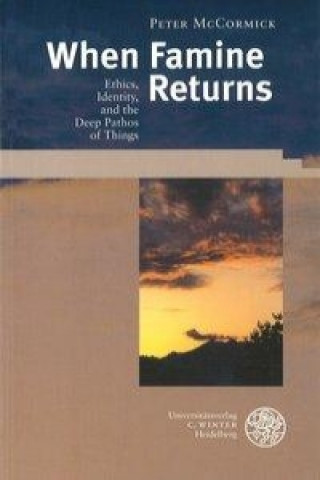
Kód: 12680329
When Famine Returns
Autor Peter McCormick
Does everyone have a moral obligation to aid famine victims? Or do all persons have more basic ethical responsibility continually to assist such victims substantially, even "beyond the call of moral duty?" If so, then why? And ... celý popis


- Jazyk:
 Němčina
 - Vazba: Brožovaná
- Počet stran: 167
Nakladatelství: Universitätsverlag Winter, 2003
- Více informací o knize

630 Kč
Dostupnost:
50 % šance Máme informaci, že by titul mohl být dostupný. Na základě vaší objednávky se ho pokusíme do 6 týdnů zajistit.
Prohledáme celý svět
Mohlo by se vám také líbit
-

NIV Larger Print Personal Velvet Bible
554 Kč -

First Team
692 Kč -

Ferlinghetti's Greatest Poems
313 Kč -

J'apprends le francais ! - Cahier d'exercices sans corriges, niveau A2 a B1
279 Kč -

Game AI Pro 3
2493 Kč -

Bekenntnis und Geschichte
267 Kč -

Conoscere i movimenti del cavallo
726 Kč -

Perspectivas históricas del arte operacional : Francia, Alemania, Rusia-Unión Soviética, Estados Unidos
759 Kč -

Revue des sciences sociales n° 70/2023 - La fabrique de l’inclusion numérique des personnes âgées
695 Kč -

Current Progress in Multimedia: Volume II
2961 Kč -

Guillaume Tell Suivi de Eliezer: Oeuvres Posthumes
445 Kč -

From a Dead Sleep
425 Kč -

Booked!
480 Kč -

Joseph und seine Brüder
1259 Kč -

Erfolgreich werben und verkaufen im Internet
308 Kč -

Iron Furnace
529 Kč -

The Letters of Henry Adams
9207 Kč -

ADMINISTRACIONES PUBLICAS EN EL CONCURSO
3451 Kč -

Nature of Healthy Dating Relationship
242 Kč -

Reba's Pocket Posh Journal, Chevron
175 Kč -

Managing in the Email Office
1390 Kč -

Strafzwecke in Strafrechtslehre und OEffentlichkeit
774 Kč -
Random Harvest
501 Kč -
Education in Israel ILS 222
5489 Kč -

Residenzmuseum in Munchen
529 Kč -

The Old Dominion
237 Kč -

Shaken
544 Kč -

Latinos Protestantes: Historia Presente y Futuro en los Estados Unidos
548 Kč
Darujte tuto knihu ještě dnes
- Objednejte knihu a zvolte Zaslat jako dárek.
- Obratem obdržíte darovací poukaz na knihu, který můžete ihned předat obdarovanému.
- Knihu zašleme na adresu obdarovaného, o nic se nestaráte.
Informovat o naskladnění knihy
Zadejte do formuláře e-mailovou adresu a jakmile knihu naskladníme, zašleme vám o tom zprávu. Pohlídáme vše za vás.
Více informací o knize When Famine Returns
Nákupem získáte 63 bodů
 Anotace knihy
Does everyone have a moral obligation to aid famine victims? Or do all persons have more basic ethical responsibility continually to assist such victims substantially, even "beyond the call of moral duty?" If so, then why? And how? Making use of detailed case studies from the Great Bengal Famines of the 1940s to the recurring Ethiopian famines of the 1970s and 1980s and the Sudanese famines of today, Peter McCormick argues that famine is in part a philosophical issue. In the personal and tentative style of the short, classic reflective essay rather than in the impersonal style of the contemporary extended philosophical monograph, he proposes that "the problem of famine" cannot be understood as exclusively an economic or political problem. Rather, comprehending famine properly raises at least one quite fundamental ethical issue. For the basic ethical significance of famine is that seriously considering whether and just how one ought continually to assist the numberless victims of famine challenges our previous understandings of what it is both to be a person and to live fully, and rightly, the life of a person.
Parametry knihy
Zařazení knihy Knihy v němčině Geisteswissenschaften, Kunst, Musik Philosophie Antike
630 Kč
- Plný název: When Famine Returns
- Autor: Peter McCormick
- Jazyk: Němčina
- Vazba: Brožovaná
- Počet stran: 167
- EAN: 9783825311230
- ISBN: 3825311236
- ID: 12680329
- Nakladatelství: Universitätsverlag Winter
- Hmotnost: 217 g
- Rozměry: 214 × 139 × 13 mm
- Datum vydání: January 2003
Oblíbené z jiného soudku
-

The Philosophy of Redemption
335 Kč -

Four Thousand Weeks: Time Management for Mortals
309 Kč -

On the Shortness of Life
144 Kč -
Determined: A Science of Life Without Free Will
556 Kč -

Immortal Souls
648 Kč -
Moral Ambition
325 Kč -

Unqualified Reservations: Volume 1
645 Kč -

Master Critical Thinking for Teens
409 Kč -
The Logic of Scientific Discovery
893 Kč -

On Bullshit
225 Kč -

This Is Vegan Propaganda
276 Kč -

The Einsteinian Revolution
467 Kč -

The Great Philosophers Collection
1025 Kč -

Ibn Gabirol. El pensamiento judio andalusí
666 Kč -

Cybernetics for the 21st Century Vol. 1
423 Kč -

Meditations by Marcus Aurelius
179 Kč -
The God Delusion
248 Kč -

How to Live
210 Kč -

My Big TOE Awakening Discovery Inner Workings
949 Kč -

The Right to Sex: Feminism in the Twenty-First Century
319 Kč -

Hermes Trismegistus
339 Kč -

The Gateway Experience
420 Kč -

Marcus Aurelius - Meditations
359 Kč -

Then I Am Myself the World: What Consciousness Is and How to Expand It
482 Kč -

Ludwig Wittgenstein
459 Kč -

Jenseits von Gut und Böse
157 Kč -

Animal Liberation Now
276 Kč -

Quotations from Chairman Mao Tse-tung
320 Kč -

Relativity: The Special and the General Theory
271 Kč -

The Language Animal
491 Kč -
The Practicing Stoic
362 Kč -

Exit the Cave
333 Kč -

Against Interpretation
340 Kč -

The Fallacy Detective
624 Kč -

Useful Not True
210 Kč -

Focus on What Matters
241 Kč -

The Kybalion
216 Kč -
Socrates' Children Box Set
1267 Kč -

The Thinking Toolbox
624 Kč -
Moral Ambition
445 Kč -

Open Socrates
281 Kč -

The Boy, the Mole, the Fox and the Horse Fifth Anniversary Limited Edition
482 Kč -

Science and Sanity
857 Kč -

The Daimon and the Soul of the West
272 Kč -

How to Know a Person: The Art of Seeing Others Deeply and Being Deeply Seen
473 Kč -

After
235 Kč -
Ted Lasso and Philosophy: No Question Is Into Touch
379 Kč -

Archetypal Psychology
421 Kč -

On the Genealogy of Morals (Collector's Edition) (Laminated Hardback with Jacket)
857 Kč
Osobní odběr Praha, Brno a 47484 dalších
Copyright ©2008-26 nejlevnejsi-knihy.cz Všechna práva vyhrazenaSoukromíCookies

 Vrácení do měsíce
 571 999 099 (8-15.30h)