Kód: 04939159
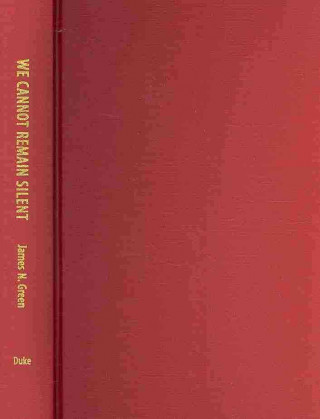
We Cannot Remain Silent
Autor James Green
In 1964, Brazil's democratically elected, left-wing government was ousted in a coup and replaced by a military junta. The Johnson administration quickly recognized the new government. The U.S. press and members of Congress were ne ... celý popis


- Jazyk:
 Angličtina
 - Vazba: Pevná
- Počet stran: 472
Nakladatelství: Duke University Press, 2010
- Více informací o knize

4101 Kč
Dostupnost:
50 % šance Máme informaci, že by titul mohl být dostupný. Na základě vaší objednávky se ho pokusíme do 6 týdnů zajistit.
Prohledáme celý svět
Mohlo by se vám také líbit
-
Kapky moudrosti srdce IV.
66 Kč -

Real Algebraic Geometry
4562 Kč -

Out Of Bounds With My Best Friend's Brother
243 Kč -
Réactions, des atomes aux galaxies
610 Kč -

Inner Alchemy
286 Kč -

Fantasie in fis-moll
410 Kč -

Sinn und Sinnlosigkeit des Soldatentodes
369 Kč
Darujte tuto knihu ještě dnes
- Objednejte knihu a zvolte Zaslat jako dárek.
- Obratem obdržíte darovací poukaz na knihu, který můžete ihned předat obdarovanému.
- Knihu zašleme na adresu obdarovaného, o nic se nestaráte.
Informovat o naskladnění knihy
Zadejte do formuláře e-mailovou adresu a jakmile knihu naskladníme, zašleme vám o tom zprávu. Pohlídáme vše za vás.
Více informací o knize We Cannot Remain Silent
Nákupem získáte 410 bodů
 Anotace knihy
In 1964, Brazil's democratically elected, left-wing government was ousted in a coup and replaced by a military junta. The Johnson administration quickly recognized the new government. The U.S. press and members of Congress were nearly unanimous in their support of the 'revolution' and the coup leaders' anticommunist agenda. Few Americans were aware of the human-rights abuses perpetrated by Brazil's new regime. By 1969, a small group of academics, clergy, Brazilian exiles, and political activists had begun to educate the American public about the violent repression in Brazil and mobilize opposition to the dictatorship. By 1974, most informed political activists in the United States associated the Brazilian government with its torture chambers. In "We Cannot Remain Silent", James N. Green analyzes the U.S. grassroots activities against torture in Brazil, and the ways those efforts helped to create a new discourse about human-rights violations in Latin America. He explains how the campaign against Brazil's dictatorship laid the groundwork for subsequent U.S. movements against human-rights abuses in Chile, Uruguay, Argentina, and Central America. Green interviewed many of the activists who educated journalists, government officials, and the public about the abuses taking place under the Brazilian dictatorship. Drawing on those interviews and archival research from Brazil and the United States, he describes the creation of a network of activists with international connections, the documentation of systematic torture and repression, and the cultivation of Congressional allies and the press. Those efforts helped to expose the terror of the dictatorship and undermine U.S. support for the regime. Against the background of the political and social changes of the 1960s and 1970s, Green tells the story of a decentralized, international grassroots movement that effectively challenged U.S. foreign policy.
Parametry knihy
Zařazení knihy Knihy v angličtině Humanities History History: earliest times to present day
4101 Kč
- Plný název: We Cannot Remain Silent
- Podnázev: Opposition to the Brazilian Military Dictatorship in the United States
- Autor: James Green
- Jazyk: Angličtina
- Vazba: Pevná
- Počet stran: 472
- EAN: 9780822347170
- ISBN: 0822347172
- ID: 04939159
- Nakladatelství: Duke University Press
- Hmotnost: 816 g
- Rozměry: 236 × 163 × 33 mm
- Datum vydání: 02. July 2010
Oblíbené z jiného soudku
-

The Origins of Totalitarianism
317 Kč -

Tuesdays With Morrie
235 Kč -

Medieval Costume and How to Make It
258 Kč -

On Tyranny
219 Kč -

The Art of Combat
581 Kč -
Peloponnesian War
297 Kč -

Swerve
284 Kč -

Distant Mirror
336 Kč -

Penguin History of the Twentieth Century
464 Kč -
Ancient Greece
502 Kč -

Road to Sparta
248 Kč -

Creation of Patriarchy
511 Kč -

Nixonland
293 Kč -

History of Ancient Egypt
336 Kč -

Victorian Lady's Guide to Fashion and Beauty
336 Kč -

Son Also Rises
380 Kč -

Crossfire
407 Kč -

Tuesdays With Morrie
227 Kč -

Henry III
291 Kč -

Inescapable Questions
503 Kč -

Liberty & Order
616 Kč -

Woodstock
441 Kč -

Gardens of Hell
691 Kč -
Chronicles of the First Crusade
328 Kč -

Revolution 1989
315 Kč -

Epics of Sumerian Kings
589 Kč -

From Third World to First
285 Kč -

Guns, Germs, and Steel
265 Kč -

Illustrated Encyclopedia of Uniforms of World War I
445 Kč -

History of the Decline and Fall of the Roman Empire
335 Kč -

Learn to Read Ancient Sumerian
651 Kč -

Book of Margery Kempe
265 Kč -

Secret Team
412 Kč -

History of the Ancient World
568 Kč -
Gallic War
178 Kč -

Fall of Carthage
336 Kč -

Oxford Illustrated History of Prehistoric Europe
838 Kč -
24 Hours in Ancient Athens
200 Kč -

Oxford Handbook of Neolithic Europe
1335 Kč -

Alexander the Great
318 Kč -
Egyptian Book of the Dead: The Book of Going Forth by Day : The Complete Papyrus of Ani Featuring Integrated Text and Full-Color Images (History ... M
606 Kč -

Complete Roman Army
445 Kč -

Caesar
428 Kč -

Life in a Medieval Castle
319 Kč -

Fear and Loathing on the Campaign Trail '72
297 Kč -

Electric Kool-Aid Acid Test
235 Kč -

Streams of Gold, Rivers of Blood
691 Kč -

Safe Area Gorazde
506 Kč -

Swords of the Viking Age
641 Kč
Osobní odběr Praha, Brno a 47529 dalších
Copyright ©2008-26 nejlevnejsi-knihy.cz Všechna práva vyhrazenaSoukromíCookies

 Vrácení do měsíce
 571 999 099 (8-15.30h)