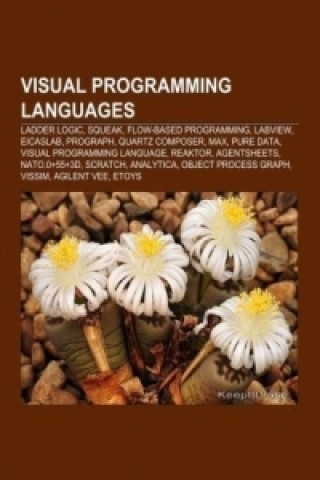
Kód: 01405206
Visual programming languages
Source: Wikipedia. Pages: 53. Chapters: Ladder logic, Squeak, Flow-based programming, LabVIEW, EICASLAB, Prograph, Quartz Composer, Max, Pure Data, Visual programming language, Reaktor, AgentSheets, Nato.0+55+3d, Scratch, Analytic ... celý popis


- Jazyk:
 Angličtina
 - Vazba: Brožovaná
- Počet stran: 54
Nakladatelství: Books on Demand, 2012
- Více informací o knize


Mohlo by se vám také líbit
-

Základy metody projektového řízení PRINCE2
727 Kč -

Stray Kids
215 Kč -

Gropius
309 Kč -

Sharks
244 Kč -

Comprendre Spinoza (analyse complete de sa pensee)
168 Kč -

Down Among the Dead Men
673 Kč -

Curso de Economía Política, Tomo I
619 Kč -

Summer at Firefly Beach
325 Kč -

Tracking the 101st Cavalry
610 Kč -

City of Strangers
278 Kč -

Considering the Creation of a Domestic Intelligence Agency in the United States, 2009
842 Kč -

Dark Intruder
591 Kč -
The Moral Universe: A Preface to Christian Living
924 Kč -

Life of the Indigenous Mind
1836 Kč
Darujte tuto knihu ještě dnes
- Objednejte knihu a zvolte Zaslat jako dárek.
- Obratem obdržíte darovací poukaz na knihu, který můžete ihned předat obdarovanému.
- Knihu zašleme na adresu obdarovaného, o nic se nestaráte.
Více informací o knize Visual programming languages
Nákupem získáte 37 bodů
 Anotace knihy
Source: Wikipedia. Pages: 53. Chapters: Ladder logic, Squeak, Flow-based programming, LabVIEW, EICASLAB, Prograph, Quartz Composer, Max, Pure Data, Visual programming language, Reaktor, AgentSheets, Nato.0+55+3d, Scratch, Analytica, Object Process Graph, VisSim, Agilent VEE, Etoys, Simulink, Limnor, Alice, Mama, Subtext, HyperNext, Usine, Stagecast Creator, Illumination Software Creator, Tersus, Google App Inventor, Lava, Kyma, Baltie, HiAsm, Vvvv, OpenMusic, VSXu, ToonTalk, Automator, AMBIT, Smalltalk YX, Ptolemy Project, Piet, Stateflow, Symbolic Sound Corporation, AppWare, DRAKON, Bidule, TOMVIEW, Deutsch limit, Lily, FxPlug, MST Workshop, ThingLab, Fabrik, CODE, GNU Radio Companion. Excerpt: In computer science, flow-based programming (FBP) is a programming paradigm that defines applications as networks of "black box" processes, which exchange data across predefined connections by message passing, where the connections are specified externally to the processes. These black box processes can be reconnected endlessly to form different applications without having to be changed internally. FBP is thus naturally component-oriented. FBP is a particular form of dataflow programming based on bounded buffers, information packets with defined lifetimes, named ports, and separate definition of connections. The FBP development approach views an application not as a single, sequential, process, which starts at a point in time, and then does one thing at a time until it is finished, but as a network of asynchronous processes communicating by means of streams of structured data chunks, called "information packets" (IPs). In this view, the focus is on the application data and the transformations applied to it to produce the desired outputs. The network is defined externally to the processes, as a list of connections which is interpreted by a piece of software, usually called the "scheduler". The processes communicate by means of fixed-capacity connections. A connection is attached to a process by means of a port, which has a name agreed upon between the process code and the network definition. More than one process can execute the same piece of code. At any point in time, a given IP can only be "owned" by a single process, or be in transit between two processes. Ports may either be simple, or array-type, as used e.g. for the input port of the Collate component described below. It is the combination of ports with asynchronous processes that allows many long-running primitive functions of data processing, such as Sort, Merge, Summarize, etc., to be supported in the form of software black boxes. Because FBP processes can continue executing as long they have data to work
Parametry knihy
369 Kč
- Plný název: Visual programming languages
- Podnázev: Ladder logic, Squeak, Flow-based programming, LabVIEW, EICASLAB, Prograph, Quartz Composer, Max, Pure Data, Visual programming language, Reaktor, AgentSheets, Nato.0+55+3d, Scratch, Analytica, Object
- Jazyk: Angličtina
- Vazba: Brožovaná
- Počet stran: 54
- EAN: 9781156627273
- ID: 01405206
- Nakladatelství: Books on Demand
- Hmotnost: 124 g
- Rozměry: 246 × 189 × 3 mm
- Rok vydání: 2012
Oblíbené z jiného soudku
-

Moonwalk
270 Kč -

The Score
241 Kč -

Berserk Deluxe Volume 1
804 Kč -

The Deal
236 Kč -

The Mistake
254 Kč -

Jujutsu Kaisen, Vol. 30
221 Kč -
Berserk Deluxe Volume 2
942 Kč -

Dancing The Dream
517 Kč -
Murdoku
334 Kč -
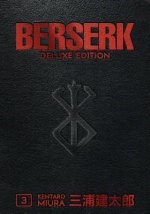
Berserk Deluxe Volume 3
781 Kč -

White Nights
89 Kč -

The Goal
253 Kč -

Threshing Day (Wing and Claw Collection)
400 Kč -
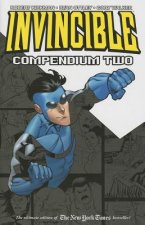
Invincible Compendium Volume 2
1108 Kč -

Chainsaw Man, Vol. 21
240 Kč -

The Legacy
243 Kč -

Jujutsu Kaisen, Vol. 29
199 Kč -

Invincible Compendium Volume 3
1108 Kč -

Lord of Mysteries, Vol. 3: The Clown, Part III
373 Kč -

Berserk Deluxe Volume 5
804 Kč -

Jujutsu Kaisen, Vol. 26
232 Kč -

Witch Hat Atelier: Grimoire Edition 1
786 Kč -

Berserk Deluxe Volume 4
854 Kč -

JoJo's Bizarre Adventure: Part 7--Steel Ball Run, Vol. 7
427 Kč -

Lord of Mysteries, Vol. 1: The Clown, Part I
342 Kč -

Restitution
227 Kč -

Jujutsu Kaisen, Vol. 1
225 Kč -

The Courage To Be Disliked
206 Kč -

Heated Rivalry
227 Kč -

Witch Hat Atelier: Grimoire Edition 2
786 Kč -
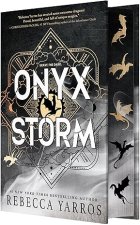
Onyx Storm (Deluxe Limited Edition) (The Empyrean, 3)
526 Kč -

Yesteryear
325 Kč -

Moonwalk: A Memoir
536 Kč -

Veil Volume 1
368 Kč -
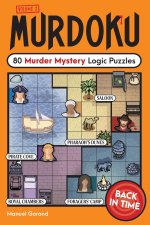
Murdoku Volume 2: Back in Time
334 Kč -

Jujutsu Kaisen, Vol. 2
240 Kč -
Invincible Compendium Volume 1
1108 Kč -

Jujutsu Kaisen, Vol. 25
221 Kč -
Onyx Storm
227 Kč -

Berserk Deluxe Volume 6
862 Kč -

Six of Crows: A Darker Shore: Letters from Ketterdam
387 Kč -

The Count of Monte Cristo
227 Kč -

Jujutsu Kaisen, Vol. 28
199 Kč -

Voracious
227 Kč -

Fourth Wing
526 Kč -
Kid's Box New Generation Level 2 Activity Book with Digital Pack British English
251 Kč -
Throne of Glass Box Set
1775 Kč -

The Long Game
227 Kč -

Iron Flame
526 Kč
Osobní odběr Praha, Brno a 46896 dalších
Copyright ©2008-26 nejlevnejsi-knihy.cz Všechna práva vyhrazenaSoukromíCookies

 Vrácení do měsíce
 571 999 099 (8-15.30h)