Kód: 16363762
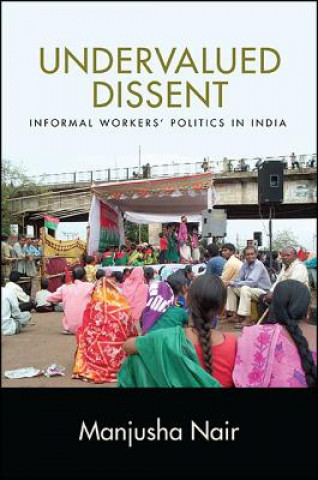
Undervalued Dissent: Informal Workers' Politics in India
Autor Manjusha Nair
Uses two case studies to demonstrate how neoliberal reforms in India have de-democratized labor politics.Honorable Mention, 2018 Global Division Book Award presented by the Global Division of the Society for the Study of Social Pr ... celý popis


- Jazyk:
 Angličtina
 - Vazba: Brožovaná
- Počet stran: 248
Nakladatelství: ST UNIV OF NEW YORK PR, 2017
- Více informací o knize

922 Kč

Skladem u dodavatele v malém množství
Odesíláme za 14-21 dnů
Potřebujete více kusů?Máte-li zájem o více kusů, prověřte, prosím, nejprve dostupnost titulu na naši zákaznické podpoře.
Přidat mezi přání
Mohlo by se vám také líbit
-

Dragon Ball Super - Tome 20
235 Kč -

Kolumbijský Bordel
317 Kč -

Story of a Soul
365 Kč -

I Love Russian
1091 Kč -

Японская объемная вышивка. Таинственный сад
779 Kč -

Lucky Luke Vol. 75: Rin Tin Can's Inheritance
198 Kč -

Treatment
267 Kč -

Lacan for Beginners
335 Kč -

Crushing YouTube
446 Kč -

Sex and the Teenager
643 Kč -

Rosa's Big Sunflower Experiment
173 Kč -

Biology of the Springtails
5059 Kč -

Norman Foster : arquitectura y vida
662 Kč -

The Annealing Algorithm
3532 Kč -

End of Diabetes
491 Kč -

The Lalibela Churches: The History and Legacy of the Medieval Cave Churches in Ethiopia
261 Kč -

Hypercrime
6754 Kč -

The Recluse: A tale of an adult with ADHD
269 Kč -

Design patterns. Schemi di progettazione del software orientato agli oggetti
409 Kč -

Όλα Εξαιτίας σου
300 Kč -

Hagan correr la voz
732 Kč -

Prayers from the Holy Family
339 Kč -

Strukturen der Zurechnung
2505 Kč -

Joining The Men's Club
274 Kč -

Soar
629 Kč -

Imaginary Europes
5651 Kč -

New Directions in Thin Film Nanophotonics
2357 Kč -

Le Tyran (Ed.1870)
337 Kč -

Land and Property Research
1024 Kč -

Geographie de l'Europe, Classe de Quatrieme, Divisions a Et B
674 Kč -

Veinte días sin ti
299 Kč -

Proceedings of the FISITA 2012 World Automotive Congress
4707 Kč -

The Forest Surprise
161 Kč -

Letters Of Percy Bysshe Shelley, Containing Material Never Before Collected. Edited By Roger Ingpen; Vol II
881 Kč -

Anchor for the Soul Devo Lux-L
308 Kč
Darujte tuto knihu ještě dnes
- Objednejte knihu a zvolte Zaslat jako dárek.
- Obratem obdržíte darovací poukaz na knihu, který můžete ihned předat obdarovanému.
- Knihu zašleme na adresu obdarovaného, o nic se nestaráte.
Více informací o knize Undervalued Dissent: Informal Workers' Politics in India
Nákupem získáte 92 bodů
 Anotace knihy
Uses two case studies to demonstrate how neoliberal reforms in India have de-democratized labor politics.
Honorable Mention, 2018 Global Division Book Award presented by the Global Division of the Society for the Study of Social Problems
Historically, the Indian state has not offered welfare and social rights to all of its citizens, yet a remarkable characteristic of its polity has been the ability of citizens to dissent in a democratic way. In Undervalued Dissent, Manjusha Nair argues that this democratic space has been vanishing slowly. Based on extensive fieldwork in Chhattisgarh, a regional state in central India, this book examines two different informal workers' movements. Informal workers are not part of organized labor unions and make up eighty-five percent of the Indian workforce. The first movement started in 1977 and was a success, while the other movement began in 1989 and still continues today, without success. The workers in both movements had similar backgrounds, skills, demands, and strategies. Nair maintains that the first movement succeeded because the workers contended within a labor regime that allowed space for democratic dissent, and the second movement failed because they contested within a widely altered labor regime following neoliberal reforms, where these spaces of democratic dissent were preempted. The key difference between the two regimes, Nair suggests, is not in the withdrawal of a prolabor state from its protective and regulatory role, as has been argued by many, but rather in the rise of a new kind of state that became functionally decentralized, economically predatory, and politically communalized. These changes, Nair concludes, successfully de-democratized labor politics in India.
Parametry knihy
922 Kč
- Plný název: Undervalued Dissent: Informal Workers' Politics in India
- Autor: Manjusha Nair
- Jazyk: Angličtina
- Vazba: Brožovaná
- Počet stran: 248
- EAN: 9781438462462
- ISBN: 1438462468
- ID: 16363762
- Nakladatelství: ST UNIV OF NEW YORK PR
- Hmotnost: 362 g
- Rozměry: 226 × 152 × 20 mm
- Datum vydání: 02. July 2017
Oblíbené z jiného soudku
-

Threshing Day (Wing and Claw Collection)
400 Kč -

Threshing Day (Limited Deluxe Edition)
473 Kč -

Berserk Deluxe Volume 1
879 Kč -

What Happened Yesterday
380 Kč -

White Nights
89 Kč -

Murdoku
334 Kč -

Berserk Deluxe Volume 2
941 Kč -

Court of Thorns and Roses 6
358 Kč -

Berserk Deluxe Volume 3
801 Kč -

21 Days of Fear
396 Kč -

Jojo's Bizarre Adventure: Part 7--Steel Ball Run, Vol. 8
427 Kč -

Onyx Storm (Deluxe Limited Edition) (The Empyrean, 3)
551 Kč -

Kid's Box New Generation Level 2 Activity Book with Digital Pack British English
288 Kč -

The Art of Gravity Falls
851 Kč -

Yesteryear
325 Kč -

The Courage To Be Disliked
206 Kč -

Kid's Box New Generation Level 3 Activity Book with Digital Pack British English
251 Kč -

Witch Hat Atelier: Grimoire Edition 1
755 Kč -

Dancing The Dream
482 Kč -

Kid's Box New Generation Level 1 Activity Book with Digital Pack British English
251 Kč -

Magic the Gathering Reality Fracture Secret Lair Bundle english
2709 Kč -

Fourth Wing
536 Kč -

Iron Flame
551 Kč -

The Count of Monte Cristo
227 Kč -

Murdoku
362 Kč -

Berserk Deluxe Volume 4
879 Kč -

Throne of Glass Box Set
2030 Kč -

I Who Have Never Known Men
227 Kč -

Lord of Mysteries, Vol. 4: The Faceless, Part I
335 Kč -

Jojo's Bizarre Adventure: Part 7--Steel Ball Run, Vol. 2
442 Kč -

East of Eden
276 Kč -

Kid's Box New Generation Level 2 Pupil's Book with eBook British English
409 Kč -

Project Hail Mary
213 Kč -

Protocols
325 Kč -

Berserk Deluxe Volume 5
879 Kč -

Kid's Box New Generation Level 3 Pupil's Book with eBook British English
409 Kč -

Kid's Box New Generation Level 1 Pupil's Book with eBook British English
409 Kč -

Death Note (All-in-One Edition)
879 Kč -

Jujutsu Kaisen, Vol. 26
225 Kč -

JoJo's Bizarre Adventure: Part 7--Steel Ball Run, Vol. 7
415 Kč -

The Score
227 Kč -

Murdoku Volume 2: Back in Time
334 Kč -

How Lucky Am I?
424 Kč -

Lord of Mysteries, Vol. 1: The Clown, Part I
334 Kč -

The Mistake
221 Kč -

Psychology of Money
395 Kč -

Murdoku Volume 2: Back In Time
379 Kč -

Crescent City Paperback Box Set
728 Kč -

Witch Hat Atelier: Grimoire Edition 2
777 Kč
Osobní odběr Praha, Brno a 48137 dalších
Copyright ©2008-26 nejlevnejsi-knihy.cz Všechna práva vyhrazenaSoukromíCookies

 Vrácení do měsíce
 571 999 099 (8-15.30h)