Kód: 21019322
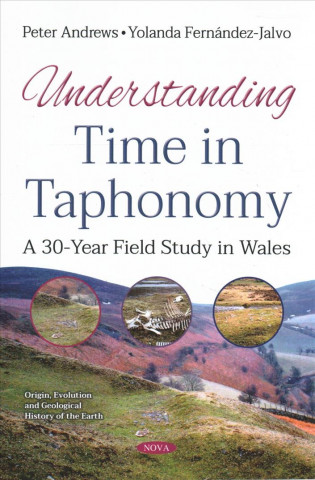
Understanding Time in Taphonomy
Autor Peter Andrews, Yolanda Fernandez-Jalvo
This book investigates time as it affects taphonomy. All taphonomic agents operate through time, which may be long or short, so time adds another dimension to taphonomic change. The processes and modifications recorded in fossils ... celý popis


- Jazyk:
 Angličtina
 - Vazba: Brožovaná
- Počet stran: 209
Nakladatelství: Nova Science Publishers Inc, 2019
- Více informací o knize

2441 Kč
Dostupnost:
50 % šance Máme informaci, že by titul mohl být dostupný. Na základě vaší objednávky se ho pokusíme do 6 týdnů zajistit.
Prohledáme celý svět
Mohlo by se vám také líbit
-

Total Immersion
284 Kč -

Chain of Thorns
400 Kč -

Glint
235 Kč -

DISNEY WHOS WHO REFRESH
256 Kč -

Midsummer Night's Dream (No Fear Shakespeare)
145 Kč -

Crystal Bible Volume 2
358 Kč -

Materia Medica of Homeopathic Gemstones
237 Kč -
Biomechanics For Dummies
465 Kč -

Rule #1
325 Kč -

Missing Microbes
301 Kč -

The Book of Mentors - Honoring Legacy Legend Jim Rohn
334 Kč -

SI LO CREES, LO CREAS
451 Kč -

Deutsche Lkw-Anhänger
762 Kč -

Periodic Table
161 Kč -
![The Light of Egypt; Or, the Science of the Soul and the Stars [Two Volumes in One]](https://media.libris.to/jacket/37234280t.jpg "The Light of Egypt; Or, the Science of the Soul and the Stars [Two Volumes in One]")
The Light of Egypt; Or, the Science of the Soul and the Stars [Two Volumes in One]
348 Kč -

Irish-American Units in the Civil War
415 Kč -

The South Pole: An Account of the Norwegian Antarctic Expedition in the FRAM, 1910-1912
1017 Kč -

Reise Know-How Sprachführer Polnisch Slang - das andere Polnisch
206 Kč -

Post-Cold War International System
1619 Kč -

The Strangeworlds Travel Agency: The Edge of the Ocean
207 Kč -

Pohádky z parapetu
166 Kč -

Remember Me, 1 DVD
255 Kč -

The Theory and History of Banking
554 Kč -

Map that Led to You
194 Kč -

La fantástica historia de Los tres cerditos
468 Kč -

Numerical Analysis
4724 Kč -

Speed Game
524 Kč -

Death in White Bear Lake
616 Kč -
Anatomy Of The Head And Neck Applied To Dental Practice
1115 Kč -

Baptist Guilt
697 Kč -
A Tutor to Astronomie and Geographie
568 Kč -

Kaleidoskop slov a obrazů - Na okraji velkých témat
285 Kč -

Maskarate Ispod Kuplja: Drama
166 Kč -

Hammer, Volume 1
269 Kč -

Au zoo avec T'Choupi
358 Kč -

Hidden Shore
866 Kč -

Guía legal para una startup
1117 Kč -

Economics of Social Protection
3350 Kč -

Deep Learning with R for Beginners
1293 Kč -

Historia doble del Cauca
592 Kč -

The Right to Information Act, 2005 in India. A Critical Analysis
328 Kč -

Senor, quiero sentirme restaurada
300 Kč -

Early Thunder
169 Kč -

Forensic Taphonomy and Ecology of North American Scavengers
1200 Kč -

Casper Hauser: An Account Of An Individual, Kept In A Dungeon, Separated From All Communication With The World, From Early Childhood
576 Kč -

Against the Machine: How the Web Is Reshaping Culture and Commerce--And Why It Matters
373 Kč -

Get It Done
341 Kč -

Accidental ? Physician Poet
224 Kč -

The Old Mother Goose, Volume 3 (Simplified Chinese): 06 Paperback Color
774 Kč -

How to Improve Test Scores!: Improve Test Scores
618 Kč -

Memoires de Leonard, Ancien Garcon Macon (Ed.1895)
702 Kč -

Fictions Fo Bi
457 Kč -

Story So Far
564 Kč -

Sirene Libro da Colorare
226 Kč -

Andreas Vesalius Bruxellensis
3868 Kč -

Trigonometry
308 Kč -

Everyday Day to Day Weekly Academic Planner!
233 Kč -

Science of Everyday Things
6486 Kč -

Om
242 Kč -

CORS and OPUS For Engineers
2663 Kč -

The Unintended Consequences of Not Living Fully: Truth Is Sacred
237 Kč -

Shakespeare Among the Courtesans
5435 Kč -

Natural Solutions for Sexual Enhancement
221 Kč
Darujte tuto knihu ještě dnes
- Objednejte knihu a zvolte Zaslat jako dárek.
- Obratem obdržíte darovací poukaz na knihu, který můžete ihned předat obdarovanému.
- Knihu zašleme na adresu obdarovaného, o nic se nestaráte.
Informovat o naskladnění knihy
Zadejte do formuláře e-mailovou adresu a jakmile knihu naskladníme, zašleme vám o tom zprávu. Pohlídáme vše za vás.
Více informací o knize Understanding Time in Taphonomy
Nákupem získáte 244 bodů
 Anotace knihy
This book investigates time as it affects taphonomy. All taphonomic agents operate through time, which may be long or short, so time adds another dimension to taphonomic change. The processes and modifications recorded in fossils can tell us how long the fossils took to accumulate and the geological/biological/ environmental context in which they fossilized. Measuring time in taphonomy requires long-term studies of taphonomic processes operating at the present time. In 1976, one of the authors (PA) started a 30-year monitoring project of animals that died natural deaths at Neuadd in Wales. The study area of 680ha of upland heathland, woodland and rough grazing were monitored. Over 100 sheep, horses, foxes, badgers, rabbits and small mammals were monitored, but only 56 yielded useful results. YFJ has also begun a similar study at Riofrio in Spain, and other long-term studies are reviewed. This 30-year study highlighted several time-specific taphonomic issues. Trampling of Neuadd specimens produced pitting and superficial scratching found commonly on fossils. Longer striations mimicking cut marks are common, particularly on bones in rocky substrates. The number and morphology of these pseudo-cut-marks are compared with cut marks made during human butchery. There is only a weak relationship with exposure time. The extreme effects of water and wind at Neuadd quickly dispersed body parts. Modifications similar to trampling and butchery were produced in running water. In still water, three modification stages are identified: Stage 1, which is 3-5 years with broad flaking; stage 2, 10-12 years with extreme flaking and loss of surface bone; and stage 3, >18 years with deep tissue loss. Weathering at Neuadd has a time-scale that is different from the one established for tropical environments: At 0-5 years, 92% of bones are unweathered, with 8% at stage 1; at 6 to 10 years, 73% of bones are unweathered, with 27% at stage 1; at 15 to 25 years, 17% of bones are unweathered, with 63% at stage 1 and 20% of bones at stage 2; at 30 to 35 years, only one skull survived, and it is at stage 1 weathering. Monitoring of buried bones at Neuadd shows three time-scales of modifications resulting from soil corrosion: Progressive corrosion under dense vegetation cover with high humidity from 2 to 23 years; increasing root marks from 2 to 23 years; and corrosion from the action of lower plants such as moss and algae in 3 to 11 years. The extent and sizes of carnivore and herbivore chewing marks was found to have no usable timescale. Dispersal of bones is slow at Neuadd and is related strongly both to the nature of the environment and to the size of the animals. Three timescales have been identified: Dispersal over 15 years is greatest for large animals in open environments, lower for medium sized animals like sheep, and the least for small and medium size animals in dense vegetation. Future monitoring projects could use electronic marking chips on single specimens, camera traps, GPS, the Global Weathering Project, radioactive markers on bones, and aerial mapping, backed up with experimental work in controlled conditions.
Parametry knihy
Zařazení knihy Knihy v angličtině Mathematics & science Chemistry Mineralogy & gems
2441 Kč
- Plný název: Understanding Time in Taphonomy
- Autor: Peter Andrews, Yolanda Fernandez-Jalvo
- Jazyk: Angličtina
- Vazba: Brožovaná
- Počet stran: 209
- EAN: 9781536146752
- ISBN: 1536146757
- ID: 21019322
- Nakladatelství: Nova Science Publishers Inc
- Hmotnost: 298 g
- Rozměry: 155 × 229 × 14 mm
- Datum vydání: 01. August 2019
Oblíbené z jiného soudku
-
Introduction to Radioactive Minerals
495 Kč -
Mineralogy of Uranium and Thorium
956 Kč -
Gemmology
823 Kč -
Introduction to the Rock-forming Minerals
1937 Kč -
Minerals of Nevada
797 Kč -

Secrets of the Gem Trade
2045 Kč -
Minerals and Gemstones
318 Kč -

Prospecting For Gemstones and Minerals
960 Kč -

Minerals
1712 Kč -
Minerals: A Very Short Introduction
242 Kč -
Meteorite Craters
746 Kč -

Diamond Compendium
4244 Kč -

Optical Mineralogy
2592 Kč -

Book of the Pearl
524 Kč -

Modern Jeweler's Consumer Guide to Colored Gemstones
2592 Kč -
Manual of Mineral Science 23e
5542 Kč -

Uranium Ore Deposits
3532 Kč -

Introduction to Mineralogy
3099 Kč -

Collector's Guide to Fluorite
367 Kč -
Hydrothermal Mineral Deposits
2827 Kč -
Mineralogy
2767 Kč -
Field Collecting Gemstones and Minerals
1011 Kč -
Ultrahigh Pressure Mineralogy
1029 Kč -
Physics and Chemistry of Earth Materials
1831 Kč -

Gems and Jewelry Appraising
2592 Kč -
Field Collecting Gemstones and Minerals
1316 Kč -
Bitumens in Ore Deposits
2357 Kč -

Tungsten in Peace and War, 1918-1946
1227 Kč -

Diamonds in Nature
3379 Kč -
History of Paleozoic Salt Accumulation
2357 Kč -
Bentonite
6990 Kč -

Manual of Mineralogy
555 Kč -
Geospatial Analysis Applied to Mineral Exploration
4365 Kč -

Diamonds in Nature
3532 Kč -

Collector's Book of Fluorescent Minerals
2827 Kč -

The World of Mineral Deposits
1040 Kč -

Bridging the Time Scales
2357 Kč -
Biomineralization and Biological Metal Accumulation
3532 Kč -
Rutley's Elements of Mineralogy
2357 Kč -
Biomineralization - From Nature to Application V 4
9373 Kč -

West African Orogens and Circum-Atlantic Correlatives
2357 Kč -
Introduction to Optical Mineralogy
2199 Kč -
Pre-Permian Geology of Central and Eastern Europe
2357 Kč -
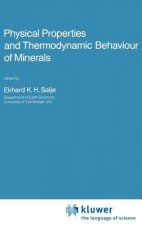
Physical Properties and Thermodynamic Behaviour of Minerals
7057 Kč -

New Developments in High-Pressure Mineral Physics and Applications to the Earth's Interior
2712 Kč -
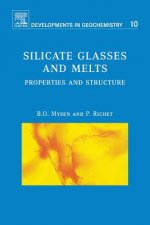
Silicate Glasses and Melts
4890 Kč -
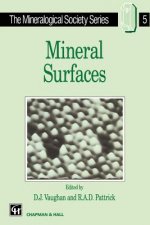
Mineral Surfaces
3532 Kč -
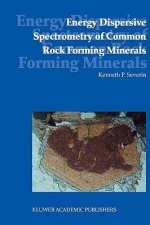
Energy Dispersive Spectrometry of Common Rock Forming Minerals
4059 Kč -
Hydroxyapatite
10651 Kč
Osobní odběr Praha, Brno a 46804 dalších
Copyright ©2008-26 nejlevnejsi-knihy.cz Všechna práva vyhrazenaSoukromíCookies

 Vrácení do měsíce
 571 999 099 (8-15.30h)