Kód: 53338340
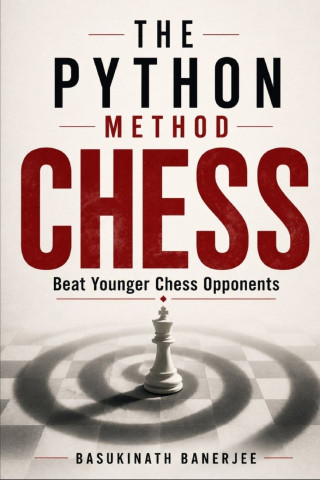
THE PYTHON METHOD - Beat Younger Chess Opponents
Autor Basukinath Banerjee
You are not getting slower.You may simply be playing the kind of chess that gives younger opponents exactly what they want.Many experienced club players know the feeling. You reach a complicated position against a teenager or a pl ... celý popis


- Jazyk:
 Angličtina
 - Vazba: Brožovaná
- Počet stran: 130
Nakladatelství: Independently published, 2026
- Více informací o knize


Mohlo by se vám také líbit
-

Moonwalk
263 Kč -

Berserk Deluxe Volume 1
861 Kč -

The Score
243 Kč -

Murdoku
306 Kč -

Threshing Day (Wing and Claw Collection)
439 Kč -

The Mistake
243 Kč -

Berserk Deluxe Volume 2
941 Kč -

The Deal
262 Kč -

Jujutsu Kaisen, Vol. 30
220 Kč -

White Nights
95 Kč -

Dancing The Dream
517 Kč -

Berserk Deluxe Volume 3
781 Kč -

Threshing Day (Limited Deluxe Edition)
488 Kč -

The Goal
253 Kč -

Jujutsu Kaisen, Vol. 26
240 Kč -
Onyx Storm (Deluxe Limited Edition) (The Empyrean, 3)
525 Kč -

Kid's Box New Generation Level 2 Activity Book with Digital Pack British English
265 Kč -

Berserk Deluxe Volume 5
781 Kč -

Chainsaw Man, Vol. 21
240 Kč -

Jujutsu Kaisen, Vol. 29
225 Kč -

Murdoku Volume 2: Back in Time
325 Kč
Darujte tuto knihu ještě dnes
- Objednejte knihu a zvolte Zaslat jako dárek.
- Obratem obdržíte darovací poukaz na knihu, který můžete ihned předat obdarovanému.
- Knihu zašleme na adresu obdarovaného, o nic se nestaráte.
Více informací o knize THE PYTHON METHOD - Beat Younger Chess Opponents
Nákupem získáte 18 bodů
 Anotace knihy
You are not getting slower.
You may simply be playing the kind of chess that gives younger opponents exactly what they want.
Many experienced club players know the feeling. You reach a complicated position against a teenager or a player in their twenties. They calculate quickly, remember long opening lines, and seem completely at home in tactical complications. You know you understand chess, yet somehow the game slips away.
Most chess books respond with the same advice: calculate better, study more openings and sharpen your tactics.
The Python Method takes a different approach.
Instead of trying to beat younger players at their greatest strength, it shows you how to steer the game towards positions where experience, judgement and patience matter more than calculation speed.
The idea is simple. A python does not overpower its prey with speed. It wins by slowly removing every escape until resistance becomes impossible.
That is the philosophy behind this book.
Through a practical six-stage system, you will learn how to:
Reject the kind of positions your opponent wants.
Close down active plans before they become dangerous.
Encourage small positional concessions that become permanent weaknesses.
Preserve those weaknesses instead of rushing to exploit them.
Gradually tighten your grip until your opponent has no constructive plan left.
Convert the accumulated pressure into a winning position.
This is not a book about spectacular sacrifices or memorising hundreds of opening variations. It is about practical tournament chess-the quiet decisions that slowly increase your advantage while leaving your opponent with fewer and fewer good moves.
The ideas are explained through complete master games by some of history's greatest positional players, including Karpov, Nimzowitsch, Rubinstein, Fischer and Capablanca. Each game illustrates how apparently modest strategic choices eventually decide the result.
Along the way, you will discover:
Why experience can become a competitive advantage rather than a handicap.
How positional restriction can reduce the need for deep calculation.
How to identify and eliminate your opponent's key pawn breaks.
How to create weaknesses that must be defended for the rest of the game.
Why prophylaxis often wins more games than direct attacks.
How to conserve mental energy during long tournament games.
Why many younger players become uncomfortable in slow, manoeuvring positions where patience matters more than speed.
If you've ever finished a game thinking,
"I understood the position, but I couldn't keep up with the calculation,"
then this book offers a different way forward.
You do not have to calculate like a twenty-year-old.
You have to create positions where endless calculation is no longer the deciding factor.
Whether you are returning to tournament chess after a long break, competing regularly at club level, or looking for a practical positional system that rewards experience, The Python Method provides a clear framework for turning your years at the board into a genuine competitive advantage.
You don't have to play faster.
You have to make your opponent play your game.
Parametry knihy
176 Kč
- Plný název: THE PYTHON METHOD - Beat Younger Chess Opponents
- Podnázev: How experienced players beat faster, younger, sharper opponents - by taking away the air instead of trading blows.
- Autor: Basukinath Banerjee
- Jazyk: Angličtina
- Vazba: Brožovaná
- Počet stran: 130
- EAN: 9798188926229
- ID: 53338340
- Nakladatelství: Independently published
- Hmotnost: 169 g
- Rozměry: 229 × 152 × 8 mm
- Datum vydání: 25. July 2026
Osobní odběr Praha, Brno a 48078 dalších
Copyright ©2008-26 nejlevnejsi-knihy.cz Všechna práva vyhrazenaSoukromíCookies

 Vrácení do měsíce
 571 999 099 (8-15.30h)