Kód: 04669570
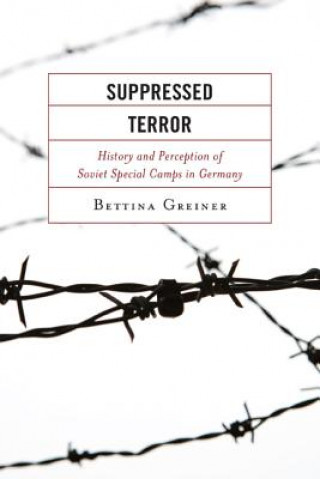
Suppressed Terror
Autor Bettina Greiner
At the end of World War II, the Soviet secret police installed ten special camps in the Soviet occupation zone, later to become the German Democratic Republik. Between 1945 and 1950, roughly 154,000 Germans were held incommunicado ... celý popis


- Jazyk:
 Angličtina
 - Vazba: Pevná
- Počet stran: 418
Nakladatelství: Lexington Books, 2014
- Více informací o knize


Mohlo by se vám také líbit
-

Mathématiques CE2 (2025) - Méthode de Singapour - Fichier élève 2
215 Kč -

Smrtící kytice
83 Kč -

Library of Legends
391 Kč -

Little Book of the Tudors
474 Kč -

GRIM V03
285 Kč -
SULAMITE
499 Kč -

Iza and the Magic Suitcase
358 Kč -

Der Bundespolizei-Flugdienst
927 Kč -

Selbst & Selbstkonzept Bei C.G.Jung
328 Kč -
Computational Science and Its Applications - ICCSA 2016
2410 Kč -

Handbook of Africa's International Relations
1783 Kč -

Japanese Chronicles
475 Kč -

Vollstandiges Woerterbuch zu den Gedichten des Q. Horatius Flaccus
1042 Kč -

Everyday Life and Cultural Theory
4807 Kč -

Alicyclic Chemistry
10317 Kč -

AI and Cognitive Science '89
1350 Kč -
Crisis Communications
3379 Kč -

Computer oder Freunde? UEber die Vereinbarkeit von sozialer Kompetenz und Kompetenz im Umgang mit Neuen Medien
1076 Kč -

Wisden Collector's Guide
1358 Kč -
Etnografia. Scritture e rappresentazioni dell'antropologia
783 Kč -

Mutternarben
181 Kč
Darujte tuto knihu ještě dnes
- Objednejte knihu a zvolte Zaslat jako dárek.
- Obratem obdržíte darovací poukaz na knihu, který můžete ihned předat obdarovanému.
- Knihu zašleme na adresu obdarovaného, o nic se nestaráte.
Více informací o knize Suppressed Terror
Nákupem získáte 397 bodů
 Anotace knihy
At the end of World War II, the Soviet secret police installed ten special camps in the Soviet occupation zone, later to become the German Democratic Republik. Between 1945 and 1950, roughly 154,000 Germans were held incommunicado in these camps. Whether those accused of being Nazis, spies, or terrorists were indeed guilty as charged, they were indiscriminately imprisoned as security threats and denied due process of the law. One third of the captives did not survive. To this day, most Germans have no knowledge of this postwar Stalinist persecution, even though it exemplifies in a unique way the entangled history of Germans as perpetrators and victims. How can one write the history of victims in a "society of perpetrators?" This is only one of the questions Displaced Terror: History and Perception of Soviet Special Camps in Germany raises in exploring issues in memory culture in contemporary Germany. The study begins with a detailed description of the camp system against the backdrop of Stalinist security policies in a territory undergoing a transition from war zone to occupation zone to Cold War hot spot. The interpretation of the camps as an instrument of pacification rather than of denacification does not ignore the fact that, while actual perpetrators were a minority, the majority of the special camp inmates had at least been supporters of Nazi rule and were now imprisoned under life-threatening conditions together with victims and opponents of the defeated regime. Based on their detention memoirs, the second part of the book offers a closer look at life and death in the camps, focusing on the prisoners' self-organization and the frictions within these coerced communities. The memoirs also play an important role in the third and last part of the study. Read as attempts to establish public acknowledgment of violence suffered by Germans, they mirror German memory culture since the end of World War II.
Parametry knihy
Zařazení knihy Knihy v angličtině Humanities History Regional & national history
3971 Kč
- Plný název: Suppressed Terror
- Autor: Bettina Greiner
- Jazyk: Angličtina
- Vazba: Pevná
- Počet stran: 418
- EAN: 9780739177433
- ISBN: 0739177435
- ID: 04669570
- Nakladatelství: Lexington Books
- Hmotnost: 758 g
- Rozměry: 162 × 237 × 40 mm
- Datum vydání: 01. May 2014
Oblíbené z jiného soudku
-

Hundred Years' War on Palestine
260 Kč -

Ethnic Cleansing of Palestine
276 Kč -

Bury My Heart At Wounded Knee
276 Kč -

Slightly Out of Focus
303 Kč -

24 Hours in Ancient Rome
218 Kč -

Wages of Destruction
445 Kč -

Reflections on the Revolution in France
258 Kč -

Black Hawk Down
335 Kč -

On China
407 Kč -
Palestine
416 Kč -

Oxford History of Greece and the Hellenistic World
381 Kč -

Coming of the Third Reich
424 Kč -

Florence
1268 Kč -

Frederick the Great
227 Kč -

Berlin
276 Kč -

Medieval Russia, 980-1584
1121 Kč -

Austrian Commanders of the Napoleonic Wars
414 Kč -

Anglo-Saxon Chronicle
475 Kč -

Sumer and the Sumerians
1298 Kč -

Benjamin Franklin
336 Kč -

Easy Company Soldier
335 Kč -

Children of Ash and Elm
400 Kč -

History of the Renaissance World
645 Kč -

Pirate Ship 1660-1730
343 Kč -

Third Reich at War
424 Kč -
Ancient Iraq
373 Kč -

God's Playground: A History of Poland, Vol. 1
1562 Kč -

Pax Britannica
315 Kč -

Don Troiani's American Battles
716 Kč -

Annals & The Histories
350 Kč -

Spanish Civil War
324 Kč -

Badges and Uniforms of the Royal Air Force
336 Kč -

Ancien Regime and the Revolution
312 Kč -

Heaven's Command
342 Kč -

German Fighter Ace Werner Molders:: An Illustrated Biography
860 Kč -

Unfinished Empire
293 Kč -

Dutch Overseas Empire, 1600-1800
882 Kč -

Tomahawk and Musket
431 Kč -
Russia Under the Old Regime
343 Kč -

Thracians 700BC-46AD
368 Kč -

Chinese Army 1937-49
338 Kč -

British Army in World War I (2)
382 Kč -

1000 Years of Annoying the French
270 Kč -

Wing Chun Warrior
318 Kč -

Institutions of Hanseatic Trade
1480 Kč -

From Colony to Superpower
474 Kč -

Wolfram
315 Kč -

Santa Anna's Army
414 Kč -

Canadian Corps in World War I
359 Kč
Osobní odběr Praha, Brno a 46566 dalších
Copyright ©2008-26 nejlevnejsi-knihy.cz Všechna práva vyhrazenaSoukromíCookies

 Vrácení do měsíce
 571 999 099 (8-15.30h)