Kód: 09245784
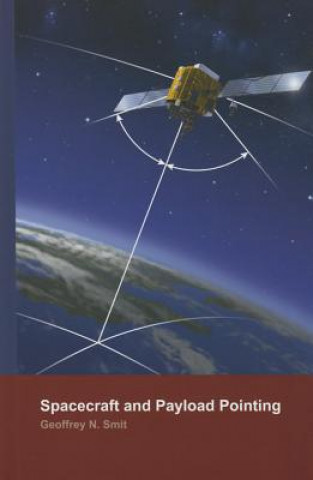
Spacecraft and Payload Pointing
Autor Geoffrey N. Smit
Spacecraft and Payload Pointing focuses on development of the attitude determination and control system (ADACS) for a spacecraft, including payload pointing. Such systems can require knowledge of a large diversity of disciplines f ... celý popis


- Jazyk:
 Angličtina
 - Vazba: Pevná
- Počet stran: 460
Nakladatelství: Aerospace Press, 2015
- Více informací o knize

3306 Kč
Dostupnost:
50 % šance Máme informaci, že by titul mohl být dostupný. Na základě vaší objednávky se ho pokusíme do 6 týdnů zajistit.
Prohledáme celý svět
Mohlo by se vám také líbit
-

Moonwalk
270 Kč -

The Score
248 Kč -

The Deal
248 Kč -

The Mistake
227 Kč -

Jujutsu Kaisen, Vol. 30
233 Kč -

Witch Hat Atelier: Grimoire Edition 1
777 Kč -

Invincible Compendium Volume 2
1123 Kč -

Berserk Deluxe Volume 1
804 Kč -

The Goal
321 Kč -

Berserk Deluxe Volume 2
862 Kč -

Invincible Compendium Volume 1
1108 Kč -

Witch Hat Atelier Manga Box Set 1
1241 Kč -

Heated Rivalry
227 Kč -

Murdoku
380 Kč -

Moonwalk: A Memoir
558 Kč -

Lord of Mysteries, Vol. 3: The Clown, Part III
355 Kč -

Jujutsu Kaisen, Vol. 25
240 Kč -

Jujutsu Kaisen, Vol. 26
240 Kč -

White Nights
89 Kč -

Veil Volume 1
292 Kč -

Berserk Deluxe Volume 3
804 Kč
Darujte tuto knihu ještě dnes
- Objednejte knihu a zvolte Zaslat jako dárek.
- Obratem obdržíte darovací poukaz na knihu, který můžete ihned předat obdarovanému.
- Knihu zašleme na adresu obdarovaného, o nic se nestaráte.
Informovat o naskladnění knihy
Zadejte do formuláře e-mailovou adresu a jakmile knihu naskladníme, zašleme vám o tom zprávu. Pohlídáme vše za vás.
Více informací o knize Spacecraft and Payload Pointing
Nákupem získáte 331 bodů
 Anotace knihy
Spacecraft and Payload Pointing focuses on development of the attitude determination and control system (ADACS) for a spacecraft, including payload pointing. Such systems can require knowledge of a large diversity of disciplines for two reasons. First, the ADACS itself is a broad subject, including the dynamics of the spacecraft and payloads, the physics and engineering of the ADACS sensor and actuator hardware, control and filtering theory, plus systems engineering. Second, many disciplines are involved since the ADACS must interface with several other subsystems (notably payload, structure, and command and data handling [C&DH]) and because ADACS performance translates into key mission performance parameters such as pointing control. When mission requirements are flowed down to the spacecraft and then to its subsystems, the engineer must be able to translate these requirements into appropriate terms at each level. Mission requirements are customer related (such as the ability to broadcast a TV signal or transmit data); they must be translated into spacecraft system concepts (orbits, transmitted power levels), then to subsystem requirements (available power, antenna gain, antenna pointing accuracy), and further down to the level of components. Rather than treat each of the subject areas involved in ADACS design in great depth, this book aims to show how they fit together. The subject can be examined from two basic points of view. The first is that of the systems engineer. This view focuses on requirements, requirements flowdowns, and verification. In it, the onboard hardware and software are regarded as black boxes, defined by their functions, reliability, etc. The other standpoint is that of the physicist or engineer who focuses on what is involved in actually getting these items to work. This view includes actions such as quantifying feasible performance levels, learning how they can be improved, and understanding their fundamental limitations.
Parametry knihy
Zařazení knihy Knihy v angličtině Technology, engineering, agriculture Other technologies & applied sciences Space science
3306 Kč
- Plný název: Spacecraft and Payload Pointing
- Autor: Geoffrey N. Smit
- Jazyk: Angličtina
- Vazba: Pevná
- Počet stran: 460
- EAN: 9781884989230
- ISBN: 1884989233
- ID: 09245784
- Nakladatelství: Aerospace Press
- Hmotnost: 838 g
- Rozměry: 229 × 152 × 32 mm
- Datum vydání: 28. April 2015
Osobní odběr Praha, Brno a 47405 dalších
Copyright ©2008-26 nejlevnejsi-knihy.cz Všechna práva vyhrazenaSoukromíCookies

 Vrácení do měsíce
 571 999 099 (8-15.30h)