Kód: 48204897
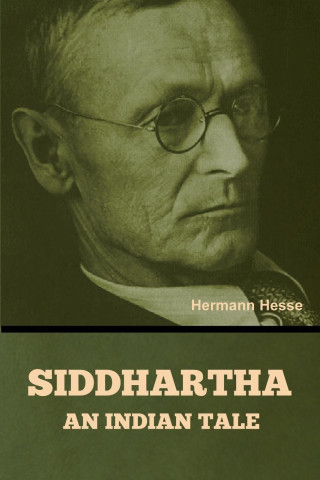
Siddhartha
Autor Hermann Hesse
Siddhartha is an allegorical novel by Hermann Hesse that deals with the spiritual journey of a boy known as Siddhartha from Nepal during the time of the Buddha.The book, Hesse's ninth novel, was written in German, in a simple yet ... celý popis


- Jazyk:
 Angličtina
 - Vazba: Brožovaná
- Počet stran: 132
Nakladatelství: Bibliotech Press, 2025
- Více informací o knize


Mohlo by se vám také líbit
-

Moonwalk
276 Kč -

The Score
248 Kč -

The Deal
254 Kč -

The Mistake
290 Kč -

Jujutsu Kaisen, Vol. 30
240 Kč -

Berserk Deluxe Volume 1
805 Kč -

The Goal
269 Kč -

Berserk Deluxe Volume 2
838 Kč -
Invincible Compendium Volume 2
1108 Kč -

Legacy
244 Kč -

Lord of Mysteries, Vol. 3: The Clown, Part III
373 Kč -

Murdoku
319 Kč -

Berserk Deluxe Volume 3
805 Kč -

Witch Hat Atelier Manga Box Set 1
1241 Kč -

Chainsaw Man, Vol. 21
225 Kč -

Dancing The Dream
517 Kč -

White Nights
85 Kč -

Jujutsu Kaisen, Vol. 25
221 Kč -

Jujutsu Kaisen, Vol. 29
221 Kč -

Witch Hat Atelier: Grimoire Edition 1
794 Kč -

JoJo's Bizarre Adventure: Part 7--Steel Ball Run, Vol. 7
427 Kč
Darujte tuto knihu ještě dnes
- Objednejte knihu a zvolte Zaslat jako dárek.
- Obratem obdržíte darovací poukaz na knihu, který můžete ihned předat obdarovanému.
- Knihu zašleme na adresu obdarovaného, o nic se nestaráte.
Více informací o knize Siddhartha
Nákupem získáte 36 bodů
 Anotace knihy
Siddhartha is an allegorical novel by Hermann Hesse that deals with the spiritual journey of a boy known as Siddhartha from Nepal during the time of the Buddha.
The book, Hesse's ninth novel, was written in German, in a simple yet powerful and lyrical style. It was first published in 1922, after Hesse had spent some time in India in the 1910s. It was published in the U.S. in 1951 and became influential during the 1960s.
About the Author
Hermann Hesse, (born July 2, 1877, Calw, Germany-died August 9, 1962, Montagnola, Switzerland), German novelist and poet who was awarded the Nobel Prize for Literature in 1946. The main theme of his work is the individual's efforts to break out of the established modes of civilization so as to find an essential spirit and identity.
Hesse grew up in Calw and in Basel. He attended school briefly in Göppingen before, at the behest of his father, he entered the Maulbronn seminary in 1891. Though a model student, he was unable to adapt and left less than a year later. As he would later explain,
"I was a good learner, good at Latin though only fair at Greek, but I was not a very manageable boy, and it was only with difficulty that I fitted into the framework of a pietist education that aimed at subduing and breaking the individual personality."
Hesse, who aspired to be a poet, was apprenticed in a Calw tower-clock factory and later in a Tübingen bookstore. He would express his disgust with conventional schooling in the novel Unterm Rad (1906; Beneath the Wheel), in which an overly diligent student is driven to self-destruction. (britannica.com)
Throughout his life, Hermann Hesse was a seeker. This is reflected not only in his outstanding literary works, which won him the Nobel Prize, but also in his resume. In his home town of Calw, where he was born on July 2, 1877, he spent his youth in the bosom of his family - formative years that found their way into many of his books. Maulbronn, Tübingen and Basel were among the other places Hesse lived. In 1904, he moved to an old farmhouse in Gaienhofen on Lake Constance to embark on a career as a freelance writer. In 1911, he made a journey to India, and moved to Switzerland a short time later, living first in Berne and later in Montagnola (Tessin), where he entered his most prolific period as a writer, and where he also died in 1962. The task of overcoming personal crises is one of the defining elements of Hesse's work, though other issues such as religion and politics also feature prominently. (www.hermann-hesse.de)
Parametry knihy
Zařazení knihy Knihy v němčině Belletristik Erzählende Literatur Hauptwerk vor 1945
363 Kč
- Plný název: Siddhartha
- Autor: Hermann Hesse
- Jazyk: Angličtina
- Vazba: Brožovaná
- Počet stran: 132
- EAN: 9798897731091
- ID: 48204897
- Nakladatelství: Bibliotech Press
- Hmotnost: 226 g
- Rozměry: 229 × 152 × 8 mm
- Datum vydání: 08. March 2025
Osobní odběr Praha, Brno a 46029 dalších
Copyright ©2008-26 nejlevnejsi-knihy.cz Všechna práva vyhrazenaSoukromíCookies

 Vrácení do měsíce
 571 999 099 (8-15.30h)