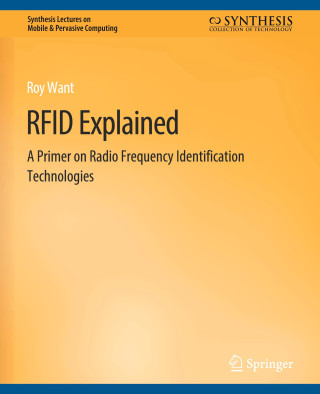
Kód: 39298594
RFID Explained
Autor Roy Want
This lecture provides an introduction to Radio Frequency Identification (RFID), a technology enabling automatic identification of objects at a distance without requiring line-of-sight. Electronic tagging can be divided into techno ... celý popis


- Jazyk:
 Angličtina
 - Vazba: Brožovaná
- Počet stran: 96
Nakladatelství: Springer International Publishing, 2007
- Více informací o knize


Mohlo by se vám také líbit
-

Motorcycle Workshop Practice Techbook
904 Kč -

History of Scotland
490 Kč -

Ultimatum
428 Kč -

ARARAT
368 Kč -
RFID
1933 Kč -

RFID Security
1306 Kč -
RFID
607 Kč -

FinTech Future
476 Kč -

Balance of Power
858 Kč -

Rights of Women in Islam
2646 Kč -

Componente genético e hipertensão arterial na adolescência
813 Kč -

Influencer und Versicherungen. Ist Influencer Marketing ein geeignetes Mittel fur die Versicherungsbranche?
975 Kč -

Genesis
274 Kč -

Text
4962 Kč -

Works of Sir William Jones
1357 Kč -

Satisfactory Ike
1109 Kč -

UEbungsaufgaben zur Stroemungsmechanik 2
865 Kč -

How to Raise Your Children Biologically: Empathic Parenting
444 Kč -

Das Leipziger Führungsmodell
469 Kč -

Birth, Death and the Afterlife
625 Kč -

Your Horoscope 2019: Aquarius
243 Kč
Darujte tuto knihu ještě dnes
- Objednejte knihu a zvolte Zaslat jako dárek.
- Obratem obdržíte darovací poukaz na knihu, který můžete ihned předat obdarovanému.
- Knihu zašleme na adresu obdarovaného, o nic se nestaráte.
Více informací o knize RFID Explained
Nákupem získáte 65 bodů
 Anotace knihy
This lecture provides an introduction to Radio Frequency Identification (RFID), a technology enabling automatic identification of objects at a distance without requiring line-of-sight. Electronic tagging can be divided into technologies that have a power source (active tags), and those that are powered by the tag interrogation signal (passive tags); the focus here is on passive tags. An overview of the principles of the technology divides passive tags into devices that use either near field or far field coupling to communicate with a tag reader. The strengths and weaknesses of the approaches are considered, along with the standards that have been put in place by ISO and EPCGlobal to promote interoperability and the ubiquitous adoption of the technology. A section of the lecture has been dedicated to the principles of reading co-located tags, as this represents a significant challenge for a technology that may one day be able to automatically identify all of the items in your shopping cart in a just few seconds. In fact, RFID applications are already quite extensive and this lecture classifies the primary uses. Some variants of modern RFID can also be integrated with sensors enabling the technology to be extended to measure parameters in the local environment, such as temperature & pressure. The uses and applications of RFID sensors are further described and classified. Later we examine important lessons surrounding the deployment of RFID for the Wal-Mart and the Metro AG store experiences, along with deployments in some more exploratory settings. Extensions of RFID that make use of read/write memory integrated with the tag are also discussed, in particular looking at novel near term opportunities. Privacy and social implications surrounding the use of RFID inspire recurring debates whenever there is discussion of large scale deployment; we examine the pros and cons of the issues and approaches for mitigating the problems. Finally, the remaining challenges of RFID are considered and we look to the future possibilities for the technology.Table of Contents: Introduction / Principles of Radio Frequency Identification / RFID Industry Standards / Reading Collected RFID Tags / Applications of RFID Tagging / RFID Incorporating Sensing / Deployment and Experience with RFID Systems / Privacy, Kill Switches, and Blocker Tags / Opportunities for RFID Integrated with Memory / Challenges, Future Technology, and Conclusion
Parametry knihy
Zařazení knihy Knihy v němčině Naturwissenschaften, Medizin, Informatik, Technik Mathematik Mathematik - Sonstiges
649 Kč
- Plný název: RFID Explained
- Autor: Roy Want
- Jazyk: Angličtina
- Vazba: Brožovaná
- Počet stran: 96
- EAN: 9783031013461
- ISBN: 3031013468
- ID: 39298594
- Nakladatelství: Springer International Publishing
- Hmotnost: 197 g
- Rozměry: 235 × 191 × 6 mm
- Datum vydání: 31. December 2007
Oblíbené z jiného soudku
-
Storytelling with Data
1030 Kč -
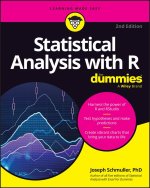
Statistical Analysis with R for Dummies
490 Kč -

Math Games with Bad Drawings
482 Kč -

The First Million Digits of Pi
287 Kč -

Some Famous Problems of the Theory of Numbers
179 Kč -
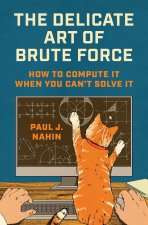
The Delicate Art of Brute Force
491 Kč -

Die Entdeckung der Unendlichkeit
329 Kč -

Arbeitsbuch Höhere Mathematik in Rezepten
972 Kč -

Hoehere Mathematik in Rezepten
1294 Kč -

Everything Is Predictable: How Bayesian Statistics Explain Our World
618 Kč -
![IB Math AI [Applications and Interpretation] Internal Assessment](https://media.libris.to/jacket/39212937t.jpg "IB Math AI [Applications and Interpretation] Internal Assessment")
IB Math AI [Applications and Interpretation] Internal Assessment
756 Kč -

Eine Echte Herausforderung fur Echte Sudoku-Meister mit 240 Extreme Sudoku-Ratsel
308 Kč -

Modelling Spatial Density
3755 Kč -

Numerical Methods for Linear Complementarity Problems in Physics-Based Animation
1269 Kč -

EULERIAN NUMBERS
3650 Kč -

Die Mathematik hinter allem
612 Kč -

Schräge Mathematik und andere Pretiosen
309 Kč -

Excel 2021
362 Kč -

Shape: The Hidden Geometry of Information, Biology, Strategy, Democracy, and Everything Else
309 Kč -

Das große Mathematik Trainingsbuch
734 Kč -

Mathematical Introduction To General Relativity, A
1819 Kč -

The Art of More: How Mathematics Created Civilization
466 Kč -

Math Olympiad Contests Preparation For Grades 4-8
299 Kč -

Introduction to the Foundations of Applied Mathematics
717 Kč -

Brückenkurs Mathematik für Wirtschaftswissenschaftler
758 Kč -

Vorlesungen über Geometrie der Algebren, 1
1544 Kč -

Deep Learning Architectures
984 Kč -

Graph Theory and Its Applications
1644 Kč -

Differential Geometry
1641 Kč -
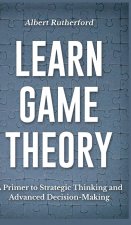
Learn Game Theory
590 Kč -

Combinatorics, Modeling, Elementary Number Theory: From Basic to Advanced
2891 Kč -

Grundlagen der Mathematik für Schüler in russischer und deutscher Sprache
269 Kč -

Thinking Better : The Art of the Shortcut in Math and Life
532 Kč -

The Lambert W Function
1956 Kč -

Mathematical Meditations
827 Kč -

Mathematische Grundlagen für Physiker
758 Kč -

Gottfried Wilhelm Leibniz, 1
972 Kč -

Linked Data
649 Kč -

Uniformisierung, 1
1324 Kč -

Problems in Differential Equations
833 Kč -

Stochastik für Einsteiger
1170 Kč -

The Extremology
1218 Kč -

Mathematik 100 Konzepte
217 Kč -

Mathematical Thinking
1155 Kč -

Теория игр: Искусство стр
340 Kč -
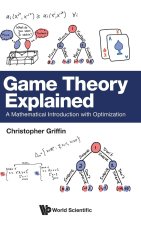
Game Theory Explained: A Mathematical Introduction with Optimization
2388 Kč -

Mapmatics
524 Kč -

K VOPROSU O POVEDENII GEODEZIChESKIH NA GIPERBOLIChESKIH MNOGOOBRAZIYaH
1519 Kč -

Actuarial Pension Funding Theory
1500 Kč
Osobní odběr Praha, Brno a 47531 dalších
Copyright ©2008-26 nejlevnejsi-knihy.cz Všechna práva vyhrazenaSoukromíCookies

 Vrácení do měsíce
 571 999 099 (8-15.30h)