Kód: 45252490
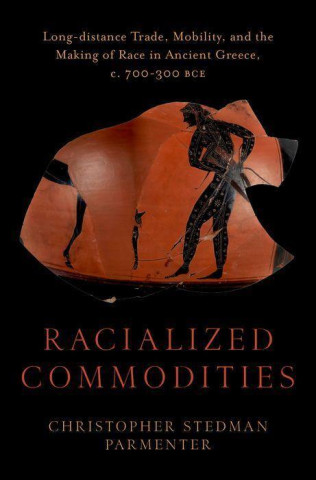
Racialized Commodities
Autor Parmenter, Christopher Stedman (Assistant Professor of Classics, Assistant Professor of Classics, The Ohio State University)
Between c. 700-300 BCE, the ancient Greeks developed a vivid imaginary of the world''s peoples. Ranging from the light-skinned, "gray-eyed Thracians" of the distant north to the "dark-skinned Ethiopians" of the far south, as the p ... celý popis


- Jazyk:
 Angličtina
 - Vazba: Pevná
- Počet stran: 400
Nakladatelství: Oxford University Press, USA, 2024
- Více informací o knize


Mohlo by se vám také líbit


Darujte tuto knihu ještě dnes
- Objednejte knihu a zvolte Zaslat jako dárek.
- Obratem obdržíte darovací poukaz na knihu, který můžete ihned předat obdarovanému.
- Knihu zašleme na adresu obdarovaného, o nic se nestaráte.
Více informací o knize Racialized Commodities
Nákupem získáte 305 bodů
 Anotace knihy
Between c. 700-300 BCE, the ancient Greeks developed a vivid imaginary of the world''s peoples. Ranging from the light-skinned, "gray-eyed Thracians" of the distant north to the "dark-skinned Ethiopians" of the far south, as the poet Xenophanes described them around 540 BCE, Greeks envisioned a world populated by human groups with distinct physiognomies. Racialized Commodities traces how Greece''s "racial imaginary"--a confluence of thinking about cultural geography, commodity production, and human physiognomy--emerged from cross-cultural trade between Greece and its Mediterranean neighbors during the Archaic and Classical Periods. It adopts the model of a "commodity biography" to investigate how trade led to the entanglement of cultures, bodies, and things in Archaic and Classical Greece. For merchants, the racial imaginary might be used to play up the "exotic" provenance of their goods to consumers. It might also circulate practical information about customs, pricing, navigation, and doing business in foreign ports. Archaic Greek attempts to explain foreign bodies were rarely pejorative, and Racialized Commodities begins with some of their earliest images of African peoples, described by Greeks as Egyptians or Ethiopians, before seeking to explain what changed in the early Classical Period. As the Persian Empire loomed and Greek cities became increasingly dependent on enslaved labor, negative stereotypes of Thracians and Scythians became widespread and coalesced into the charged idea of the barbarous--the "barbarian."
Parametry knihy
Zařazení knihy Knihy v němčině Geisteswissenschaften, Kunst, Musik Geschichte Mittelalter
3050 Kč
- Plný název: Racialized Commodities
- Autor: Parmenter, Christopher Stedman (Assistant Professor of Classics, Assistant Professor of Classics, The Ohio State University)
- Jazyk: Angličtina
- Vazba: Pevná
- Počet stran: 400
- EAN: 9780197757116
- ISBN: 0197757111
- ID: 45252490
- Nakladatelství: Oxford University Press, USA
- Hmotnost: 684 g
- Datum vydání: 30. July 2024
Oblíbené z jiného soudku
-

How the World Made the West
276 Kč -

The Immortality Key
400 Kč -

Leaky Aqueducts, Battle Pigeons, and Mystery Cults
389 Kč -
The Last Dynasty
276 Kč -

Talking Classics
358 Kč -

The Roots of the Federal Reserve: Tracing the Nephilim from Noah to the US Dollar
588 Kč -

Sumerian Mythology
216 Kč -

The Decline and Fall of the Ptolemies
591 Kč -

Warriors of Anatolia
508 Kč -

The Ptolemies, Apogee and Collapse: Ptolemiac Egypt 246-146 BC
591 Kč -

The Fall of the Seleukid Empire 187-75 BC
362 Kč -

Evil Roman Emperors
493 Kč -

Aspects of the Late Roman Republic, 133 - 44 BC
715 Kč -

Scipio Africanus
598 Kč -

The Roman Footwear from Vindolanda
409 Kč -
Cuneiform Texts in the Metropolitan Museum of Art
325 Kč -

A Concise History of Byzantium
936 Kč -

Meditations
132 Kč -

After 1177 B.C.
302 Kč -

Samurai Encyclopedia
412 Kč -

Mystery Cults in the Ancient World
336 Kč -

Roman Cavalry Helmets
340 Kč -

A History of the Roman Empire in 21 Women
241 Kč -

Pandora's Jar
248 Kč -

El infinito en un junco
338 Kč -

Celtic Ancient Origins
248 Kč -

Goliath's Curse
555 Kč -

Lost Cities of the Ancient World
567 Kč -

Meditations
318 Kč -

Sacred Band
319 Kč -

Ancient Warfare Illustrated Atlas
525 Kč -

The Anthology
770 Kč -

Rome Versus Carthage
412 Kč -
Athens and Sparta
715 Kč -

Atlas of the Roman Empire
858 Kč -
Hubris
524 Kč -

Byzantine Soldier Vs Seljuk Warrior
381 Kč -

Roman Infantry Helmets
341 Kč -

The Mythology Book
365 Kč -

Armies of the Byzantine Empire, 395-1204
574 Kč -

The Three Kingdoms of Korea: Lost Civilizations
442 Kč -

The Queer Thing About Sin
459 Kč -

Birth of the Byzantine Army 476-641 CE Volume 2
663 Kč -

The Armies of Ptolemaic Egypt
555 Kč -

Birth of the Byzantine Army 476-641 CE Volume 1
879 Kč -

Classical Mythology of the Constellations
178 Kč -

Plato
373 Kč -

British Celtic Warrior vs Roman Soldier
374 Kč -

The Apocalypse of Yajnavalkya
412 Kč
Osobní odběr Praha, Brno a 47484 dalších
Copyright ©2008-26 nejlevnejsi-knihy.cz Všechna práva vyhrazenaSoukromíCookies

 Vrácení do měsíce
 571 999 099 (8-15.30h)