Kód: 04528160
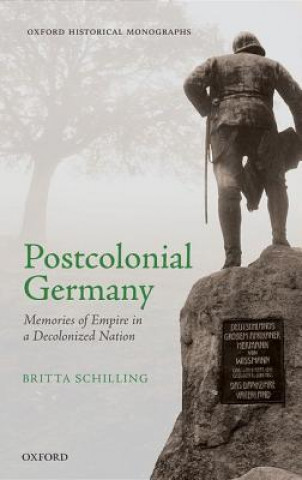
Postcolonial Germany
Autor Britta Schilling
At the end of the First World War, Germany appeared to have lost everything: the lives of millions of soldiers and civilians, control over borderland territories, and, above all, a sense of national self-worth in the international ... celý popis


- Jazyk:
 Angličtina
 - Vazba: Pevná
- Počet stran: 274
Nakladatelství: Oxford University Press, 2014
- Více informací o knize


Mohlo by se vám také líbit
-

Až dojdou peníze
322 Kč -

Kapesní atlas žen
209 Kč -

Keto Cookies
237 Kč -

Die V 100 der DR. Band 2
1098 Kč -

Storyboarding for Wim Wenders: Visions of Wenders
550 Kč -
Routledge Philosophy GuideBook to Kant and the Critique of Pure Reason
933 Kč -

Enquete au college/Sur la piste de la salamandre
273 Kč -
COUPERIN L: PIECES DE CLAVECIN VOLUME 1 (LP18)
944 Kč -

Как перестать беспокоиться и начать жить
695 Kč -

Absolute Destruction
825 Kč -
Programming Languages Concepts 3e (WSE)
4993 Kč -

Germany's Genocide of the Herero
3302 Kč -

Retour et capitalisation d'expérience
1267 Kč -
Political Suicide: Or The Death Of England By Her Own Hands (1831)
598 Kč -

One Coin Found
484 Kč -
Premanufacture Notification - Chemistry Assistance for Submitters
3241 Kč -

Today Gabriella Will Be a Princess
525 Kč -

Syntactic Relations
2163 Kč -

Short Story of the Rise, Reign and Ruin of the Antinomians, Familists and Libertines That Infected the Churches of New England
532 Kč -

The Partner
217 Kč -

City, Court, Academy
4835 Kč -
New South A Chronicle of Social and Industrial Evolution
308 Kč -

William Sheppard, Cromwell's Law Reformer
1110 Kč -

Conseils Spirituels Aux Bouddhistes Et Aux Chr'tiens
220 Kč -
Conseil d'Etat. Conclusions En Replique Pour M. James Hamilton, MIS d'Abercorn, Demandeur
315 Kč -

Power of Money
2646 Kč -

Manchester, Bolton & Warrington
314 Kč -

ROSIE Y SUS BRILLANTES GAFAS DE COLORES
337 Kč
Darujte tuto knihu ještě dnes
- Objednejte knihu a zvolte Zaslat jako dárek.
- Obratem obdržíte darovací poukaz na knihu, který můžete ihned předat obdarovanému.
- Knihu zašleme na adresu obdarovaného, o nic se nestaráte.
Více informací o knize Postcolonial Germany
Nákupem získáte 423 bodů
 Anotace knihy
At the end of the First World War, Germany appeared to have lost everything: the lives of millions of soldiers and civilians, control over borderland territories, and, above all, a sense of national self-worth in the international political arena. But it also lost almost three million square kilometres of land overseas in the form of colonies and concessions in Africa, China, and the Pacific. Allied powers declared Germany unfit to rule over overseas populations, and it was forcibly decolonized. It thus became the first 'postcolonial' European nation that had participated in the 'new imperialism' of the modern era. The end of colonialism was the beginning of a memory culture that has been remarkably long-lived and dynamic. Postcolonial Germany traces the evolution of the collective memory of German colonialism, stretching from the loss of the colonies across the eras of National Socialism, national division, and the Cold War to the present day. It shows to what extent this memory was intimately bound to objects of material culture in the former colonial metropole, such as tropical fruit sold at colonial balls, state gifts handed to the former colonies at independence, and ethnological items kept as family heirlooms. The study draws on a wide range of sources, including popular literature, oral history, and previously unexplored archival holdings. It marks an important shift in historical methodology, considering the significance of both material culture and private memories in constructing accounts of the past. Above all, it raises important questions about the public responsibilities of postcolonial nations and governments in Europe and their relationship to the private legacies of colonialism.
Parametry knihy
Zařazení knihy Knihy v angličtině Humanities History History: specific events & topics
4225 Kč
- Plný název: Postcolonial Germany
- Autor: Britta Schilling
- Jazyk: Angličtina
- Vazba: Pevná
- Počet stran: 274
- EAN: 9780198703464
- ISBN: 0198703465
- ID: 04528160
- Nakladatelství: Oxford University Press
- Hmotnost: 466 g
- Rozměry: 221 × 143 × 21 mm
- Datum vydání: 06. March 2014
Oblíbené z jiného soudku
-

Man's Search for Meaning
205 Kč -

Women, Race & Class
237 Kč -

Man's Search For Meaning
269 Kč -

The Rape of Nanking
350 Kč -

Imperialism: The Highest Stage of Capitalism
183 Kč -

Man's Search For Meaning
336 Kč -

Che Guevara
527 Kč -

Knight's Own Book of Chivalry
548 Kč -

Call The Midwife
235 Kč -
Nuremberg Diary
365 Kč -

Bloodlands
276 Kč -
Madness and Civilization
335 Kč -

Brief History of Japan
272 Kč -

Shadows Of The Workhouse
248 Kč -

Farewell To The East End
248 Kč -

Race for the South Pole
377 Kč -

Bathhouse at Midnight
1297 Kč -

Jewish State
194 Kč -

Automata and Mechanical Toys
666 Kč -
Culture and Society
314 Kč -

Lighthouse Stevensons
292 Kč -

Illyrians
1219 Kč -

Sea Rover's Practice
365 Kč -

Rome's Enemies
359 Kč -

Destruction of California Indians
525 Kč -

In Defense of Looting
525 Kč -

The Complete MAUS
358 Kč -

World Football Club Crests
397 Kč -

Eichmann in Jerusalem
269 Kč -

Diary of a Young Girl
169 Kč -

Ascent of Money
334 Kč -

Thomas Sankara Speaks
359 Kč -

Delirious New York
589 Kč -

Alphabet Logo: Trademarks & Symbols
438 Kč -

Road to Wigan Pier
219 Kč -

Browning .50-caliber Machine Guns
440 Kč -

Society of the Spectacle
254 Kč -

Guns, Germs and Steel
276 Kč -

How to be a Tudor
292 Kč -

Night
219 Kč -

Wall Street and the Bolshevik Revolution
292 Kč -

Fix the Pumps
287 Kč -

Rabid
269 Kč -

Blue
972 Kč -

Out Of Place
292 Kč -

Critique of Dialectical Reason, Vol. 1
795 Kč -
Hans Ulrich Obrist: A Brief History of Curating
345 Kč -

Spetsnaz
366 Kč -

Rose 'Then and Now' Bible Map Atlas
907 Kč
Osobní odběr Praha, Brno a 47531 dalších
Copyright ©2008-26 nejlevnejsi-knihy.cz Všechna práva vyhrazenaSoukromíCookies

 Vrácení do měsíce
 571 999 099 (8-15.30h)