Kód: 04670129
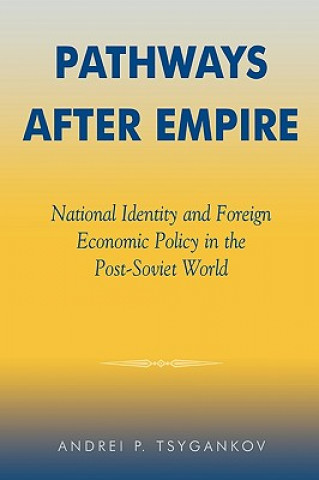
Pathways after Empire
Autor Andrei P. Tsygankov
This book explores how culture shapes foreign economic policy in post-Soviet states. After the Soviet empire fragmented, some of the newly emerged nations directed their economic activities primarily toward Russia and other former ... celý popis


- Jazyk:
 Angličtina
 - Vazba: Brožovaná
- Počet stran: 254
Nakladatelství: Rowman & Littlefield, 2001
- Více informací o knize


Mohlo by se vám také líbit
-

Zones of Thought
423 Kč -

Love Gap
537 Kč -

Beowulf
183 Kč -

Osobní automobily 2 Škoda Octavia
61 Kč -

Nebulous Stars Isadora's geheimes Tagebuch
596 Kč -

La prof
557 Kč -

SEX.COM
643 Kč -

Nežnosť rozkladu
150 Kč -

It Takes a Monster ... Dragonblood Academy
491 Kč -

Information Theory
1298 Kč -

Night Tide
374 Kč -

Marvel kapitány 2.: Hangyányi célok
94 Kč -

Les Martyrs de Rahay En 1870, Par Edouard Houdayer,
293 Kč -

Orvis Vest Pocket Guide to Caddisflies
286 Kč -

Die for me, my Darling 03
148 Kč -

Price, Quality and Trust
1041 Kč -

Masters of Light
2116 Kč -

Realm's End
320 Kč -

The Eb-5 Handbook: A Guide for Investors and Developers
1063 Kč -

Maximizing Project Value: Defining, Managing, and Measuring for Optimal Return
446 Kč -

Der Kundenwert Im Marketing
1544 Kč -

Aristotle's Rhetoric
1132 Kč -

Anything
318 Kč -

Humanismo para una nueva época: nuevos ensayos sobre el pensamiento de Luis Villoro
444 Kč -

American Journalism History Reader
2076 Kč -

Missing Bronte
497 Kč -

New Picture Dictionary (English-Korean)
308 Kč -

Cancer and Cancer Care
3912 Kč -

Voices From Heaven
383 Kč -

Write Dance
3268 Kč -

Lyrik II
6596 Kč -

Mens et Mania
618 Kč -

What Young People Should Know: The Reproductive Function In Man And The Lower Animals (1875)
619 Kč -

They Called Me Uncivilized
241 Kč -

Food and Nutrition Across the Lifespan
4538 Kč
Darujte tuto knihu ještě dnes
- Objednejte knihu a zvolte Zaslat jako dárek.
- Obratem obdržíte darovací poukaz na knihu, který můžete ihned předat obdarovanému.
- Knihu zašleme na adresu obdarovaného, o nic se nestaráte.
Více informací o knize Pathways after Empire
Nákupem získáte 161 bodů
 Anotace knihy
This book explores how culture shapes foreign economic policy in post-Soviet states. After the Soviet empire fragmented, some of the newly emerged nations directed their economic activities primarily toward Russia and other former republics, while others turned sharply away from the Soviet bloc. Taking a constructivist approach, Andrei P. Tsygankov explains the striking variation by making the original argument that a new state's strength of national identity shapes its foreign economic policy. The stronger the identity, the more likely the new state was to shift away from the empire. Drawing on detailed case studies of Latvia, Ukraine, and Belarus, the author demonstrates how the Baltic nations, with a strong sense of identity, chose to deal with Russia and other ex-Soviet nations on a strictly bilateral basis and entered preferential arrangements with European countries. Ukraine, with moderate identity strength, pursued active economic relations with both Russia and Europe. Finally, Belarus, with a relatively weak identity, pursued an effort to reintegrate with Russia at the expense of developing ties with Europe. Employing a range of both qualitative and quantitative analysis, this study brings a national identity perspective into the forefront of international political economy theory.
Parametry knihy
Zařazení knihy Knihy v angličtině Economics, finance, business & management Economics International economics
1605 Kč
- Plný název: Pathways after Empire
- Podnázev: National Identity and Foreign Economic Policy in the Post-Soviet World
- Autor: Andrei P. Tsygankov
- Jazyk: Angličtina
- Vazba: Brožovaná
- Počet stran: 254
- EAN: 9780742516731
- ISBN: 0742516733
- ID: 04670129
- Nakladatelství: Rowman & Littlefield
- Hmotnost: 390 g
- Rozměry: 228 × 152 × 20 mm
- Datum vydání: 28. November 2001
Oblíbené z jiného soudku
-

Bad Samaritans
270 Kč -

Merchants of Grain
412 Kč -

Splendid Exchange
560 Kč -

Making of an Atlantic Ruling Class
709 Kč -

Quest for the Perfect Strawberry
524 Kč -

Technical Analysis
1906 Kč -

Doing Business in Europe
3278 Kč -

International Trade
1418 Kč -
New Confessions of an Economic Hit Man
317 Kč -

Soros on Soros - Staying Ahead of the Curve
755 Kč -
New Foreign Policy
380 Kč -

Treasure Islands
276 Kč -
Has the West Lost It?
276 Kč -

Forex for Ambitious Beginners
420 Kč -

Crisis of Global Capitalism
501 Kč -

Is the American Century Over?
271 Kč -

Red Capitalism
524 Kč -

Almighty Dollar
325 Kč -
Fault Lines
324 Kč -
Travels of a T-Shirt in the Global Economy
519 Kč -

False Economy
291 Kč -

Between Debt and the Devil
916 Kč -

Superpower
618 Kč -

Between Silver and Guano
867 Kč -
Two Centuries of Overseas Trading
1293 Kč -

Great Rebalancing
334 Kč -

The Road to Ruin
337 Kč -
International Economics: Theory and Policy, Global Edition
2180 Kč -
SuperHubs
235 Kč -
The Competitive Advantage of Nations
908 Kč -

China Shakes The World
308 Kč -

Competition Policy
1919 Kč -
False Dawn
267 Kč -

Japanese Business Culture and Practices
241 Kč -

Import/Export Kit For Dummies 3e
490 Kč -

No Ordinary Disruption
431 Kč -

Cracking the China Conundrum
1212 Kč -

Concise History of International Finance
838 Kč -

Pillaging the World
414 Kč -

EuroTragedy
913 Kč -

Oxford Handbook on The World Trade Organization
1120 Kč -

Age of Turbulence
380 Kč -

Natural Capitalism
388 Kč -

Handbook of International Trade and Finance
1447 Kč -

International Trade
1729 Kč -

International Economic Institutions
1182 Kč -

Making Globalization Work
267 Kč -

International Trade Finance
2066 Kč -

Essay on the Nature of Trade in General
312 Kč
Osobní odběr Praha, Brno a 46303 dalších
Copyright ©2008-26 nejlevnejsi-knihy.cz Všechna práva vyhrazenaSoukromíCookies

 Vrácení do měsíce
 571 999 099 (8-15.30h)