Kód: 04914419
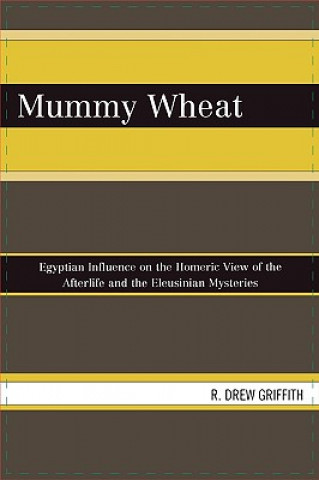
Mummy Wheat
Autor R. Drew Griffith
Homer presents a world-view in which death represents the end of consciousness and total annihilation of personhood. Yet in Odyssey, Book Four, he contradicts this by saying that one man at least will not die, but will be transpor ... celý popis


- Jazyk:
 Angličtina
 - Vazba: Brožovaná
- Počet stran: 272
Nakladatelství: University Press of America, 2008
- Více informací o knize


Mohlo by se vám také líbit
-

Alphabreaths
319 Kč -

Samolepící bločky žluté CUBO 75x75 / 400 lístků v bločku
62 Kč -

Self in Jungian Psychology
773 Kč -

You Can't Smell a Flower With Your Ear!
125 Kč -

Jesus Christ, The True Temple of God
479 Kč -
Road that Is Not a Road and the Open City, Ritoque, Chile
932 Kč -

Femení singular
296 Kč -

Industrial Decarbonization and the Energy Transition
5283 Kč -

Global Competitiveness Report 2004-2005
2473 Kč -
Untold Mayhem
258 Kč -

Anne's House of Dreams
74 Kč -

Der Klassik(ver)führer, Wagner: Parsifal, 2 Audio-CDs
473 Kč -

Fault of Sages
279 Kč -
In The Company Of Light
319 Kč -

Planning and Transformation
2147 Kč -

How to Heal from Psychic Attack: The Problem Solvers Alphabet
444 Kč -
Lineage of the Saints
444 Kč -

Anna of the Five Towns
179 Kč -

25 Jahre danach
512 Kč -

Popular Protest in the New Middle East
2640 Kč -

Economic Development in the Americas since 1500
1178 Kč
Dárkový poukaz: Radost zaručena
- Darujte poukaz v libovolné hodnotě a my se postaráme o zbytek.
- Poukaz se vztahuje na celou naši nabídku.
- Elektronický poukaz vytisknete z e-mailu a můžete ihned darovat.
- Platnost poukazu je 12 měsíců od data vystavení.
Více informací o knize Mummy Wheat
Nákupem získáte 175 bodů
 Anotace knihy
Homer presents a world-view in which death represents the end of consciousness and total annihilation of personhood. Yet in Odyssey, Book Four, he contradicts this by saying that one man at least will not die, but will be transported to Elysium, where he will have a blessed existence forever. In Mummy Wheat R. Drew Griffith argues that this shocking violation of Homer's normal world-view comes from Egypt, where more than anywhere else in the ancient world people firmly believed in life after death. This Egyptian view entered Homer deeply enough that traces of it can be found in many facets of his poetic language. Finally, Griffith argues, the Elysium idea did not die with Homer, but became enshrined in one of the most influential and long-lived religious traditions of Greece: the mysteries of Demeter at Eleusis outside of Athens.
Parametry knihy
Zařazení knihy Knihy v angličtině Literature & literary studies Literature: history & criticism Literary studies: general
1753 Kč
- Plný název: Mummy Wheat
- Podnázev: Egyptian Influence on the Homeric View of the Afterlife and the Eleusinian Mysteries
- Autor: R. Drew Griffith
- Jazyk: Angličtina
- Vazba: Brožovaná
- Počet stran: 272
- EAN: 9780761842989
- ISBN: 0761842985
- ID: 04914419
- Nakladatelství: University Press of America
- Hmotnost: 408 g
- Rozměry: 231 × 154 × 20 mm
- Datum vydání: 18. September 2008
Oblíbené z jiného soudku
-

How to Read a Book
248 Kč -

Zofloya
227 Kč -

Weird and the Eerie
205 Kč -
Dubliners
202 Kč -

Karamazov Brothers
230 Kč -

The Picture of Dorian Gray
149 Kč -

Saga of Tanya the Evil, Vol. 3
279 Kč -

Memoirs of a Dutiful Daughter
293 Kč -

Persuasion
116 Kč -

Room With A View
210 Kč -
Germinal
174 Kč -
Selected Poems
225 Kč -
Life of Samuel Johnson
434 Kč -
Metamorphoses
162 Kč -
Edda
178 Kč -

Moveable Feast
194 Kč -
Athenaze, Book II
2799 Kč -

Annotated Alice
235 Kč -
Wide Sargasso Sea
224 Kč -

SEOUL University Korean 1B Workbook (QR), m. 1 Audio
753 Kč -

SEOUL University Korean 1B Student's Book (QR), m. 1 Audio
1107 Kč -
Sir Gawain and The Green Knight
194 Kč -
Mimesis
491 Kč -
Idiot
224 Kč -
Teenage Writings
225 Kč -

Selected Poetry
205 Kč -
Thrasymachus
1014 Kč -
Fabliaux
560 Kč -

Klaeber's Beowulf
1193 Kč -
The Art of the Tale
466 Kč -
Fantastic in Literature
846 Kč -
Art of Rhetoric
94 Kč -
Iliad
107 Kč -
Odyssey
209 Kč -
Two Treatises of Government
178 Kč -

Twenty Years After
263 Kč -
Moby-Dick
638 Kč -
Odyssey (Deckle Edge)
380 Kč -
The Poetic Edda
668 Kč -

Anna Karenina
193 Kč -
Great Expectations
160 Kč -
Great God Pan and Other Horror Stories
380 Kč -
Essential Writings of Ralph Waldo Emerson
412 Kč -

Education of a Wandering Man
169 Kč -
Three Theban Plays
276 Kč -
Consolation of Philosophy
248 Kč -
Poetics
227 Kč -

Tenant of Wildfell Hall
189 Kč -
Iliad
244 Kč
Osobní odběr Praha, Brno a 46512 dalších
Copyright ©2008-26 nejlevnejsi-knihy.cz Všechna práva vyhrazenaSoukromíCookies

 Vrácení do měsíce
 571 999 099 (8-15.30h)