Kód: 01433866
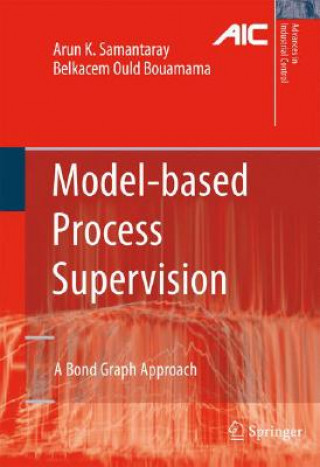
Model-based Process Supervision
Autor Arun K. Samantaray, Belkacem Ould Bouamama
This book provides control engineers and workers in industrial and academic research establishments interested in process engineering with a means to build up a practical and functional supervisory control environment and to use s ... celý popis


- Jazyk:
 Angličtina
 - Vazba: Pevná
- Počet stran: 474
Nakladatelství: Springer London Ltd, 2008
- Více informací o knize


Mohlo by se vám také líbit
-

Sacred Earth, Sacred Soul
291 Kč -

Rakousko - Lonely Planet
443 Kč -

ESV Journaling Bible
801 Kč -

Mog the Forgetful Cat Book and Toy Gift Set
334 Kč -

Babi Yar: A Document in the Form of a Novel; New, Complete, Uncensored Version
335 Kč -

First Questions and Answers: Why do we need trees?
320 Kč -

RSPB Spotlight Frogs and Toads
395 Kč -

Fieber in Urbicand
476 Kč -

Running Sideways
948 Kč -

Raven's Lucky Numbers Dream Book: The Only Lottery Book You'll Ever Need
340 Kč -

Tom Wolfe Carves Fancy Canes
285 Kč -

Loi Allemande Du 23 Octobre 1878, Contre Les Tendances Democratiques Socialistes
315 Kč -

Algunos Secretos Nunca Deben Guardarse
271 Kč -

Four Public Utilities Laws Analyzed: Illinois, Indiana, Pennsylvania and West Virginia, 1913.
441 Kč -

Journey with Matityahu Book 1 Awakening
274 Kč -

Winning the War for Talent
375 Kč -

Quiquiricosas
526 Kč -

Die Wirkungsweise der Diode (Technik, 9. Klasse, Haupt- und Realschule)
369 Kč -

Time Slip
209 Kč -

Vers Un Nouvel Habitat
606 Kč -

Marienberg
478 Kč -

Lecciones de Seguridad Social (II) : Seguridad Social y empresa, régimen general y reta
827 Kč -

PopCo
318 Kč -

Policing Across Borders
2357 Kč -

Maunder Minimum And The Variable Sun-earth Connection, The
1740 Kč -

Abstracts of the 65th congress of the German Society of Neurology
1182 Kč -

British Barbarians
206 Kč -

Sweet Desire - Süßes Verlangen, 1 DVD
293 Kč -

Dora Maar und die zwei Gesichter der Liebe
271 Kč -

Los libros arden mal
419 Kč -

Markterschliessung Russlands fur mittelstandische Fassadenbauer
1014 Kč -

Poetry and Politics
1150 Kč -

Campfires in Context: Hunter-Gatherer Fire Technology and the Archaeological Record of the Southern High Plains USA
1681 Kč -

Clique of Gold
469 Kč -

Schlecht vernetzt im Internet?
267 Kč
Darujte tuto knihu ještě dnes
- Objednejte knihu a zvolte Zaslat jako dárek.
- Obratem obdržíte darovací poukaz na knihu, který můžete ihned předat obdarovanému.
- Knihu zašleme na adresu obdarovaného, o nic se nestaráte.
Více informací o knize Model-based Process Supervision
Nákupem získáte 353 bodů
 Anotace knihy
This book provides control engineers and workers in industrial and academic research establishments interested in process engineering with a means to build up a practical and functional supervisory control environment and to use sophisticated models to get the best use out of their process data. Several applications to academic and small-scale-industrial processes are discussed and the development of a supervision platform for an industrial plant is presented.Model-based fault detection and isolation requires a mathematical model of the system behaviour. Modelling is important and can be difficult because of the complexity of the monitored system and its control architecture. The authors use bond-graph modelling, a unified multi-energy domain modelling method, to build dynamic models of process engineering systems by composing hierarchically arranged sub-models of various commonly encountered process engineering devices. The structural and causal properties of bond-graph models are exploited for supervisory systems design. §The structural properties of a system, necessary for process control, are elegantly derived from bond-graph models by following the simple algorithms presented here. Additionally, structural analysis of the model augmented with available instrumentation indicates directly whether it is possible to detect and/or isolate faults in some specific sub-space of the process. Such analysis aids in the design and resource optimization of new supervision platforms. §Static and dynamic constraints, which link the time evolution of the known variables under normal operation, are evaluated in real time to determine faults in the system. Various decision or post-processing steps integral to the supervisory environment are discussed in this monograph; they are required to extract meaningful data from process state knowledge because of unavoidable process uncertainties. Process state knowledge has been further used to take active and passive fault accommodation measures. §Several applications to academic and small-scale-industrial processes are interwoven throughout. Finally, an application concerning development of a supervision platform for an industrial plant is presented with experimental validation. §Model-based Process Supervision provides control engineers and workers in industrial and academic research establishments interested in process engineering with a means to build up a practical and functional supervisory control environment and to use sophisticated models to get the best use out of their process data.Model-based fault detection and isolation requires a mathematical model of the system behaviour. Modelling is important and can be difficult because of the complexity of the monitored system and its control architecture. The authors use bond-graph modelling, a unified multi-energy domain modelling method, to build dynamic models of process engineering systems by composing hierarchically arranged sub-models of various commonly encountered process engineering devices. The structural and causal properties of bond-graph models are exploited for supervisory systems design. §The structural properties of a system, necessary for process control, are elegantly derived from bond-graph models by following the simple algorithms presented here. Additionally, structural analysis of the model, augmented with available instrumentation, indicates directly whether it is possible to detect and/or isolate faults in some specific sub-space of the process. Such analysis aids in the design and resource optimization of new supervision platforms. §Static and dynamic constraints, which link the time evolution of the known variables under normal operation, are evaluated in real time to determine faults in the system. Various decision or post-processing steps integral to the supervisory environment are discussed in this monograph; they are required to extract meaningful data from process state knowledge because of unavoidable process uncertainties. Process state knowledge has been further used to take active and passive fault accommodation measures. §Several applications to academic and small-scale-industrial processes are interwoven throughout. Finally, an application concerning development of a supervision platform for an industrial plant is presented with experimental validation. §Model-based Process Supervision provides control engineers and workers in industrial and academic research establishments interested in process engineering with a means to build up a practical and functional supervisory control environment and to use sophisticated models to get the best use out of their process data.
Parametry knihy
Zařazení knihy Knihy v angličtině Technology, engineering, agriculture Mechanical engineering & materials Production engineering
3532 Kč
- Plný název: Model-based Process Supervision
- Podnázev: A Bond Graph Approach
- Autor: Arun K. Samantaray, Belkacem Ould Bouamama
- Jazyk: Angličtina
- Vazba: Pevná
- Počet stran: 474
- EAN: 9781848001589
- ISBN: 1848001584
- ID: 01433866
- Nakladatelství: Springer London Ltd
- Hmotnost: 1910 g
- Rozměry: 235 × 155 × 31 mm
- Datum vydání: 28. March 2008
Oblíbené z jiného soudku
-

Practical Process Control
920 Kč -

Feedforward Control
1008 Kč -

Effective FMEAs - Achieving Safe, Reliable, and Economical Products and Processes using Failure Mode and Effects Analysis
2976 Kč -

Architecture and Design for Industry 4.0
4002 Kč -

Practical Reliability Engineering 5e
2499 Kč -

All Wrapped Up in Paracord
302 Kč -

Poka-Yoke
3261 Kč -

CNC Handbook
1933 Kč -
Manufacturing Execution Systems (MES): Optimal Design, Planning, and Deployment
3003 Kč -

Guidelines for Asset Integrity Management
3399 Kč -

Aviation Risk and Safety Management
1315 Kč -

Fundamentals of Optimization
1843 Kč -

Grinding Technology
2509 Kč -

Industrial powder coating
3681 Kč -

Product Lifecycle Management (Volume 1)
4562 Kč -

Audel Plumber's Pocket Manual 10e
881 Kč -

Company Controlling
2357 Kč -

Fundamentals of Optimization
1315 Kč -

Fault Detection and Diagnosis in Industrial Systems
1729 Kč -

Encyclopedia of Quality Assurance and Management
2891 Kč -

Eignungsnachweis von Mess- und Prüfprozessen
1938 Kč -

Introduction to Systems Thinking and Interdisciplinary Engineering
1040 Kč -

Fire Hazards of Exterior Wall Assemblies Containing Combustible Components
1384 Kč -

Mastering System Identification in 100 Exercises
1600 Kč -

How to Make Cutting Shears for Sheet Metal
246 Kč -

Resilience Engineering in Practice
1980 Kč -

SFPE Handbook of Fire Protection Engineering, 2 Teile
23137 Kč -

Automation, Production Systems, and Computer-Integrated Manufacturing, Global Edition
2248 Kč -

Aviation Risk and Safety Management
1843 Kč -

Laser Additive Remanufacturing and Life Extension Technology
4104 Kč -

Operations Research Problems
2533 Kč -
Multiple Criteria Decision Making
3767 Kč -

Transport of Dangerous Goods
3532 Kč -

Programmable Logic Controllers - A Practical Approach IEC 61131-3 using CoDeSys
2884 Kč -
Random Data - Analysis and Measurement Procedures 4e
4365 Kč -

Digital Twin Driven Smart Manufacturing
6594 Kč -

Metal Magnetic Memory Technique and Its Applications in Remanufacturing
3767 Kč -

Intelligent Engineering Optimisation with the Bees Algorithm
4707 Kč -

Engineers Precision Data Pocket Reference
1269 Kč -

Root Cause Analysis Handbook
2863 Kč -

SCADA
2667 Kč -

TRIZ. Theory of Inventive Problem Solving
2073 Kč -

Functional Safety for Road Vehicles
1958 Kč -

Process Automation Handbook
11489 Kč -

Company Controlling
2357 Kč -

Autonomous Technology
978 Kč -

Industry 4.0 and Advanced Manufacturing
5882 Kč -

Guide to Scanner Based Laser Processing
2153 Kč -

Advanced Welding Techniques
3297 Kč
Osobní odběr Praha, Brno a 47771 dalších
Copyright ©2008-26 nejlevnejsi-knihy.cz Všechna práva vyhrazenaSoukromíCookies

 Vrácení do měsíce
 571 999 099 (8-15.30h)