Kód: 02109880
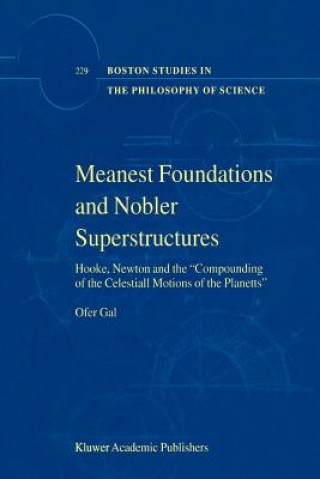
Meanest Foundations and Nobler Superstructures
Autor Ofer Gal
This book is a historical-epistemological study of one the most consequential idea of early modern celestial mechanics: Robert Hooke's proposal to "compoun[d] the celestial motions of the planets of a direct motion by the tangent ... celý popis


- Jazyk:
 Angličtina
 - Vazba: Brožovaná
- Počet stran: 252
Nakladatelství: Springer, 2010
- Více informací o knize


Mohlo by se vám také líbit
-

KJV Bible Compact Faux Leather, Teal
288 Kč -

Ultimates by Deniz Camp Vol. 2: All Power to the People
358 Kč -

Got the Life
367 Kč -

This is Not a T-Shirt
313 Kč -

Zkouška bratrství
197 Kč -

Tropical Paradise Scenes to Paint or Color
143 Kč -

Japanese Kanji Writing Practice Book: Japanese Genkouyoushi Paper Workbook for Practicing Kanji Writing
146 Kč -

Nathaniel
158 Kč -

Manaraga
404 Kč -

My Big Book Of Look & Find Images - Look And Find Books For Kids Edition
341 Kč -

CRO-MAGNON
664 Kč -

Naturalmente musica. La scala di Do
283 Kč -
Econometrics of Health Care
3532 Kč -
Computer Aided Systems Theory - EUROCAST '89
1182 Kč -

True Life
326 Kč -

Symbole für Herrschaft und Königtum in den Erzählungen von Saul und David
3127 Kč -

Canoe Camping
466 Kč -

Im großen Hauptquartier 1870-71
570 Kč -

Pour tout l'or des mots au bonheur des mots, des mots et des merveilles
1024 Kč -

Kapital in seiner Kulturbedeutung
287 Kč -

Using German Synonyms
3279 Kč -

Technische Mechanik
1214 Kč -

Kachinas
468 Kč -

Obsession: A Sharon Hayes Detective Story
279 Kč -

Cauchy3-Book17-Poems
444 Kč -

David, King of Israel, and Caleb in Biblical Memory
2274 Kč -

The Willows
154 Kč -

Hamburger Buttons
358 Kč -

Spin Dynamics in Confined Magnetic Structures I
4707 Kč -

Prefrontal Cortex
4707 Kč -

de l'Utilite d'Une Mission Archeologique Permanente A Carthage
364 Kč -

Filme im Geschichtsunterricht - Gattungen, Eigenschaften und didaktische Implikationen
369 Kč -

Die praktische Konkordanz von Kompetenzen
3566 Kč -

Am Konigssee
818 Kč -

What Is the Role of Teens in Your Church?
317 Kč -
Physics of Low Dimensional Systems
3532 Kč -

Stephan Victor, Erzherzog von OEsterreich
610 Kč -

Multichip Modules
2988 Kč -

Communism in Malaysia and Singapore
1182 Kč -

Pediatric Airway Diseases
4599 Kč -

Sportjournalismus im internationalen Vergleich
308 Kč -

Your Soul's Quest
341 Kč -

Animal Kingdom T05
239 Kč -

Egyptian Texts of the Bronzebook
809 Kč -

Monographie de Notre-Dame de Chartres: Explication Des Planches
467 Kč -

Gemeinderecht
1077 Kč -

Interracial Con Game
358 Kč -

Descriptive Catalogue of Materials Relating to the History of Great Britain and Ireland to the End of the Reign of Henry VII
1416 Kč -

Squishy Taylor and the Tunnel of Doom
565 Kč -

Lite me up
458 Kč -

Johnny's Boys
410 Kč -

All About Hanukkah: A Coloring Book
237 Kč -

Futures Thinking, Learning, and Leading
1499 Kč -

Systematic Reviews
1050 Kč -

Übungen zur Transaktionsanalyse
597 Kč -

Das Bundesstaatsrecht Der Schweiz
1214 Kč -

Stereochimie Aux Reactions Internes Entre Les Radicaux Eloignes d'Une Meme Molecule
358 Kč -

Letters from India and Kashmir
529 Kč -

Purification de la moelle T1 DVD
808 Kč -

India Mission of the Methodist Episcopal Church
685 Kč -

50 West End Shows 50 West End Songs Pvg
810 Kč -

From Eden To Canaan: How The World Came To Be The Way It Is
279 Kč -

Autumn Marine
341 Kč
Darujte tuto knihu ještě dnes
- Objednejte knihu a zvolte Zaslat jako dárek.
- Obratem obdržíte darovací poukaz na knihu, který můžete ihned předat obdarovanému.
- Knihu zašleme na adresu obdarovaného, o nic se nestaráte.
Více informací o knize Meanest Foundations and Nobler Superstructures
Nákupem získáte 236 bodů
 Anotace knihy
This book is a historical-epistemological study of one the most consequential idea of early modern celestial mechanics: Robert Hooke's proposal to "compoun[d] the celestial motions of the planets of a direct motion by the tangent & an attractive motion towards a central body," a proposal which Isaac Newton adopted and realized in his Principia. §Hooke's Programme was revolutionary both cosmologically and mathematically. It presented "the celestial motions," the proverbial symbol of stability and immutability, as a process of continuous change, and prescribed only parameters of rectilinear motions and rectilinear attractions for calculating their closed curved orbits. Yet the traces of Hooke's construction of his Programme for the heavens lead through his investigations in such earthly disciplines as microscopy, practical optics and horology, and the mathematical tools developed by Newton to accomplish it appear no less local and goal-oriented than Hooke's lenses and springs.§This transgression of the boundaries between the theoretical, experimental and technological realms is reminiscent of Hooke's own free excursions in and out of the circles occupied by gentlemen-philosophers, university mathematicians, instrument makers, technicians and servants. It presents an opportunity to examine the social and epistemological distinctions, relations and hierarchies between those realms and their inhabitants, and compels a critical assessment of the philosophical categories they embody.This book is a historical-epistemological study of one the most consequential idea of early modern celestial mechanics: Robert Hooke's proposal to "compoun[d] the celestial motions of the planets of a direct motion by the tangent & an attractive motion towards a central body," a proposal which Isaac Newton adopted and realized in his Principia.§Hooke's Programme was revolutionary both cosmologically and mathematically. It presented "the celestial motions," the proverbial symbol of stability and immutability, as a process of continuous change, and prescribed only parameters of rectilinear motions and rectilinear attractions for calculating their closed curved orbits. Yet the traces of Hooke's construction of his Programme for the heavens lead through his investigations in such earthly disciplines as microscopy, practical optics and horology, and the mathematical tools developed by Newton to accomplish it appear no less local and goal-oriented than Hooke's lenses and springs.§This transgression of the boundaries between the theoretical, experimental and technological realms is reminiscent of Hooke's own free excursions in and out of the circles occupied by gentlemen-philosophers, university mathematicians, instrument makers, technicians and servants. It presents an opportunity to examine the social and epistemological distinctions, relations and hierarchies between those realms and their inhabitants, and compels a critical assessment of the philosophical categories they embody.
Parametry knihy
Zařazení knihy Knihy v angličtině Mathematics & science Science: general issues Philosophy of science
2357 Kč
- Plný název: Meanest Foundations and Nobler Superstructures
- Podnázev: Hooke, Newton and the Compounding of the Celestiall Motions of the Planetts
- Autor: Ofer Gal
- Jazyk: Angličtina
- Vazba: Brožovaná
- Počet stran: 252
- EAN: 9789048160679
- ISBN: 9048160677
- ID: 02109880
- Nakladatelství: Springer
- Hmotnost: 667 g
- Rozměry: 279 × 210 × 15 mm
- Datum vydání: 08. December 2010
Oblíbené z jiného soudku
-

Why People Believe Weird Things
365 Kč -

Order Out of Chaos
538 Kč -

Life 3.0
276 Kč -
Structure of Scientific Revolutions
342 Kč -
Logic of Scientific Discovery
399 Kč -

Physics and Philosophy
298 Kč -

Arts of Living on a Damaged Planet
458 Kč -
On the Mode of Existence of Technical Objects
609 Kč -

BAD SCIENCE
328 Kč -
Quantum and the Lotus
319 Kč -

Immortal Mind
308 Kč -

Principia: The Authoritative Translation
420 Kč -
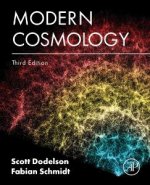
Modern Cosmology
2261 Kč -
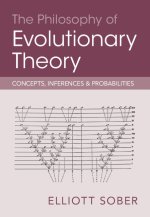
The Philosophy of Evolutionary Theory
477 Kč -
Philosophy of Biology
685 Kč -

AI
384 Kč -

Science, Pseudoscience, and the Demarcation Problem
577 Kč -

Selfish Meme
991 Kč -

Farewell to Reason
573 Kč -
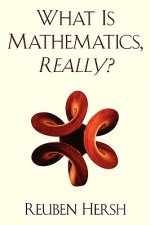
What Is Mathematics, Really?
804 Kč -

What is Life?
350 Kč -

Meeting the Universe Halfway
762 Kč -

Two Cultures
350 Kč -

Logic of Scientific Discovery
734 Kč -
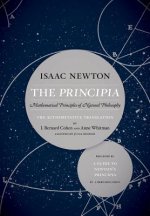
Principia: The Authoritative Translation and Guide
825 Kč -
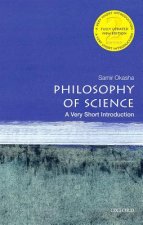
Philosophy of Science: Very Short Introduction
225 Kč -

Fourth Revolution
313 Kč -

'Nature and the Greeks' and 'Science and Humanism'
350 Kč -

Quantum Mechanics and Experience
891 Kč -

What Makes Biology Unique?
1061 Kč -
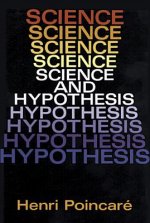
Science and Hypothesis
287 Kč -
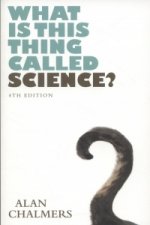
What is This Thing Called Science?
979 Kč -

Politics of Nature
1088 Kč -

Value of Science
487 Kč -

Dialectic of Duration
1109 Kč -
Understanding Philosophy of Science
1390 Kč -

Do We Really Understand Quantum Mechanics?
1731 Kč -

Human Nature
577 Kč -

Enlightenment Now
358 Kč -
Causality
1727 Kč -

Artificial Intelligence: A Very Short Introduction
225 Kč -

Social Physics
519 Kč -

Everything You Know Is Wrong, Book 1
334 Kč -

Oxford Handbook of the History of Physics
1820 Kč -
Philosophy of Physics
650 Kč -

Mind of God
292 Kč -

Wholeness of Nature
501 Kč -

Quark And The Jaguar
335 Kč -

Anti-Gravity and the World Grid
256 Kč
Osobní odběr Praha, Brno a 47546 dalších
Copyright ©2008-26 nejlevnejsi-knihy.cz Všechna práva vyhrazenaSoukromíCookies

 Vrácení do měsíce
 571 999 099 (8-15.30h)