Kód: 32902006
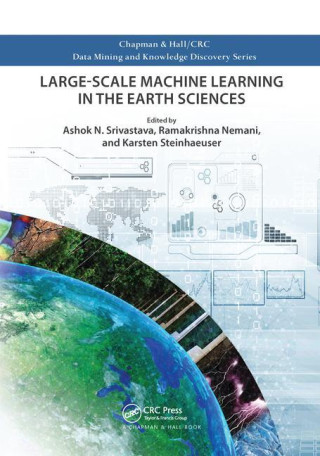
Large-Scale Machine Learning in the Earth Sciences
Autor Ashok N. Srivastava, Ramakrishna Nemani, Karsten Steinhaeuser
From the Foreword:"While large-scale machine learning and data mining have greatly impacted a range of commercial applications, their use in the field of Earth sciences is still in the early stages. This book, edited by AshokSriva ... celý popis


- Jazyk:
 Angličtina
 - Vazba: Brožovaná
- Počet stran: 238
Nakladatelství: Taylor & Francis Ltd, 2020
- Více informací o knize

1546 Kč
Dostupnost:
50 % šance Máme informaci, že by titul mohl být dostupný. Na základě vaší objednávky se ho pokusíme do 6 týdnů zajistit.
Prohledáme celý svět
Mohlo by se vám také líbit
-

Tower Dungeon 2
262 Kč -

Исторические портреты
215 Kč -

Zábava pro holčičky - Pro nejmenší
51 Kč -

Observatory Mansions
427 Kč -

Uzdravenie sexuálnych zranení s pomocou svätých
169 Kč -

Orpheus Builds A Girl
267 Kč -

Porsche 718 Cayman Gt4
650 Kč -

Introduction to Cyber Security: Guide to the World of Cyber Security
403 Kč -

Hands-on Nuxt.js Web Development
1143 Kč -

Texas Whiskey
692 Kč -

Road to Unfreedom
293 Kč -

Climate Change and Social Ecology
4835 Kč -

Global Warming
174 Kč -

Der medizinische Blick in die Zukunft
1069 Kč -

Anita Blake - Königin der Nacht
309 Kč -

Transactional Styles of Teachers and Students
1209 Kč -

Legal Order of the European Union
5127 Kč -

Transitando entre TIC y TAC
732 Kč -
Wild Men in the Middle Ages
1098 Kč -

Deus é quântico e está no DNA: Revelaç?es
363 Kč -

Magnetism and Magnetic Materials
2377 Kč -

Cromwell's Convicts
480 Kč -

CIENTIFICAS
352 Kč -

OpenShift Cookbook
1535 Kč -

Léon et le hérisson: premi?res lectures
167 Kč -

Introduction to data communications and networking
1459 Kč -

Histoire Et Description Du Museum Royal d'Histoire Naturelle
1042 Kč -

Walking Calcutta
326 Kč -

Female American; Or, the Adventures of Unca Eliza Winkfield. Compiled by Herself. in Two Volumes. ... Volume 1 of 2
571 Kč -

Créer une mini foret-jardin
524 Kč -

Devenirs de(s) villes nouvelles dans les Suds
946 Kč -

The Bat Boy and His Violin
415 Kč -

Cosm'aime: Comment créer facilement ses cosmétiques maison 100% naturels
196 Kč -

Narration, Identity, and Historical Consciousness
790 Kč -

THE MISSION OF GOD: A MANIFESTO OF HOPE
604 Kč -

Folk Tales of Bengal / Bengalin kansantarinoita (Part Two / Toinen osa)
467 Kč -

Life, Labours and Adventures of David Livingstone
630 Kč -

Self-regulation of Learning and Performance
2147 Kč -

Paving the Way for 5G Through the Convergence of Wireless Systems
4740 Kč -

Diccionario de pastoral y evangelización
2267 Kč -

Becoming a Forensic Psychologist
1067 Kč -

Rossetti & MacLane, l'integrale, 1
589 Kč -

Tratamiento de las enfermedades digestivas
1021 Kč -

Jennifer's Pocket Posh Journal, Chevron
175 Kč -

Primero, lo primero
568 Kč -
PROCESOS DE GESTION DE DEPARTAMENTOS DEL AREA DE ALOJAMIENTO
257 Kč -

Birch Reduction of Aromatic Compounds
1182 Kč -

How the L1 Culture Influences Second Language Acquisition
610 Kč -

Gesetzgebung uber die privatrechtliche Stellung der Erwerbs-
368 Kč -

Grounds for Appeal
274 Kč -

The Snow Birds
237 Kč -

Time-limited Psychodynamic Psychotherapy with Children and Adolescents
1260 Kč -

Cuentos Raros
294 Kč -

The Posse-A Story of Love and Resistance
467 Kč -

Oddities
663 Kč -

KLOOTO Games: MORE CRYPTOGRAM Jokes!
241 Kč -

The Life of Saint Columba: Apostle of Scotland
243 Kč -

Porcospini Libro da Colorare 1
237 Kč -

O Empreendedor-Alquimista
320 Kč -

Dictionnaire inattendu des Grandes Écoles
751 Kč -

Microwave-Assisted Sample Preparation for Trace Element Determination
4575 Kč -

Audience Transformations
1524 Kč -

Thunder Mountain Brides: Hidden Secrets-Agnes
237 Kč -

The Household Tragedy: In Four Scenes (1870)
541 Kč -

Computational Intelligence in Engineering Science
2592 Kč -

Gua para la evaluación y el tratamiento del dolor musculoesquelético
1215 Kč -

Introducción a la teología dogmática
505 Kč -
La Dorotea
401 Kč -

Lijiang Stories
916 Kč -

Protéger l'environnement
468 Kč -

365 Kid's Drawing: The Best Kid Drawing Book
142 Kč -

Skaluni
207 Kč -

Land der wilden Zwiebeln
348 Kč -
A minha jornada pela doença mental até ? recuperaç?o: uma autoetnografia
1055 Kč -

History of the Holy Eucharist in Great Britain; 2
837 Kč -

Violences numériques au travail
804 Kč -

Violin Surprise, a Note-Worthy Journey with Twinkle, Twinkle Little Star
402 Kč -

Wuthering Heights; Including Introductory Essays by Virginia Woolf and Charlotte Bronte
555 Kč -

Kann Papst Franziskus als Reformer gesehen werden?
369 Kč -
Intégration des PME africaines au marché international
711 Kč -

Lezioni Filologiche Sulla Lingua Siciliana (1855)
641 Kč -

Biosynthesis: An Eco-Friendly Approach of Nanomaterial Synthesis
1209 Kč -

Satire. Testo latino a fronte
316 Kč -

The Aboriginal Races of North America
1250 Kč
Darujte tuto knihu ještě dnes
- Objednejte knihu a zvolte Zaslat jako dárek.
- Obratem obdržíte darovací poukaz na knihu, který můžete ihned předat obdarovanému.
- Knihu zašleme na adresu obdarovaného, o nic se nestaráte.
Informovat o naskladnění knihy
Zadejte do formuláře e-mailovou adresu a jakmile knihu naskladníme, zašleme vám o tom zprávu. Pohlídáme vše za vás.
Více informací o knize Large-Scale Machine Learning in the Earth Sciences
Nákupem získáte 155 bodů
 Anotace knihy
From the Foreword:
"While large-scale machine learning and data mining have greatly impacted a range of commercial applications, their use in the field of Earth sciences is still in the early stages. This book, edited by Ashok
Srivastava, Ramakrishna Nemani, and Karsten Steinhaeuser, serves as an outstanding resource for anyone interested in the opportunities and challenges for the machine learning community in analyzing these data sets to answer questions of urgent societal interest I hope that this book will inspire more computer scientists to focus on environmental applications, and Earth scientists to seek collaborations with researchers in machine learning and data mining to advance the frontiers in Earth sciences."
--Vipin Kumar, University of Minnesota
Large-Scale Machine Learning in the Earth Sciences
provides researchers and practitioners with a broad overview of some of the key challenges in the intersection of Earth science, computer science, statistics, and related fields. It explores a wide range of topics and provides a compilation of recent research in the application of machine learning in the field of Earth Science.
Making predictions based on observational data is a theme of the book, and the book includes chapters on the use of network science to understand and discover teleconnections in extreme climate and weather events, as well as using structured estimation in high dimensions. The use of ensemble machine learning models to combine predictions of global climate models using information from spatial and temporal patterns is also explored.
The second part of the book features a discussion on statistical downscaling in climate with state-of-the-art scalable machine learning, as well as an overview of methods to understand and predict the proliferation of biological species due to changes in environmental conditions. The problem of using large-scale machine learning to study the formation of tornadoes is also explored in depth.
The last part of the book covers the use of deep learning algorithms to classify images that have very high resolution, as well as the unmixing of spectral signals in remote sensing images of land cover. The authors also apply long-tail distributions to geoscience resources, in the final chapter of the book.
Parametry knihy
1546 Kč
- Plný název: Large-Scale Machine Learning in the Earth Sciences
- Autor: Ashok N. Srivastava, Ramakrishna Nemani, Karsten Steinhaeuser
- Jazyk: Angličtina
- Vazba: Brožovaná
- Počet stran: 238
- EAN: 9780367573232
- ISBN: 0367573237
- ID: 32902006
- Nakladatelství: Taylor & Francis Ltd
- Hmotnost: 440 g
- Rozměry: 178 × 254 × 23 mm
- Datum vydání: 30. June 2020
Oblíbené z jiného soudku
-

Moonwalk
270 Kč -

The Score
248 Kč -

The Deal
248 Kč -

The Mistake
227 Kč -

Jujutsu Kaisen, Vol. 30
233 Kč -

Witch Hat Atelier: Grimoire Edition 1
777 Kč -

Berserk Deluxe Volume 1
804 Kč -

Invincible Compendium Volume 2
1123 Kč -

Invincible Compendium Volume 1
1108 Kč -

The Goal
321 Kč -

Berserk Deluxe Volume 2
862 Kč -

Witch Hat Atelier Manga Box Set 1
1268 Kč -

Heated Rivalry
227 Kč -

Lord of Mysteries, Vol. 3: The Clown, Part III
355 Kč -

Moonwalk: A Memoir
525 Kč -

Murdoku
358 Kč -

Jujutsu Kaisen, Vol. 25
240 Kč -

Jujutsu Kaisen, Vol. 26
240 Kč -

Jujutsu Kaisen, Vol. 29
240 Kč -

Berserk Deluxe Volume 3
804 Kč -

White Nights
89 Kč -

Veil Volume 1
292 Kč -

Legacy
238 Kč -

The Deal
319 Kč -

JoJo's Bizarre Adventure: Part 7--Steel Ball Run, Vol. 7
432 Kč -

Invincible Compendium Volume 3
1108 Kč -

The Long Game
227 Kč -

King of Gluttony
229 Kč -

Invincible Volume 1
242 Kč -

Dancing The Dream
522 Kč -

Berserk Deluxe Volume 5
782 Kč -

Starside (Deluxe Limited Edition)
522 Kč -

The Summer Hikaru Died, Vol. 7
272 Kč -

Project Hail Mary
227 Kč -

Jujutsu Kaisen, Vol. 28
221 Kč -

Berserk Deluxe Volume 4
854 Kč -

Yesteryear
370 Kč -

Boys Omnibus Vol. 1 TPB
631 Kč -

Jojo's Bizarre Adventure: Part 7--Steel Ball Run, Vol. 1
442 Kč -

The Score
319 Kč -

Jojo's Bizarre Adventure: Part 7--Steel Ball Run, Vol. 2
457 Kč -

The Ballad of Falling Dragons
275 Kč -

Veil Volume 2
363 Kč -

The Mistake
319 Kč -

The Courage To Be Disliked
227 Kč -

Murdoku
309 Kč -

Lord of Mysteries, Vol. 1: The Clown, Part I
340 Kč -

Jujutsu Kaisen, Vol. 1
244 Kč -

Chainsaw Man, Vol. 20
199 Kč
Osobní odběr Praha, Brno a 46811 dalších
Copyright ©2008-26 nejlevnejsi-knihy.cz Všechna práva vyhrazenaSoukromíCookies

 Vrácení do měsíce
 571 999 099 (8-15.30h)