Kód: 07116519
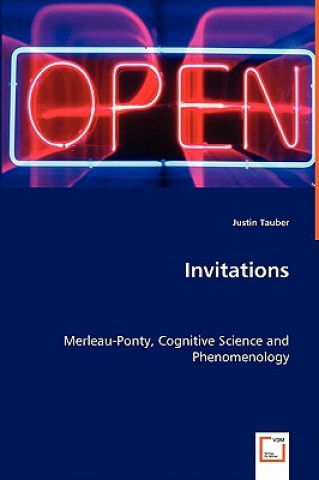
Invitations - Merleau-Ponty, Cognitive Science and Phenomenology
Autor Justin Tauber
A number of recent movements in cognitive science have been inspired by Merleau-Ponty's philosophy of perception, and his work is often used to provide philosophical support for post-cognitivist accounts of perception. Drawing on ... celý popis


- Jazyk:
 Angličtina
 - Vazba: Brožovaná
- Počet stran: 212
Nakladatelství: VDM Verlag Dr. Mueller E.K., 2008
- Více informací o knize


Mohlo by se vám také líbit
-

Star Wars: Rebel Starfighters: Owners' Workshop Manual
480 Kč -

Teenagers
702 Kč -

How to Restore Your Corvette 1968-1982
641 Kč -

Old Indian Legends
458 Kč -

(Un)Stuck
409 Kč -

Ant King
339 Kč -

Foodies Wordsearch: 100 Puzzles With a Food Drink and Cooking Theme
237 Kč -

JavaFX 2.0: Introduction by Example
876 Kč -

Islamic Design: A Mathematical Approach
3297 Kč -

Chiemsee-Dämmerung
270 Kč -

Millet
380 Kč -

Kollegiales Unterrichtscoaching
1283 Kč -

saggezza e l'audacia. Discorsi per l’Italia e per l’Europa
523 Kč -

On Liturgical Asceticism
775 Kč -

In Kent with Charles Dickens
853 Kč -

Poor Places, Thriving People
886 Kč -

History of the War in Spain and Portugal, from 1807 to 1814.
587 Kč -

Society, Politics and Economics in Mazandaran, Iran 1848-1914
4835 Kč -

Gift of the Gods. a Novel.
538 Kč -

Seeking a City with Foundations
576 Kč -

Die Kontingenz der Moderne
787 Kč -

Chief Eunuch of the Ottoman Harem
3078 Kč -

Passing Through the Clubhouse
331 Kč -

Provost-Marshal
604 Kč -

Leading People: Learning From People
807 Kč -

Sin compromiso
623 Kč -

Phylogeny, Anatomy and Physiology of Ancient Fishes
2186 Kč -

The Green Gang Inspires Others
614 Kč -

Catch-Up and Competitiveness in China
4835 Kč -

History and Antiquities of the Town, College, and Castle, of Fotheringay in the County of Northampton. ...
507 Kč -

Ghosts of Central Jersey: Historic Haunts of the Somerset Hills
422 Kč -

Pacific Northwest Travel Guide & Stories
392 Kč -

Dreamer's Song
465 Kč -

TINTIN LE TEMPLE DU SOLEIL (EN JAPONAIS GRAND FORMAT, Couv cartonnée)
888 Kč -

Picasso-Giacometti
591 Kč
Darujte tuto knihu ještě dnes
- Objednejte knihu a zvolte Zaslat jako dárek.
- Obratem obdržíte darovací poukaz na knihu, který můžete ihned předat obdarovanému.
- Knihu zašleme na adresu obdarovaného, o nic se nestaráte.
Více informací o knize Invitations - Merleau-Ponty, Cognitive Science and Phenomenology
Nákupem získáte 189 bodů
 Anotace knihy
A number of recent movements in cognitive science have been inspired by Merleau-Ponty's philosophy of perception, and his work is often used to provide philosophical support for post-cognitivist accounts of perception. Drawing on the work of Hubert Dreyfus, Francisco Varela, Shuan Gallagher and Charles Taylor, Tauber critically examines the psychological and philosophical aspects of this reception, and clarifies the difference between connectionist and enactivist readings. §§These readings often assume that Merleau-Ponty's interest in Gestalt psychology signals a break from Husserl's transcendental idealism and makes his phenomenology compatible with a broadly naturalistic approach to cognition. However, Tauber argues that Merleau-Ponty's specific interest in pathological case-studies is itself a kind of transcendental strategy - a strategy that is much closer to Husserl's later work than generally acknowledged. Demonstrating this strategy in a contemporary context, and contrasting it with the work of John Haugeland, allows Tauber to reveal Merleau-Ponty's distinctive, invitational account of embodied perception, its sensuality and intersubjectivity.
Parametry knihy
Zařazení knihy Knihy v angličtině Humanities Philosophy
1890 Kč
- Plný název: Invitations - Merleau-Ponty, Cognitive Science and Phenomenology
- Autor: Justin Tauber
- Jazyk: Angličtina
- Vazba: Brožovaná
- Počet stran: 212
- EAN: 9783836475921
- ISBN: 3836475928
- ID: 07116519
- Nakladatelství: VDM Verlag Dr. Mueller E.K.
- Hmotnost: 290 g
- Rozměry: 229 × 152 × 11 mm
- Datum vydání: 25. June 2008
Oblíbené z jiného soudku
-

The Conspiracy Against the Human Race
293 Kč -

Men Among the Ruins
441 Kč -

Simulations
261 Kč -

How the World Thinks
244 Kč -

In Search of Being
502 Kč -

Antichrist
96 Kč -

Science, Politics & Gnosticism
233 Kč -

Built to Last
293 Kč -

Expanse and Philosophy - So Far Out Into the Darkness
396 Kč -

Sacred Dance Meditations
434 Kč -

Beauty in Arabic Culture
576 Kč -
Letters from a Stoic - The Ancient Classic
263 Kč -
One-Dimensional Man
412 Kč -

Imitation of Christ
96 Kč -
Wisdom of Life
147 Kč -

Philosophy of Zen Buddhism
361 Kč -

What Does It All Mean?
765 Kč -

I am That
889 Kč -

Teachings of Don Juan
194 Kč -
Thus Spoke Zarathustra - The Philosophy Classic
250 Kč -

Mortal Questions
350 Kč -
I Am a Strange Loop
365 Kč -
Difference and Repetition
442 Kč -

Art of Worldly Wisdom
237 Kč -
Protagoras and Meno
220 Kč -
Galileo's Error
400 Kč -

My View of the World
335 Kč -

Republic
496 Kč -
The Consolations of Philosophy
319 Kč -
Philosophy of Freedom
338 Kč -
Process of Creating Life: The Nature of Order, Book 2
1518 Kč -
Philosophical Dictionary
273 Kč -

Technics and Time, 2
618 Kč -
Upheavals of Thought
861 Kč -

Machiavelli: The Art of Teaching People What to Fear
312 Kč -

Monkey Business
358 Kč -

Palliative Society - Pain Today
390 Kč -

On Ideology
334 Kč -

Upside down: a Primer for the Looking-Glass World
428 Kč -

Hidden Third
323 Kč -

Antichrist
228 Kč -
System of Moral Philosophy
361 Kč -

For the Time Being
303 Kč -

Integral Vision
235 Kč -
Time and Free Will: an Essay on the
272 Kč -

Ultimate Star Trek and Philosophy
318 Kč -

People's History Of Civilization
294 Kč -

Confession
132 Kč -

German Idealism
1311 Kč
Osobní odběr Praha, Brno a 46876 dalších
Copyright ©2008-26 nejlevnejsi-knihy.cz Všechna práva vyhrazenaSoukromíCookies

 Vrácení do měsíce
 571 999 099 (8-15.30h)