Kód: 09360448
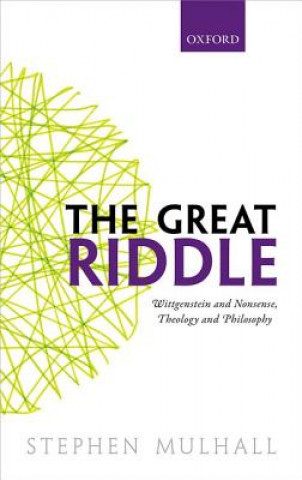
Great Riddle
Autor Stephen Mulhall
Can we talk meaningfully about God? The theological movement known as Grammatical Thomism affirms that religious language is nonsensical, because the reality of God is beyond our capacity for expression. Stephen Mulhall criticall ... celý popis


- Jazyk:
 Angličtina
 - Vazba: Pevná
- Počet stran: 160
Nakladatelství: Oxford University Press, 2015
- Více informací o knize

2062 Kč
Dostupnost:
50 % šance Máme informaci, že by titul mohl být dostupný. Na základě vaší objednávky se ho pokusíme do 6 týdnů zajistit.
Prohledáme celý svět
Mohlo by se vám také líbit
-
Training Horses
269 Kč -

Classical Hits For Children
316 Kč -
Daily Phonics, Grade 4-6+
532 Kč -

Growth of the British Empire
380 Kč -

Tourism in Northeastern Argentina
2949 Kč -

Democracy
829 Kč -
Geschichte der deutschen Gesellschaft von Pennsylvanien 1764-1917
856 Kč
Darujte tuto knihu ještě dnes
- Objednejte knihu a zvolte Zaslat jako dárek.
- Obratem obdržíte darovací poukaz na knihu, který můžete ihned předat obdarovanému.
- Knihu zašleme na adresu obdarovaného, o nic se nestaráte.
Informovat o naskladnění knihy
Zadejte do formuláře e-mailovou adresu a jakmile knihu naskladníme, zašleme vám o tom zprávu. Pohlídáme vše za vás.
Více informací o knize Great Riddle
Nákupem získáte 206 bodů
 Anotace knihy
Can we talk meaningfully about God? The theological movement known as Grammatical Thomism affirms that religious language is nonsensical, because the reality of God is beyond our capacity for expression. Stephen Mulhall critically evaluates the claims of this movement (as exemplified in the work of Herbert McCabe and David Burrell) to be a legitimate inheritor of Wittgenstein's philosophical methods as well as Aquinas's theological project. The major obstacle to this claim is that Grammatical Thomism makes the nonsensicality of religious language when applied to God a touchstone of Thomist insight, whereas 'nonsense' is standardly taken to be solely a term of criticism in Wittgenstein's work. Mulhall argues that, if Wittgenstein is read in the terms provided by the work of Cora Diamond and Stanley Cavell, then a place can be found in both his early work and his later writings for a more positive role to be assigned to nonsensical utterances-one which depends on exploiting an analogy between religious language and riddles. And once this alignment between Wittgenstein and Aquinas is established, it also allows us to see various ways in which his later work has a perfectionist dimension-in that it overlaps with the concerns of moral perfectionism, and in that it attributes great philosophical significance to what theology and philosophy have traditionally called 'perfections' and 'transcendentals', particularly concepts such as Being, Truth, and Unity or Oneness. This results in a radical reconception of the role of analogous usage in language, and so in the relation between philosophy and theology.
Parametry knihy
Zařazení knihy Knihy v angličtině Humanities Religion & beliefs Religion: general
2062 Kč
- Plný název: Great Riddle
- Podnázev: Wittgenstein and Nonsense, Theology and Philosophy
- Autor: Stephen Mulhall
- Jazyk: Angličtina
- Vazba: Pevná
- Počet stran: 160
- EAN: 9780198755326
- ISBN: 0198755325
- ID: 09360448
- Nakladatelství: Oxford University Press
- Hmotnost: 288 g
- Rozměry: 227 × 164 × 22 mm
- Datum vydání: 17. December 2015
Oblíbené z jiného soudku
-
The Righteous Mind
336 Kč -

Secular Age
428 Kč -
History of Christianity
424 Kč -
The Perennial Philosophy
340 Kč -
The Psychology of Selling
356 Kč -
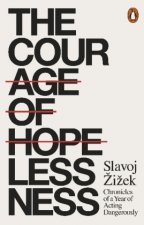
Courage of Hopelessness
276 Kč -

Down the Witches' Way
237 Kč -
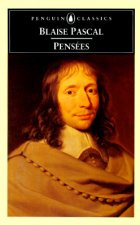
Pensees
242 Kč -
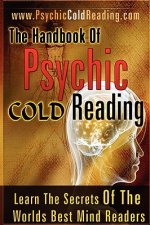
Handbook Of Psychic Cold Reading
250 Kč -
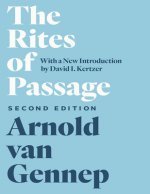
Rites of Passage, Second Edition
738 Kč -
Symbols of Sacred Science
567 Kč -

Mythic & Magickal Folklore Of Plants
358 Kč -
Simulations of God
324 Kč -

Padre Candido Amantini, CP
218 Kč -
Kingship and the Gods
1062 Kč -
Perfect Heresy
293 Kč -
Sacred Numerology of Thoth
392 Kč -
Jotunbok
714 Kč -
Qur'an and the Bible
1286 Kč -

Foxe's Book of Martyrs
391 Kč -
Bhagavad Gita
164 Kč -
The Happiness Hypothesis: Finding Modern Truth in Ancient Wisdom
334 Kč -

Screwtape Letters
248 Kč -
Living Goddesses
890 Kč -
Knowing God
347 Kč -
Wisdom Of Insecurity
293 Kč -
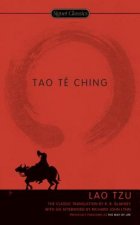
Tao Te Ching
158 Kč -
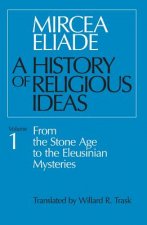
History of Religious Ideas, Volume 1
539 Kč -
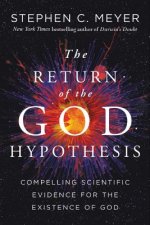
Return of the God Hypothesis
544 Kč -
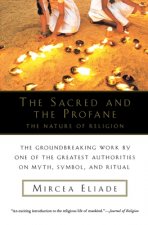
Sacred and the Profane
303 Kč -
Conversations With God
248 Kč -
The Courage to Be
330 Kč -
Seeking Allah, Finding Jesus
402 Kč -
Early History of God
656 Kč -
More Than Allegory - On religious myth, truth and belief
338 Kč -
Story of Christianity Volume 1
557 Kč -
Dialogues Concerning Natural Religion, and The Natural History of Religion
178 Kč -
Hekate Tarot
228 Kč -

History of God
294 Kč -
Evolution of God
319 Kč -
Alchemical Keys To Masonic Ritual
340 Kč -
Comfortable with Uncertainty
324 Kč -

Slave Species of the Gods
412 Kč -
Minoan Kingship and the Solar Goddess
679 Kč -

God And The Afterlife
272 Kč -
ADVERSARIAL LIGHT - Magick of the Nephilim
546 Kč -
Christianity: A Very Short Introduction
225 Kč -
Art of Worldly Wisdom
195 Kč -
Apotheosis - The Ultimate Beginner's Guide to Luciferianism & the Left-Hand Path
538 Kč
Osobní odběr Praha, Brno a 46611 dalších
Copyright ©2008-26 nejlevnejsi-knihy.cz Všechna práva vyhrazenaSoukromíCookies

 Vrácení do měsíce
 571 999 099 (8-15.30h)