Kód: 16491619
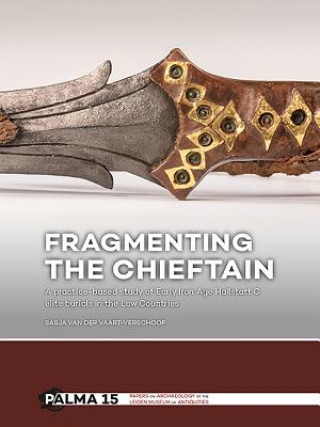
Fragmenting the Chieftain
Autor Sasja van der Vaart-Verschoof
There is a cluster of Early Iron Age (800-500 BC) elite burials in the Low Countries in which bronze vessels, weaponry, horse-gear and wagons were interred as grave goods. Mostly imports from Central Europe, these objects are foun ... celý popis


- Jazyk:
 Angličtina
 - Vazba: Brožovaná
- Počet stran: 300
Nakladatelství: Sidestone Press, 2018
- Více informací o knize


Mohlo by se vám také líbit
-

Moonwalk
283 Kč -

The Score
276 Kč -

The Deal
254 Kč -

The Mistake
227 Kč -

Jujutsu Kaisen, Vol. 30
227 Kč -

The Goal
276 Kč -

Berserk Deluxe Volume 1
779 Kč -

Invincible Compendium Volume 2
1167 Kč -

Berserk Deluxe Volume 2
837 Kč -

Legacy
248 Kč -

Lord of Mysteries, Vol. 3: The Clown, Part III
338 Kč -
Murdoku
358 Kč -

Witch Hat Atelier: Grimoire Edition 1
1130 Kč -

JoJo's Bizarre Adventure: Part 7--Steel Ball Run, Vol. 7
427 Kč -

Jujutsu Kaisen, Vol. 25
221 Kč -

Witch Hat Atelier Manga Box Set 1
1241 Kč -

Jujutsu Kaisen, Vol. 26
225 Kč -

Heated Rivalry
227 Kč -

Berserk Deluxe Volume 3
779 Kč -

The Deal
334 Kč -
Murdoku
334 Kč
Darujte tuto knihu ještě dnes
- Objednejte knihu a zvolte Zaslat jako dárek.
- Obratem obdržíte darovací poukaz na knihu, který můžete ihned předat obdarovanému.
- Knihu zašleme na adresu obdarovaného, o nic se nestaráte.
Více informací o knize Fragmenting the Chieftain
Nákupem získáte 92 bodů
 Anotace knihy
There is a cluster of Early Iron Age (800-500 BC) elite burials in the Low Countries in which bronze vessels, weaponry, horse-gear and wagons were interred as grave goods. Mostly imports from Central Europe, these objects are found brought together in varying configurations in cremation burials generally known as chieftains' graves or princely burials. In terms of grave goods they resemble the Fürstengräber of the Hallstatt Culture of Central Europe, with famous Dutch and Belgian examples being the Chieftain's grave of Oss, the wagon-grave of Wijchen and the elite cemetery of Court-St-Etienne. Fragmenting the Chieftain presents the results of an in-depth and practice-based archaeological analysis of the Dutch and Belgian elite graves and the burial practice through which they were created. It was established that the elite burials are embedded in the local burial practices - as reflected by the use of the cremation rite, the bending and breaking of grave goods, and the pars pro toto deposition of human remains and objects, all in accordance with the dominant local urnfield burial practice. It appears that those individuals interred with wagons and related items warranted a more elaborate funerary rite, most likely because these ceremonial and cosmologically charged vehicles marked their owners out as exceptional individuals. Furthermore, in a few graves the configuration of the grave good set, the use of textiles to wrap grave goods and the dead and the reuse of burial mounds show the influence of individuals familiar with Hallstatt Culture burial customs. A comprehensive overview of the Dutch and Belgian graves can be found in the accompanying Fragmenting the Chieftain - Catalogue. Late Bronze and Early Iron Age elite burials in the Low Countries (separate publication). Contents 1 Introduction 2 Theoretical framework: identifying elites and their graves 3 Dating elite burials 4 The elite burials: presenting the dataset 5 The (development of the) elite burial practice 6 How grave goods were used and interpreted 7 Conclusion 8 Final reflections and questions for the future Summary (English and Dutch) Acknowledgements Bibliography Curriculum vitae App. A1 Abbreviations App. A2 Summary overview of objects in Catalogue, per find category
Parametry knihy
Zařazení knihy Knihy v angličtině Humanities Archaeology Archaeology by period / region
915 Kč
- Plný název: Fragmenting the Chieftain
- Podnázev: A practice-based study of Early Iron Age Hallstatt C elite burials in the Low Countries
- Autor: Sasja van der Vaart-Verschoof
- Jazyk: Angličtina
- Vazba: Brožovaná
- Počet stran: 300
- EAN: 9789088905117
- ISBN: 9088905118
- ID: 16491619
- Nakladatelství: Sidestone Press
- Hmotnost: 660 g
- Rozměry: 234 × 281 × 22 mm
- Datum vydání: 25. January 2018
Osobní odběr Praha, Brno a 46795 dalších
Copyright ©2008-26 nejlevnejsi-knihy.cz Všechna práva vyhrazenaSoukromíCookies

 Vrácení do měsíce
 571 999 099 (8-15.30h)