Kód: 50658277
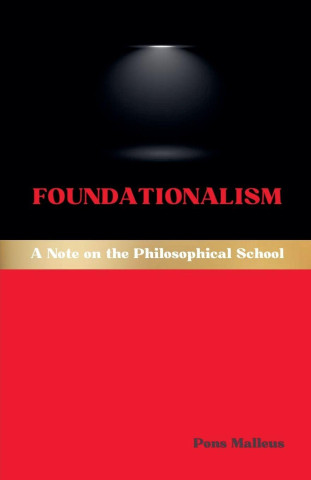
Foundationalism
Autor Pons Malleus
Philosophy, at its core, is a quest for knowledge and understanding-a rigorous endeavor to explore the nature, scope, and justification of human belief. Among the myriad traditions and schools that have shaped philosophical inquir ... celý popis


- Jazyk:
 Angličtina
 - Vazba: Brožovaná
- Počet stran: 94
Nakladatelství: Pons Malleus, 2026
- Více informací o knize


Mohlo by se vám také líbit
-

Murdoku
309 Kč -

Threshing Day (Wing and Claw Collection)
400 Kč -

Berserk Deluxe Volume 1
878 Kč -

Threshing Day (Limited Deluxe Edition)
473 Kč -

White Nights
89 Kč -

Berserk Deluxe Volume 2
941 Kč -

The Odyssey
320 Kč -

Kid's Box New Generation Level 2 Activity Book with Digital Pack British English
291 Kč -

Onyx Storm (Deluxe Limited Edition) (The Empyrean, 3)
550 Kč -

Berserk Deluxe Volume 3
779 Kč -

Kid's Box New Generation Level 2 Pupil's Book with eBook British English
522 Kč -

Needoh - Nice Cube (random colours)
191 Kč -

Murdoku Volume 2: Back in Time
309 Kč -

The Score
243 Kč -

Fourth Wing
525 Kč -

Moonwalk
270 Kč -

Jujutsu Kaisen, Vol. 26
225 Kč -

Kid's Box New Generation Level 3 Activity Book with Digital Pack British English
288 Kč -

Iron Flame
525 Kč -

Kid's Box New Generation Level 1 Activity Book with Digital Pack British English
291 Kč -

Dancing The Dream
482 Kč
Darujte tuto knihu ještě dnes
- Objednejte knihu a zvolte Zaslat jako dárek.
- Obratem obdržíte darovací poukaz na knihu, který můžete ihned předat obdarovanému.
- Knihu zašleme na adresu obdarovaného, o nic se nestaráte.
Více informací o knize Foundationalism
Nákupem získáte 29 bodů
 Anotace knihy
Philosophy, at its core, is a quest for knowledge and understanding-a rigorous endeavor to explore the nature, scope, and justification of human belief. Among the myriad traditions and schools that have shaped philosophical inquiry, Foundationalism holds a particularly pivotal place. This school of thought, which seeks to ground knowledge on a secure and indubitable basis, has profoundly influenced epistemology-the study of knowledge itself. The present book embarks on a detailed exploration of Foundationalism, aiming to provide both newcomers and seasoned thinkers with a comprehensive account of its principles, challenges, and enduring significance.
At first glance, Foundationalism might appear straightforward: it posits that our beliefs must rest upon certain foundational beliefs that are themselves self-evident, indubitable, or otherwise beyond doubt. These foundational beliefs act as the bedrock upon which all other knowledge is constructed. This metaphor of a building or structure is often employed to illustrate the idea-just as a building requires a solid foundation to stand firm, so too must our system of beliefs rest on secure grounds. Yet, beneath this seemingly simple image lies a rich and complex philosophical tradition with a vibrant history and nuanced arguments.
The roots of Foundationalism trace back to ancient philosophy, but it rose to prominence in the modern era with figures such as René Descartes, who famously sought a firm foundation for knowledge by doubting all that could be doubted until he reached the indubitable truth of the cogito-"I think, therefore I am." This foundational belief, in Descartes' view, was self-evident and beyond question, serving as the anchor for rebuilding knowledge. Descartes' project inspired generations of philosophers to grapple with the nature of justification and certainty.
Yet, Foundationalism has never been without controversy. The challenge lies in identifying which beliefs qualify as foundational and defending their supposed certainty. Critics argue that the quest for indubitable beliefs is either impossible or unnecessary, giving rise to alternative epistemological frameworks such as Coherentism and Reliabilism. Foundationalism's critics often highlight the so-called "regress problem," which demands justification for every belief: without a foundational belief, justification would regress infinitely; with one, it must be convincingly unassailable. Navigating these objections and responses forms a crucial part of the contemporary debate.
This book offers an extensive survey of Foundationalism's development-from its classical formulations to its modern adaptations and criticisms. It examines how the school has been interpreted in various philosophical traditions and its intersections with related fields such as psychology, cognitive science, and even artificial intelligence. Through this examination, the reader will appreciate both the enduring appeal of Foundationalism and the dynamic debates that continue to shape its trajectory.
Beyond the technical philosophical discussions, Foundationalism invites us to reflect on a deeply human concern: How do we know what we know? What justifies our confidence in our beliefs? And ultimately, can we achieve a stable and secure understanding of the world? These questions are not merely academic; they resonate in everyday life, influencing how we navigate the complexity of information, uncertainty, and trust.
The chapters that follow are structured to guide the reader from the foundational concepts and historical origins, through the main arguments and criticisms, to contemporary perspectives and applications. Along the way, we engage with seminal texts and key philosophers, encouraging critical reflection and dialogue. The aim is to not only inform but also inspire readers to grapple with the profound issues at the heart of epistemology.
Parametry knihy
294 Kč
- Plný název: Foundationalism
- Podnázev: A Note on the Philosophical School
- Autor: Pons Malleus
- Jazyk: Angličtina
- Vazba: Brožovaná
- Počet stran: 94
- EAN: 9798233875526
- ID: 50658277
- Nakladatelství: Pons Malleus
- Hmotnost: 120 g
- Rozměry: 216 × 140 × 5 mm
- Datum vydání: 16. January 2026
Osobní odběr Praha, Brno a 48518 dalších
Copyright ©2008-26 nejlevnejsi-knihy.cz Všechna práva vyhrazenaSoukromíCookies

 Vrácení do měsíce
 571 999 099 (8-15.30h)