Kód: 01972890
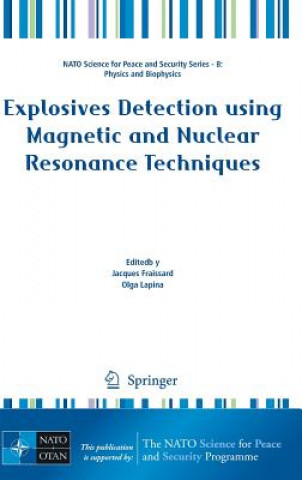
Explosives Detection using Magnetic and Nuclear Resonance Techniques
Autor Jacques Fraissard, Olga Lapina
Nuclear quadrupole resonance (NQR) a highly promising new technique for bulk explosives detection: relatively inexpensive, more compact than NMR, but with considerable selectivity. Since the NQR frequency is insensitive to long-ra ... celý popis


- Jazyk:
 Angličtina
 - Vazba: Pevná
- Počet stran: 292
Nakladatelství: Springer, 2009
- Více informací o knize


Mohlo by se vám také líbit
-

Sherlock Holmes - Die besten Geschichten / Best of Sherlock Holmes. Sherlock Holmes, Best of Sherlock Holmes
181 Kč -

The Man in the Iron Mask (Collector's Edition) (Laminated Hardback with Jacket)
1121 Kč -

Zosia Iskierka, przyszła liderka
201 Kč -

Comintern
1457 Kč -

Bazaar Of Opportunities For New Business Development: Bridging Networked Innovation, Intellectual Property And Business
2207 Kč -

Sew Cute Embroidery Kit
357 Kč -

Ashgate Research Companion to World Methodism
5127 Kč -

Textos De La Literatura Espanola De Facil Lectura
371 Kč -

Introduction to Forensic Geoscience
1604 Kč -

Tales from Schwartzgarten: Osbert the Avenger
257 Kč -

Phonics for Pupils with Special Educational Needs Book 5: Sound by Sound Part 3
1770 Kč -

People First
446 Kč -

Coming Fall Of Islam In Iran
275 Kč -

I Love to Sleep in My Own Bed
381 Kč -

Visitation of the County of Leicester in the Year 1619
1115 Kč -

Bracelet Cristal de Roche Perles rondes 4 mm
112 Kč -

On the Topology of Isolated Singularities in Analytic Spaces
2592 Kč -

Why People Cooperate
935 Kč -
Le serment maçonnique
224 Kč -

Poemas del metro
545 Kč -

Oszmàn-Török NÃ(c)pköltÃ(c)si GyÃ1/4jtemÃ(c)ny
1054 Kč
Darujte tuto knihu ještě dnes
- Objednejte knihu a zvolte Zaslat jako dárek.
- Obratem obdržíte darovací poukaz na knihu, který můžete ihned předat obdarovanému.
- Knihu zašleme na adresu obdarovaného, o nic se nestaráte.
Více informací o knize Explosives Detection using Magnetic and Nuclear Resonance Techniques
Nákupem získáte 353 bodů
 Anotace knihy
Nuclear quadrupole resonance (NQR) a highly promising new technique for bulk explosives detection: relatively inexpensive, more compact than NMR, but with considerable selectivity. Since the NQR frequency is insensitive to long-range variations in composition, mixing explosives with other materials, such as the plasticizers in plastic explosives, makes no difference. The NQR signal strength varies linearly with the amount of explosive, and is independent of its distribution within the volume monitored. NQR spots explosive types in configurations missed by the X-ray imaging method.§But if NQR is so good, why it is not used everywhere? Its main limitation is the low signal-to-noise ratio, particularly with the radio-frequency interference that exists in a field environment, NQR polarization being much weaker than that from an external magnetic field. The distinctive signatures are there, but are difficult to extract from the noise. In addition, the high selectivity is partly a disadvantage, as it is hard to build a multichannel system necessary to cover a wide range of target substances. Moreover, substances fully screened by metallic enclosures, etc. are difficult to detect. A workshop was held at St Petersburg in July 2008 in an attempt to solve these problems and make NQR the universal technique for the detection of bombs regardless of type. This book presents the essentials of the papers given there.
Parametry knihy
Zařazení knihy Knihy v angličtině Mathematics & science Chemistry Analytical chemistry
3532 Kč
- Plný název: Explosives Detection using Magnetic and Nuclear Resonance Techniques
- Autor: Jacques Fraissard, Olga Lapina
- Jazyk: Angličtina
- Vazba: Pevná
- Počet stran: 292
- EAN: 9789048130603
- ISBN: 9048130603
- ID: 01972890
- Nakladatelství: Springer
- Hmotnost: 1340 g
- Rozměry: 235 × 155 × 23 mm
- Datum vydání: 09. July 2009
Oblíbené z jiného soudku
-
NMR Spectroscopy - Basic Principles, Concepts and Applications in Chemistry 3e
3881 Kč -

Principles of Fluorescence Spectroscopy
2762 Kč -

Schaum's Outline of Analytical Chemistry
658 Kč -
Mass Spectrometry - Principles and Applications 3e
1525 Kč -
Solving Problems with NMR Spectroscopy
3335 Kč -
Molecules and Radiation
442 Kč -

Chemical Analysis Of Water
2144 Kč -
High Performance Liquid Chromatography in Plant Sciences
2357 Kč -
Understanding NMR Spectroscopy 2e
1267 Kč -

Spectroscopic Methods in Organic Chemistry
1614 Kč -
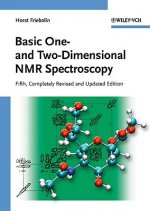
Basic One and Two Dimensional NMR Spectroscopy 5e
1571 Kč -

Analytical Chemistry, Seventh Edition International Adaptationl Adaptation
1534 Kč -
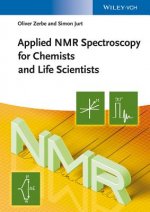
Applied NMR Spectroscopy for Chemists and Life Scientists
1753 Kč -

Principles of Instrumental Analysis
4945 Kč -
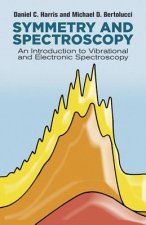
Symmetry and Spectroscopy
653 Kč -

Statistics and Chemometrics for Analytical Chemistry
1835 Kč -

Handbook of Analytical Chemistry: Volume I
2758 Kč -
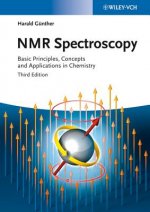
NMR Spectroscopy - Basic Principles, Concepts and Applications in Chemistry 3e
2196 Kč -
Spin Dynamics - Basics of Nuclear Magnetic Resonance 2e
1587 Kč -

Solid-State Laser Engineering
6632 Kč -
Fundamentals of Analytical Chemistry
2906 Kč -

Raman Spectroscopy in Cultural Heritage Preservation
2827 Kč -
Atomic Absorption Spectrometry
1632 Kč -
Computational Spectroscopy - Methods, Experiments and Applications
4933 Kč -
Gas Chromatography and Mass Spectrometry: A Practical Guide
2613 Kč -
Modern Spectroscopy 4e
1545 Kč -

HPLC-MS Handbook for Practitioners
2362 Kč -
Basic Atomic and Molecular Spectroscopy
538 Kč -

High-Resolution NMR Techniques in Organic Chemistry
2254 Kč -
Methods in Computational Chemistry
1182 Kč -
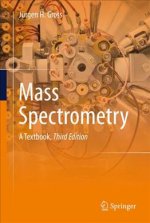
Mass Spectrometry
2991 Kč -

Analytical Chemistry
2533 Kč -

Physical Principles of Electron Microscopy
1384 Kč -
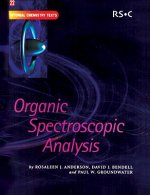
Organic Spectroscopic Analysis
538 Kč -
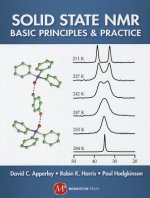
Solid State NMR
2525 Kč -

Beginners' Guide to Scanning Electron Microscopy
3823 Kč -
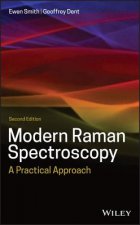
Modern Raman Spectroscopy
1725 Kč -
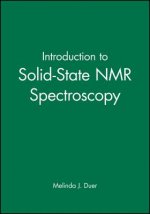
Introduction to Solid-State NMR Spectroscopy
1899 Kč -
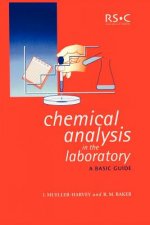
Chemical Analysis in the Laboratory
389 Kč -

Computational Materials Science
2762 Kč -
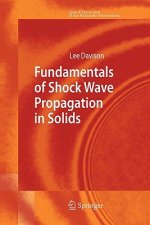
Fundamentals of Shock Wave Propagation in Solids
1500 Kč -
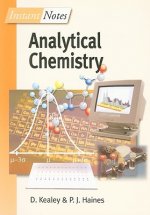
Analytical Chemistry
1002 Kč -

Spectroscopy, Diffraction and Tomography in Art and Heritage Science
3448 Kč -
Atlas of Plastics Additives
3681 Kč -

Radioactivity in the Environment
9216 Kč -

Modern Environmental Analysis Techniques for Pollutants
5283 Kč -

Molecular Physical Chemistry
2533 Kč -

Analytical Chemistry
3157 Kč -
Impedance Spectroscopy - Applications to Electrochemical and Dielectric Phenomena
2906 Kč
Osobní odběr Praha, Brno a 46770 dalších
Copyright ©2008-26 nejlevnejsi-knihy.cz Všechna práva vyhrazenaSoukromíCookies

 Vrácení do měsíce
 571 999 099 (8-15.30h)