Kód: 04036245
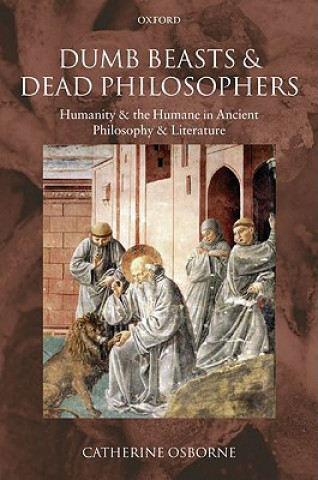
Dumb Beasts and Dead Philosophers
Autor Catherine Osborne
Animal rights do not feature explicitly in ancient thought. Indeed the notion of natural rights in general is not obviously present in the classical world. Plato and Aristotle are typically read as racist and elitist thinkers who ... celý popis


- Jazyk:
 Angličtina
 - Vazba: Brožovaná
- Počet stran: 278
Nakladatelství: Oxford University Press, 2009
- Více informací o knize


Mohlo by se vám také líbit
-

Titan
325 Kč -

Data Warehouse ETL Toolkit - Practical Techniques for Extracting, Cleaning, Conforming and Delivering Data
1078 Kč -

Executive's Guide to COSO Internal Controls - Understanding and Implementing the New Framework
1921 Kč -

Night of the Living Dead Vol. 2: Mandy's Demons
286 Kč -

Alicante
613 Kč -
Family Tree, Volume 2
327 Kč -
Galileo Revisited: The Galileo Affair in Context
403 Kč -

The Book of the Mazda MX-5 Miata
598 Kč -

Idiot by Fyodor Mikhailovich Dostoevsky, Fiction, Classics
1057 Kč -

Francais.Com
754 Kč -

Die Bildstöcke des Eichsfeldes Teil 2
572 Kč -
Neoplatonism and Western Aesthetics
922 Kč -
Dead Emcee Scrolls
355 Kč -
Hummingbirds
284 Kč -
Anecdotario taurino II : de Luis Miguel Dominguín a Manuel Benítez "El Cordobés"
524 Kč -

Yellowstone: Survival: A Post-Apocalyptic Survival Thriller
340 Kč -

Coming of Age in Times of Crisis
1352 Kč -

Getting A Life
376 Kč -
Black Parrot, Green Crow
496 Kč -
New Approaches to Macroeconomic Modeling
1407 Kč -

Montague Newburgh; Or, the Mother and Son.
772 Kč -
Filosofía de la tensión : realidad, silencio y claroscuro
516 Kč -

Dirilis Canakkale
325 Kč -

SERAPH OF THE END 10
200 Kč -

Interaktives Marketing
1938 Kč -

Gleaming Dawn. a Romance of the Middle Ages.
604 Kč -

Twenty Lessons in Organic Chemistry
445 Kč -

Die Anfangeroperation
1401 Kč -

Effortless Ninja Foodi Cookbook
502 Kč -
The Vision: Words from the Father's Heart
341 Kč -

Time Travel Bible Adventures: Luke "Part A" and Jonah
294 Kč -

Biomaterials and Medical Device - Associated Infections
4866 Kč -

Iron-Catalysed Hydrofunctionalisation of Alkenes and Alkynes
2357 Kč -

The Dark Knight, 1 Blu-ray
340 Kč -

Pre-Calculus Know-It-ALL
829 Kč
Darujte tuto knihu ještě dnes
- Objednejte knihu a zvolte Zaslat jako dárek.
- Obratem obdržíte darovací poukaz na knihu, který můžete ihned předat obdarovanému.
- Knihu zašleme na adresu obdarovaného, o nic se nestaráte.
Více informací o knize Dumb Beasts and Dead Philosophers
Nákupem získáte 120 bodů
 Anotace knihy
Animal rights do not feature explicitly in ancient thought. Indeed the notion of natural rights in general is not obviously present in the classical world. Plato and Aristotle are typically read as racist and elitist thinkers who barely recognise the humanity of their fellow humans. Surely they would be the last to show up as models of the humane view of other kinds? In this unusual philosophy book, Catherine Osborne asks the reader to think again. She shows that Plato's views on reincarnation and Aristotle's views on the souls of plants and animals reveal a continuous thread of life in which humans are not morally superior to beasts; Greek tragedy turns up thoughts that mirror the claims of rights activists when they speak for the voiceless; the Desert Fathers teach us to admire the natural perceptiveness of animals rather than the corrupt ways of urban man; the long tradition of arguments for vegetarianism in antiquity highlights how mankind's abuse of other animals is the more offensive the more it is for indulgent ends. What, then, is the humane attitude, and why is it better? How does the humane differ from the sentimental? Is there a truth about how we should treat animals?By reflecting on the work of the ancient poets and philosophers, Osborne argues, we can see when and how we lost touch with the natural intelligence of dumb animals.
Parametry knihy
Zařazení knihy Knihy v angličtině Humanities Philosophy History of Western philosophy
1201 Kč
- Plný název: Dumb Beasts and Dead Philosophers
- Autor: Catherine Osborne
- Jazyk: Angličtina
- Vazba: Brožovaná
- Počet stran: 278
- EAN: 9780199568277
- ISBN: 0199568278
- ID: 04036245
- Nakladatelství: Oxford University Press
- Hmotnost: 460 g
- Rozměry: 233 × 158 × 21 mm
- Datum vydání: 28. May 2009
Oblíbené z jiného soudku
-

Why I Am so Clever
82 Kč -

Meditations
186 Kč -

The Myth of Sisyphus
169 Kč -
The Republic
297 Kč -
Nausea
281 Kč -

Beyond Good and Evil
250 Kč -

Ride the Tiger
427 Kč -
Discourses and Selected Writings
235 Kč -
Simulacra and Simulation
475 Kč -
Thus Spoke Zarathustra: A Book for Everyone and No One
235 Kč -
Letters from a Stoic
226 Kč -

On the Shortness of Life
178 Kč -

Aphorisms on Love and Hate
98 Kč -

Either/Or
336 Kč -
Anti-Oedipus
381 Kč -
Phenomenology of Spirit
407 Kč -
The Nicomachean Ethics
235 Kč -

Myth of Sisyphus
251 Kč -
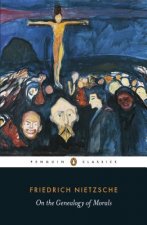
On the Genealogy of Morals
235 Kč -

Fear and Trembling
248 Kč -

Letters from a Stoic
317 Kč -
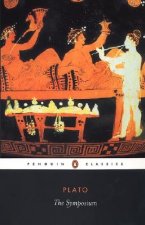
The Symposium
209 Kč -
Meditations
310 Kč -
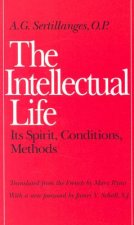
Intellectual Life
389 Kč -
Nicomachean Ethics
139 Kč -
Symposium
162 Kč -
World as Will and Representation, Vol. 1
458 Kč -
Camera Lucida
235 Kč -
Plato: Five Dialogues
372 Kč -

History of Western Philosophy
490 Kč -
Human, All Too Human & Beyond Good and Evil
147 Kč -
Human, All Too Human
248 Kč -

On War
163 Kč -
Montaigne
284 Kč -

World as Will and Representation, Vol. 2
664 Kč -
Joyous Science
282 Kč -

Ecce Homo
244 Kč -
Basic Works of Aristotle
428 Kč -

Candide and Other Stories
147 Kč -

Dark Ecology
534 Kč -
Iamblichus on The Mysteries
1202 Kč -
Existential Psychotherapy
1499 Kč -
Twilight of the Idols
225 Kč -

Aquinas
229 Kč -
Guide to the Good Life
413 Kč -
History of Philosophy Volume 1
704 Kč -
Ecce Homo
168 Kč -
Early Greek Philosophy
740 Kč -
Phenomenology of Perception
864 Kč
Osobní odběr Praha, Brno a 46008 dalších
Copyright ©2008-26 nejlevnejsi-knihy.cz Všechna práva vyhrazenaSoukromíCookies

 Vrácení do měsíce
 571 999 099 (8-15.30h)