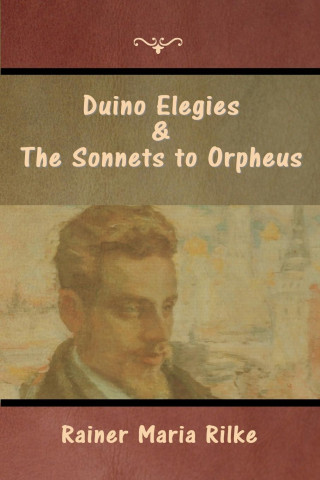
Kód: 42887282
Duino Elegies and The Sonnets to Orpheus
Autor Rainer Maria Rilke
Through most of the 1910s, Rilke had suffered from a severe depression that had kept him from writing. He had begun his Duino Elegies in 1912, and completed parts of it in 1913 and 1915 before being rendered silent by a psychologi ... celý popis


- Jazyk:
 Angličtina
 - Vazba: Brožovaná
- Počet stran: 198
Nakladatelství: IndoEuropeanPublishing.com, 2023
- Více informací o knize


Mohlo by se vám také líbit
-

Letters to a Young Poet
226 Kč -
I Gave You Eyes and You Looked Toward Darkness
219 Kč -

Duino Elegies
288 Kč -

Motive A1-B1
1058 Kč -

100 Bullets Book Five (New Edition)
645 Kč -

Photographer's Guide to the Sony DSC-RX100 VII
875 Kč -

Duino Elegies & The Sonnets to Orpheus
288 Kč -

Effekt Neu 3. Język niemiecki. Liceum i technikum. Zeszyt ćwiczeń. Nowa edycja 2023-2025
350 Kč -

Mrs Dalloway
293 Kč -

Duino Elegies
251 Kč -

Nottingham - Tome 1 - La Rançon du roi
419 Kč -

Skrachovanec
222 Kč -

Sešit A5 linkovaný Spot kraft
41 Kč -

Israel's Divine Healer
386 Kč -

Scientologist!
292 Kč -

Bury Us Upside Down
446 Kč -

Hands-On Industrial Internet of Things - Second Edition
991 Kč -
Duino Elegies and the Sonnets of Orpheus
355 Kč -

HUGUETTE CALAND
568 Kč -

The Climbers, 1 DVD
406 Kč -

Handbuch Gemeindepsychologie
1784 Kč -

Zenobia or The fall of Palmyra, Novel
614 Kč -

Hegel's Lehre Von Der Religion Und Kunst: Von Dem Standpuncte Des Glaubens Aus Beurtheilt (1842)
968 Kč -

The Art of Mentoring: Simple tools & techniques to achieve your full potential
279 Kč -

Winning the Customer: Turn Consumers into Fans and Get Them to Spend More
665 Kč -

Les Celtes de la région parisienne
1280 Kč -

Guide Du Botaniste Dans Le Dauphine, 4
311 Kč -
ultima adunanza. Giulietta e Romeo untold
542 Kč -

Slowa i gramatyka francuska
1115 Kč -

Wisdom
403 Kč -

Terrorista
296 Kč -

Alternative Theories of the State
2438 Kč -

Rechtliche Aspekte Der Praeimplantations- Und Praefertilisationsdiagnostik
2374 Kč -

Origins of Anti-Semitism
1402 Kč -

Fa budskapet att fasta
289 Kč -

Preimplantation Genetic Diagnosis
5353 Kč -

Esquisses de Philosophie Critique
390 Kč -

Le Pour Et Le Contre Sur Un Objet de Grande Discorde Et d'Importance Majeure
311 Kč -
Ciceron, Discours: Tome VIII: Pour Cluentius.
672 Kč -

Oh the Glory of It All
519 Kč -

Run Like the Wind
299 Kč -

Computational Approaches in Chlamydomonas reinhardtii for Effectual Bio-hydrogen Production
1181 Kč
Darujte tuto knihu ještě dnes
- Objednejte knihu a zvolte Zaslat jako dárek.
- Obratem obdržíte darovací poukaz na knihu, který můžete ihned předat obdarovanému.
- Knihu zašleme na adresu obdarovaného, o nic se nestaráte.
Více informací o knize Duino Elegies and The Sonnets to Orpheus
Nákupem získáte 39 bodů
 Anotace knihy
Through most of the 1910s, Rilke had suffered from a severe depression that had kept him from writing. He had begun his Duino Elegies in 1912, and completed parts of it in 1913 and 1915 before being rendered silent by a psychological crisis caused by the events of World War I and his brief conscription into the Austro-Hungarian army. Only in 1920 was he motivated to focus toward completing the Elegies. However, for the next two years, his mode of life was unstable and did not permit him the time or mental state he needed for his writing.
In 1921, Rilke journeyed to Switzerland, hoping to immerse himself among French culture near Geneva and to find a place to live permanently. At the time, he was romantically involved with Baladine Klossowska. At the invitation of Werner Reinhart, Rilke moved into the Château de Muzot, a thirteenth-century manor that lacked gas and electricity, located near Veyras, Rhone Valley, Switzerland. Reinhart, a Swiss merchant and amateur clarinetist, used his wealth to act as a patron to many 20th Century writers and composers. He purchased Muzot to allow Rilke to live there rent-free and focus on his work. Rilke and Klossowska moved in in July 1921 and during the fall Rilke translated writings by Paul Valéry and Michelangelo into German.
With news of the death of his daughter's friend, Wera Knoop, Rilke was inspired to create and set to work on Sonnets to Orpheus. Within a few days, between 2 February and 5 February 1922, he had completed the first section of 26 sonnets. For the next few days, he focused on the Duino Elegies, completing them on the evening of 11 February. Immediately after, he returned to work on the Sonnets and completed the following section of 29 sonnets in less than two weeks. In letters to friends, Rilke referred to this three-week period as a "savage creative storm." Rilke considered both collections to be "of the same birth." Writing to his former lover, Lou Andreas-Salomé, on 11 February, he described this period as "...a boundless storm, a hurricane of the spirit, and whatever inside me is like thread and webbing, framework, it all cracked and bent. No thought of food."
Throughout the Sonnets, Wera appears in frequent references to her, both direct where he addresses her by name and indirect as allusions to a "dancer" or the mythical Eurydice. Later, Rilke wrote to the young girl's mother stating that Wera's ghost was "commanding and impelling" him to write. (wikipedia.org)
Parametry knihy
Zařazení knihy Knihy v němčině Belletristik Erzählende Literatur Hauptwerk vor 1945
388 Kč
- Plný název: Duino Elegies and The Sonnets to Orpheus
- Autor: Rainer Maria Rilke
- Jazyk: Angličtina
- Vazba: Brožovaná
- Počet stran: 198
- EAN: 9798889420651
- ID: 42887282
- Nakladatelství: IndoEuropeanPublishing.com
- Hmotnost: 330 g
- Rozměry: 229 × 152 × 12 mm
- Datum vydání: 26. January 2023
Oblíbené z jiného soudku
-
Restitution
227 Kč -

The Emperor's Enemy (Deluxe Limited Edition)
592 Kč -

Insatiable
227 Kč -

Little Stranger
326 Kč -

Voracious
227 Kč -

The Gate of the Feral Gods
455 Kč -

The Butcher's Masquerade
455 Kč -

Psychotic Obsession
231 Kč -
I Have No Mouth and I Must Scream
301 Kč -

Little Liar
563 Kč -

For the Fans
334 Kč -

Little Mushroom (Deluxe Hardcover Novel) Vol. 1
472 Kč -

Fallen Rook (Deluxe Edition)
361 Kč -

The Eye of the Bedlam Bride
460 Kč -

This Inevitable Ruin
455 Kč -

Grandmaster of Demonic Cultivation: Mo DAO Zu Shi (Deluxe Hardcover Novel) Vol. 5
540 Kč -

Releasing 10
227 Kč -

Grim Tidings
226 Kč -

Goodbye, Eri
248 Kč -

I Want You to Be Happy
302 Kč -

A court of silver flames
227 Kč -

The Long Game
227 Kč -

Daybreak
243 Kč -

Red Rising 3-Book Box Set
627 Kč -

Tough Guy
227 Kč -

Case File Compendium: Bing an Ben (Novel) Vol. 9
321 Kč -

Role Model
227 Kč -

Lights Out
227 Kč -

The Correspondent
206 Kč -

Kiss the Villain
174 Kč -

Tempting Venom (Deluxe Edition)
322 Kč -

Heated Rivalry
227 Kč -

Lonesome Dove
276 Kč -

Common Goal
227 Kč -

Heated Rivalry
414 Kč -

If It Makes You Happy
219 Kč -

Ballad of Sword and Wine: Qiang Jin Jiu (Novel) Vol. 8 (Special Edition)
448 Kč -

John of John
339 Kč -

Tempting Venom
227 Kč -

Caught Up
227 Kč -

Taiwan Travelogue
318 Kč -

Daggermouth
593 Kč -

The Disappearers
379 Kč -

New Moon Deluxe Collector's Edition
629 Kč -

Chokehold
557 Kč -

Heart the Lover
210 Kč -

Rebecca
221 Kč -

The Buffalo Hunter Hunter
223 Kč -

Heated Rivalry Deluxe Limited Edition
236 Kč
Osobní odběr Praha, Brno a 48423 dalších
Copyright ©2008-26 nejlevnejsi-knihy.cz Všechna práva vyhrazenaSoukromíCookies

 Vrácení do měsíce
 571 999 099 (8-15.30h)