Kód: 04709199
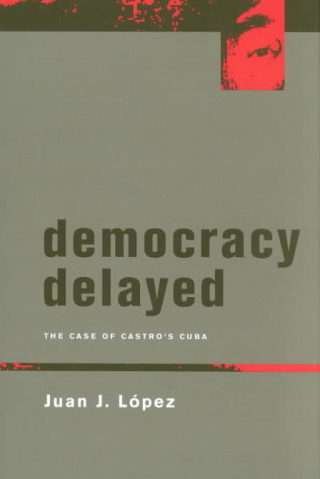
Democracy Delayed
Autor Juan J. Lopez
With the dissolution of the Soviet Union, foreign policy analysts and international relations scholars expected communist Cuba to undergo transitions to democracy and to markets as had the Eastern European nations of the former So ... celý popis


- Jazyk:
 Angličtina
 - Vazba: Pevná
- Počet stran: 272
Nakladatelství: Johns Hopkins University Press, 2002
- Více informací o knize

1259 Kč
Dostupnost:
50 % šance Máme informaci, že by titul mohl být dostupný. Na základě vaší objednávky se ho pokusíme do 6 týdnů zajistit.
Prohledáme celý svět
Mohlo by se vám také líbit
-

Piano Adventures Theory Book Level 3B
185 Kč -

Side by Side
183 Kč -

Norwegian Wood Tokyo Blues
413 Kč -

Threads
774 Kč -

Kawasaki 400, 500 & 550 Fours (79 - 91)
1013 Kč -

Cardiff and District 1890
117 Kč -

Konstruktionsdetails im Garten- und Landschaftsbau
1623 Kč -

Dialectic of Nihilsm - Post-Structuralism and Law
1137 Kč -

National Geographic Investigates
333 Kč -

Bent
401 Kč -

Active RC Filter Design
3408 Kč -

Masculine of 'Virgin'
394 Kč -

Crossing the 49th Parallel
1926 Kč -

Desloges Family
381 Kč -

Distributed Model Predictive Control Made Easy
3532 Kč -

Multipreneurship
5510 Kč -

Fates of Political Liberalism in the British Post-Colony
2780 Kč -

Replique A M. Seymour (Auguste)
258 Kč -

Customer-Driven Organization
1379 Kč -

Piratenkarte (Kinderpuzzle)
241 Kč -

Glass is Elastic
420 Kč
Dárkový poukaz: Radost zaručena
- Darujte poukaz v libovolné hodnotě a my se postaráme o zbytek.
- Poukaz se vztahuje na celou naši nabídku.
- Elektronický poukaz vytisknete z e-mailu a můžete ihned darovat.
- Platnost poukazu je 12 měsíců od data vystavení.
Informovat o naskladnění knihy
Zadejte do formuláře e-mailovou adresu a jakmile knihu naskladníme, zašleme vám o tom zprávu. Pohlídáme vše za vás.
Více informací o knize Democracy Delayed
Nákupem získáte 126 bodů
 Anotace knihy
With the dissolution of the Soviet Union, foreign policy analysts and international relations scholars expected communist Cuba to undergo transitions to democracy and to markets as had the Eastern European nations of the former Soviet bloc. But more than a decade after the fall of the Berlin Wall, Castro remains in power, with no sign that the Cuban government or economy is moving toward liberalization. In Democracy Delayed, political scientist Juan Lopez offers a searching and detailed analysis of the factors behind Cuba's failure to liberalize. Lopez begins by comparing the political systems of three Eastern European states-the former German Democratic Republic, Czechoslovakia, and Romania-with that of Cuba, in order to identify the differences that have allowed Castro to maintain his hold over the government and the economy. Lopez also shows the various conditions promoting change, including the development of civil society groups in Cuba, and discusses why some U.S. policies help the possibility of democratization in Cuba while others hinder it. While the Catholic Church in Poland and the Protestant Church in East Germany fostered change, the Catholic Church in Cuba has not taken a defiant stance against authoritarianism but seems instead to be biding its time until Castro is out of the picture. In conclusion, Lopez argues that a political transition in Cuba is possible even under the government of Fidel Castro. Some necessary conditions have been missing, but it is possible that U.S. policies could lay the groundwork for democratic charge.
Parametry knihy
Zařazení knihy Knihy v angličtině Society & social sciences Politics & government Political ideologies
1259 Kč
- Plný název: Democracy Delayed
- Podnázev: The Case of Castro's Cuba
- Autor: Juan J. Lopez
- Jazyk: Angličtina
- Vazba: Pevná
- Počet stran: 272
- EAN: 9780801870460
- ISBN: 0801870461
- ID: 04709199
- Nakladatelství: Johns Hopkins University Press
- Hmotnost: 499 g
- Rozměry: 229 × 152 × 21 mm
- Datum vydání: 15. December 2002
Oblíbené z jiného soudku
-

The Communist Manifesto
95 Kč -

Capital
159 Kč -

The Unabomber Manifesto
216 Kč -

Blackshirts and Reds
287 Kč -

State and Revolution
153 Kč -

Imperialism the Highest Stage of Capitalism
165 Kč -

Communist Manifesto
163 Kč -
![What Is to Be Done? [Burning Questions of Our Movement]](https://media.libris.to/jacket/08800888t.jpg "What Is to Be Done? [Burning Questions of Our Movement]")
What Is to Be Done? [Burning Questions of Our Movement]
172 Kč -

Rules for Radicals
335 Kč -

Reform or Revolution and Other Writings
300 Kč -

Anatomy of Fascism
276 Kč -

Czechoslovak Arms Exports to the Middle East Volume 5
455 Kč -

Law
185 Kč -
Critique of the Gotha Program
237 Kč -

Why Women Have Better Sex Under Socialism
319 Kč -

Marx's Capital
257 Kč -

From Marx To Gramsci
557 Kč -

Terrorism and Communism
538 Kč -

Understanding the F-Word
358 Kč -

Mutual Aid
291 Kč -

Death of the Liberal Class
342 Kč -

Is Europe Christian?
577 Kč -

Red Symphony
258 Kč -

The Communist Manifesto
50 Kč -

Road to Serfdom
350 Kč -

Fanged Noumena - Collected Writings 1987-2007
502 Kč -

Notes on Nationalism
82 Kč -

Capital
357 Kč -

Capital
381 Kč -

Capital
362 Kč -

Capital
236 Kč -

Why Marx Was Right
302 Kč -

Essential Rosa Luxemburg
378 Kč -

Rights of Man, Common Sense, and Other Political Writings
191 Kč -

Anarchism and Other Essays
272 Kč -

Why Liberalism Failed
320 Kč -

Democratic Paradox
391 Kč -

Communist Manifesto and Das Kapital
210 Kč -

Fields, Factories, and Workshops
235 Kč -

Imagined Communities
318 Kč -

Communist Manifesto
154 Kč -

Occult Roots of Nazism
332 Kč -

Anti-Duhring
428 Kč -
ABCs of Socialism
264 Kč -

Communist Manifesto
373 Kč -

Companion To Marx's Capital
567 Kč -

Liberal Leviathan
773 Kč -

Anti-Bolshevik Communism
423 Kč -

Prison Notebooks
2530 Kč
Osobní odběr Praha, Brno a 48465 dalších
Copyright ©2008-26 nejlevnejsi-knihy.cz Všechna práva vyhrazenaSoukromíCookies

 Vrácení do měsíce
 571 999 099 (8-15.30h)