Kód: 52865307
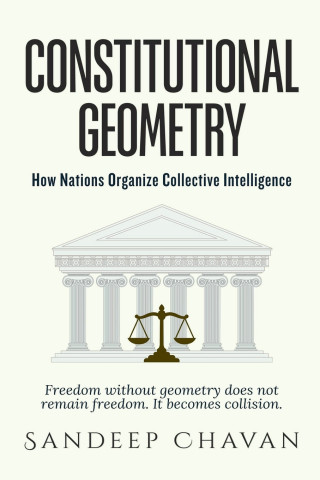
Constitutional Geometry
Autor Sandeep Chavan
Constitutional Geometry: How Nations Organize Collective Intelligence presents a powerful new lens for understanding constitutions, nations, institutions, citizenship, power, justice, and civilizational harmony.This book argues th ... celý popis


- Jazyk:
 Angličtina
 - Vazba: Brožovaná
- Počet stran: 440
Nakladatelství: Gyrus Vision, 2026
- Více informací o knize


Mohlo by se vám také líbit
-

Moonwalk
283 Kč -

The Score
276 Kč -

The Deal
254 Kč -

The Mistake
227 Kč -

Jujutsu Kaisen, Vol. 30
227 Kč -

The Goal
276 Kč -

Berserk Deluxe Volume 1
779 Kč -

Invincible Compendium Volume 2
1167 Kč -

Berserk Deluxe Volume 2
837 Kč -

Legacy
248 Kč -

Lord of Mysteries, Vol. 3: The Clown, Part III
338 Kč -

Murdoku
358 Kč -

Witch Hat Atelier: Grimoire Edition 1
1130 Kč -

JoJo's Bizarre Adventure: Part 7--Steel Ball Run, Vol. 7
427 Kč -

Jujutsu Kaisen, Vol. 25
221 Kč -

Witch Hat Atelier Manga Box Set 1
1241 Kč -

Jujutsu Kaisen, Vol. 26
225 Kč -

Heated Rivalry
227 Kč -

Berserk Deluxe Volume 3
779 Kč -

The Deal
334 Kč -

Murdoku
334 Kč
Darujte tuto knihu ještě dnes
- Objednejte knihu a zvolte Zaslat jako dárek.
- Obratem obdržíte darovací poukaz na knihu, který můžete ihned předat obdarovanému.
- Knihu zašleme na adresu obdarovaného, o nic se nestaráte.
Informovat o naskladnění knihy
Zadejte do formuláře e-mailovou adresu a jakmile knihu naskladníme, zašleme vám o tom zprávu. Pohlídáme vše za vás.
Více informací o knize Constitutional Geometry
Nákupem získáte 126 bodů
 Anotace knihy
Constitutional Geometry: How Nations Organize Collective Intelligence presents a powerful new lens for understanding constitutions, nations, institutions, citizenship, power, justice, and civilizational harmony.
This book argues that a constitution is not merely a legal document, political contract, or symbolic national text. It is the living geometry through which a civilization organizes its collective intelligence. It gives shape to power, freedom, rights, duties, justice, identity, reform, feedback, institutions, and public consciousness. A constitution does not create an ideal nation. It gives a living civilization the structure required to correct itself without destroying itself.
Sandeep Chavan develops the idea of "constitutional geometry" as the boundary architecture of national life. Through this framework, he explains why intelligence needs constraints, why power naturally expands, why freedom requires responsibility, why rights and duties must remain connected, why justice is not revenge, why reform must not become destruction, and why harmony is the final purpose of constitutional life.
The book moves beyond conventional legal discussion and treats the Constitution as a living civic architecture. It examines the anatomy of constitutional systems: power, rights, duties, institutions, feedback, stability, flexibility, reform, citizenship, and public consciousness. It also identifies deep constitutional distortions: domination disguised as order, chaos disguised as freedom, permanent privilege, permanent victimhood, identity over citizenship, emotional governance, and institutional capture.
A major section of the book studies national models as constitutional geometries. India is explored as absorption geometry, America as competition geometry, China as coordination geometry, Europe as consensus geometry, and failed or fragile states as survival geometry. These models are not treated as objects of praise or condemnation, but as different ways nations organize collective intelligence under historical, cultural, institutional, and civilizational pressures.
The final part of the book turns toward constitutional consciousness. A constitution survives not only in courts, parliaments, laws, or official ceremonies, but in the minds of citizens. Citizens must understand why power needs limits, why freedom needs structure, why institutions must remain independent, why identity must remain under citizenship, and why public emotion must pass through truth and process before becoming governance.
Written for common readers, students, educators, policymakers, researchers, civic thinkers, political philosophers, and constitution writers, Constitutional Geometry offers a serious yet accessible framework for understanding how nations remain stable, fair, free, reformable, and harmonious under pressure.
This book is not a legal textbook. It is a civic and civilizational lens.
Its final thesis is clear: a constitution is not sacred because it is written. It becomes sacred only when it preserves life, dignity, justice, order, freedom, correction, and harmony.
Parametry knihy
1264 Kč
- Plný název: Constitutional Geometry
- Autor: Sandeep Chavan
- Jazyk: Angličtina
- Vazba: Brožovaná
- Počet stran: 440
- EAN: 9798235607255
- ID: 52865307
- Nakladatelství: Gyrus Vision
- Hmotnost: 586 g
- Rozměry: 229 × 152 × 25 mm
- Datum vydání: 10. June 2026
Osobní odběr Praha, Brno a 46795 dalších
Copyright ©2008-26 nejlevnejsi-knihy.cz Všechna práva vyhrazenaSoukromíCookies

 Vrácení do měsíce
 571 999 099 (8-15.30h)