Kód: 53870801
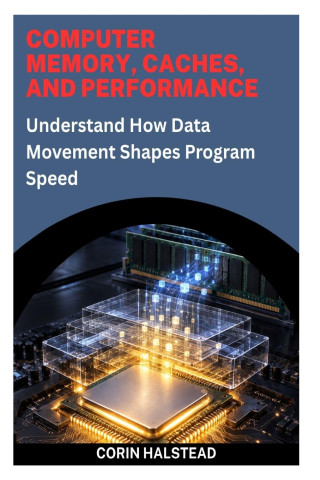
COMPUTER MEMORY, CACHES, AND PERFORMANCE
Autor CORIN HALSTEAD
Why does faster hardware sometimes fail to make software faster? Why can adding more threads stop improving throughput? And why can a small change in data layout suddenly transform application performance?Modern processors can per ... celý popis


- Jazyk:
 Angličtina
 - Vazba: Brožovaná
- Počet stran: 166
Nakladatelství: Independently published, 2026
- Více informací o knize


Mohlo by se vám také líbit
-

Threshing Day (Wing and Claw Collection)
400 Kč -

Threshing Day (Limited Deluxe Edition)
473 Kč -

Murdoku
334 Kč -

Berserk Deluxe Volume 1
878 Kč -

What Happened Yesterday
380 Kč -

White Nights
89 Kč -

Berserk Deluxe Volume 2
942 Kč -

Berserk Deluxe Volume 3
801 Kč -

Court of Thorns and Roses 6
358 Kč -

Jojo's Bizarre Adventure: Part 7--Steel Ball Run, Vol. 8
427 Kč -

Onyx Storm (Deluxe Limited Edition) (The Empyrean, 3)
551 Kč -

Dancing The Dream
482 Kč -

Kid's Box New Generation Level 2 Activity Book with Digital Pack British English
251 Kč -

21 Days of Fear
381 Kč -

Yesteryear
325 Kč -

Murdoku
379 Kč -

The Courage To Be Disliked
206 Kč -

Kid's Box New Generation Level 3 Activity Book with Digital Pack British English
251 Kč -

Kid's Box New Generation Level 1 Activity Book with Digital Pack British English
251 Kč -

Witch Hat Atelier: Grimoire Edition 1
801 Kč -

The Count of Monte Cristo
227 Kč
Darujte tuto knihu ještě dnes
- Objednejte knihu a zvolte Zaslat jako dárek.
- Obratem obdržíte darovací poukaz na knihu, který můžete ihned předat obdarovanému.
- Knihu zašleme na adresu obdarovaného, o nic se nestaráte.
Více informací o knize COMPUTER MEMORY, CACHES, AND PERFORMANCE
Nákupem získáte 42 bodů
 Anotace knihy
Why does faster hardware sometimes fail to make software faster? Why can adding more threads stop improving throughput? And why can a small change in data layout suddenly transform application performance?
Modern processors can perform extraordinary amounts of computation, but computation is only part of the performance story. Before useful work can happen, instructions and data must move through registers, caches, translation structures, main memory, interconnects, and sometimes accelerator memory. When that movement becomes inefficient, even powerful hardware can spend valuable time waiting.
Computer Memory, Caches, and Performance gives developers, systems engineers, students, and performance professionals a practical framework for understanding how data movement shapes real-world software speed.
Beginning with latency, bandwidth, locality, and parallelism, Corin Halstead explains how modern memory hierarchies behave and why working-set size can create sudden performance cliffs. You will learn how CPU caches actually use lines, sets, associativity, replacement, prefetching, and write policies-and why seemingly independent variables can interfere through false sharing and coherence traffic.
The book then moves deeper into DRAM channels, banks, memory controllers, bandwidth saturation, virtual memory, TLBs, page-table walks, page faults, huge pages, NUMA placement, thread affinity, and multicore scalability.
But this is not simply a hardware reference. The emphasis remains on better software decisions. Discover how data layout, compact representations, loop order, tiling, batching, allocation patterns, copy avoidance, and ownership design can reduce unnecessary movement and improve useful work per byte.
Dedicated chapters show how to measure these effects using hardware performance counters, profiles, traces, size sweeps, scaling experiments, and roofline-style reasoning. The same principles are then applied to web services, databases, analytics, scientific computing, cloud systems, GPUs, HBM, unified memory, and modern accelerator workloads.
With practical examples, case studies, professional checklists, troubleshooting patterns, a 30-day learning sequence, and a complete Memory Performance Investigation Playbook, this book helps you replace performance guesswork with evidence.
Follow the data, identify the real bottleneck, and make optimization decisions you can measure and defend.
Parametry knihy
423 Kč
- Plný název: COMPUTER MEMORY, CACHES, AND PERFORMANCE
- Podnázev: Understand How Data Movement Shapes Program Speed
- Autor: CORIN HALSTEAD
- Jazyk: Angličtina
- Vazba: Brožovaná
- Počet stran: 166
- EAN: 9798173442154
- ID: 53870801
- Nakladatelství: Independently published
- Hmotnost: 210 g
- Rozměry: 229 × 152 × 11 mm
- Datum vydání: 11. September 2026
Osobní odběr Praha, Brno a 47805 dalších
Copyright ©2008-26 nejlevnejsi-knihy.cz Všechna práva vyhrazenaSoukromíCookies

 Vrácení do měsíce
 571 999 099 (8-15.30h)