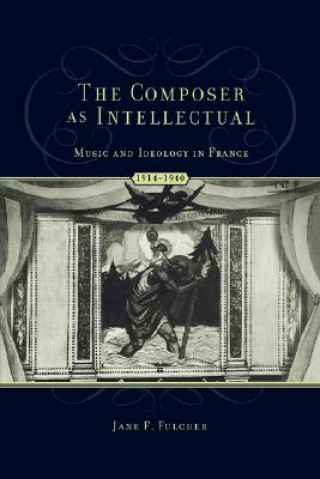
Kód: 04032035
Composer as Intellectual
Autor Jane F. Fulcher
In The Composer as Intellectual, musicologist Jane Fulcher reveals the extent to which leading French composers between the world wars were not only aware of, but engaged intellectually and creatively with the central political an ... celý popis


- Jazyk:
 Angličtina
 - Vazba: Brožovaná
- Počet stran: 488
Nakladatelství: Oxford University Press Inc, 2008
- Více informací o knize


Mohlo by se vám také líbit
-

Atomic Habits
344 Kč -

Platinum End, Vol. 4
191 Kč -

Tajikistan
418 Kč -

Dog Man
219 Kč -

Circle of Life
276 Kč -
Love and Other Words
219 Kč -

Information Theory
561 Kč -

Where Hope Comes From
317 Kč -

What You Never Knew about Timothée Chalamet
169 Kč -

Arithmetic
503 Kč -

Mayor of Casterbridge
190 Kč -

Fundamentals of Microelectronics With Robotics and Bioengineering Applications, 3rd Edition
3075 Kč -

To Catch a Firefly
609 Kč -

History of World War II
554 Kč -

Imaginary Girlfriend
514 Kč -

A Court of Silver Flames
702 Kč -

Essential Tarot
634 Kč -

Rosicrucian Magic
1092 Kč -

Animal Guide Rune Cards
529 Kč -

Conflict Resolution for Holy Beings
288 Kč -

Knock Knock Passive Aggressive Nifty Note (Pastel Version)
134 Kč -

The Pug Who Wanted to be a Witch
197 Kč -

Dragon Ball Freezer 3
439 Kč -

Premières lectures syllabiques CP Niv 3 - A l'école
185 Kč -

Tecumseh
65 Kč -

Trekking Nepal
618 Kč -

Cría Hijos Que Respeten a Las Chicas (Raising Boys Who Respect Girls, Spanish Edition): Supera La Mentalidad Machista, Los Puntos Ciegos, Y El Sexismo
300 Kč -

Relax Baby Be Cool
361 Kč -

What Do Women Want?
391 Kč -

Dřevěné puzzle Australská zvířata 96 dílků
257 Kč -

Biopolymers - New Materials for Sustainable Films and Coatings
2758 Kč -

Groundwater Science
2140 Kč -

ESV Single Column Journaling Bible
780 Kč -

Solo
251 Kč -

The Chronology of Ancient Kingdoms Amended
837 Kč -

Battlefields of the First World War
1563 Kč -

All the Multivese! II Between Multiverse Universes; Quantum Entanglement Explained by the Multiverse; Coherent Baryonic Radiation Devices - Phasers; N
685 Kč -

Cake Theory
354 Kč -

Caliphs and their Non-Muslim Subjects
1578 Kč -

Sea Jellies
657 Kč -

500 baden-württembergische Rekorde
388 Kč -

Die Expedition Gegen Chiwa Im Jahre 1873 (1874)
619 Kč -

Multichip Module Technologies and Alternatives: The Basics
5981 Kč -

Integr T M Rketinga Komunik Cija Viesn C
1014 Kč -

Syria
671 Kč -

Political Ideology in the Arab World
835 Kč -

Entretien d'Un Maire Et d'Un Electeur
315 Kč -

Surfactant Aggregation
1182 Kč -

English Nonconformist Poetry, 1660-1700, vol 2
4606 Kč -

La confrérie du Saint-Esprit, chronique marseillaise de l'an 1228. Tome 1
445 Kč -

Father Smith Instructs Jackson
641 Kč -

Bndl: Elementary and Intermediate Algebra
7095 Kč -

Highlights of Astronomy
2357 Kč -

Joe Biden
453 Kč -

Mathematical Approaches to Biomolecular Structure and Dynamics
2357 Kč -

Volver al origen
548 Kč -

Turkish Natural Language Processing
2357 Kč -

Vegan
410 Kč -

Challenging Cases in Endocrinology
5943 Kč -

Introduction to Computational Modeling Using C and Open-Source Tools
4595 Kč -

FANTASTISCH! 1RE ANNEE - LIVRE DU PROFESSEUR
611 Kč -

Detectors for Particle Radiation
3856 Kč -

Biodiversity
1001 Kč -

Hot Topics in Infection and Immunity in Children V
4059 Kč -

Environmental Case
1306 Kč -

Decarbonizing development
650 Kč -

UNIX For Dummies Quick Reference 4e
442 Kč -

Development in Context
4835 Kč -

Colour And Create alphabet: A Fun Coloring Activity Book For 2-5 Year, words From A-Z, Alphabet Coloring 8.5 x 11 Pad, Activity Book for Toddlers
176 Kč -

Papillomaviruses in Human Cancer
1182 Kč -

Krieg in China 1900 - 1901 nebst einer Beschreibung der Sitten, Gebrauche und Geschichte des Landes
805 Kč -

Future-Marketing | Zukunftsmarketing
208 Kč -

The Talmud
2937 Kč -

Tales from Shakespeare: Coloring book
154 Kč -

Didáctica de las Ciencias Experimentales II
469 Kč -

Trastorno límite de la personalidad : profundizando en el caos
746 Kč -

Was ist Soziologie?
436 Kč
Darujte tuto knihu ještě dnes
- Objednejte knihu a zvolte Zaslat jako dárek.
- Obratem obdržíte darovací poukaz na knihu, který můžete ihned předat obdarovanému.
- Knihu zašleme na adresu obdarovaného, o nic se nestaráte.
Více informací o knize Composer as Intellectual
Nákupem získáte 106 bodů
 Anotace knihy
In The Composer as Intellectual, musicologist Jane Fulcher reveals the extent to which leading French composers between the world wars were not only aware of, but engaged intellectually and creatively with the central political and ideological issues of the period. Employing recent sociological and historical insights, she demonstrates the extent to which composers, particularly those in Paris since the Dreyfus Affair, considered themselves and were considered to be intellectuals, and interacted closely with intellectuals in other fields. Their consciousness raised by the First World War and the xenophobic nationalism of official culture, some joined parties or movements, allying themselves with and propagating different sets of cultural and political-social goals. Fulcher shows how these composers furthered their ideals through the specific language and means of their art, rejecting the dominant cultural exclusions or constraints of conservative postwar institutions and creatively translating their cultural values into terms of form and style. This was not only the case with Debussy in wartime, but with Ravel in the twenties, when he became a socialist and unequivocally rejected a narrow, exclusionary nationalism. It was also the case with the group called "Les Six," who responded culturally in the twenties and then politically in the thirties, when most of them supported the programs of the Popular Front. Others could not be enthusiastic about the latter and, largely excluded from official culture, sought out other more compatible movements or returned to the Catholic Church. Like other French Catholics, they faced the crisis of Catholicism in the thirties when the church not only supported Franco, but Mussolini's imperialistic aggression in Ethiopia. While Poulenc embraced traditional Catholicism, Messiaen turned to more progressive Catholic movements that embraced modern art and insisted that religion must cross national and racial boundaries. Fulcher demonstrates how closely music had become a field of clashing ideologies in this period. She shows also how certain French composers responded, and how their responses influenced specific aspects of their professional and stylistic development. She thus argues that, from this perspective, we can not only better understand specific aspects of the stylistic evolution of these composers, but also perceive the role that their art played in the ideological battles and in heightening cultural-political awareness of their time.
Parametry knihy
Zařazení knihy Knihy v angličtině The arts Music Music: styles & genres
1057 Kč
- Plný název: Composer as Intellectual
- Autor: Jane F. Fulcher
- Jazyk: Angličtina
- Vazba: Brožovaná
- Počet stran: 488
- EAN: 9780195342963
- ISBN: 0195342968
- ID: 04032035
- Nakladatelství: Oxford University Press Inc
- Hmotnost: 691 g
- Rozměry: 234 × 156 × 25 mm
- Datum vydání: 20. March 2008
Oblíbené z jiného soudku
-

Moonwalk
270 Kč -

Dancing The Dream
522 Kč -

Michael Jackson
570 Kč -

Just Kids
277 Kč -

You Are Not Alone
340 Kč -

M Train
335 Kč -

Yann Tiersen - Piano Works
598 Kč -

Michael Jackson King of Pop 1958-2009
337 Kč -

Standing in the Shadows of Motown
645 Kč -

Jazz Theory Book
1222 Kč -

Absolutely on Music
210 Kč -

Twentieth-Century Harmony
1221 Kč -

Road Goes Ever on
581 Kč -

Look at Me!
404 Kč -
Paganini: Twenty-Four Caprices for the Violin, Op. 1
217 Kč -

Penguin Jazz Guide
621 Kč -

Elvis and the Memphis Mafia
334 Kč -

Grunge is Dead
380 Kč -

Playalong 50/50
615 Kč -

Michael Jackson
667 Kč -
Complete Preludes, Nocturnes & Waltzes
408 Kč -

Everybody Loves Our Town
314 Kč -

Library of Piano Classics
496 Kč -

Inner Voice
487 Kč -

Scar Tissue
365 Kč -

Mozart - Favorite Piano Works
335 Kč -

Complete Classical Music Guide
457 Kč -

Rock Keyboard
421 Kč -

Thinking in Jazz
1020 Kč -

ABBA Gold
538 Kč -

Last Party
282 Kč -

Phil Lynott: The Rocker
288 Kč -

Madonna Confessions
811 Kč -

My Damage
334 Kč -
O'Neill's Music Of Ireland (Revised)
615 Kč -

I'll Sleep When I'm Dead
334 Kč -

Jazz
1167 Kč -

Head-On/Repossessed
315 Kč -

Classic Paul Simon
561 Kč -

History of Opera
506 Kč -

Twenty-First Century Musicals
1379 Kč -

Fortunate Son
381 Kč -

Book of Sea Shanties
287 Kč -
Sightsinging (The Complete Method for Singers)
492 Kč -

Elvis and Me
181 Kč -

Real Book
858 Kč -

Lords Of Chaos - 2nd Edition
365 Kč -

I'm with the Band
287 Kč -

Iron Man
392 Kč
Osobní odběr Praha, Brno a 46811 dalších
Copyright ©2008-26 nejlevnejsi-knihy.cz Všechna práva vyhrazenaSoukromíCookies

 Vrácení do měsíce
 571 999 099 (8-15.30h)