Kód: 52451533
Cold War Long-Range Jet Fighter Program
Autor William Wolf
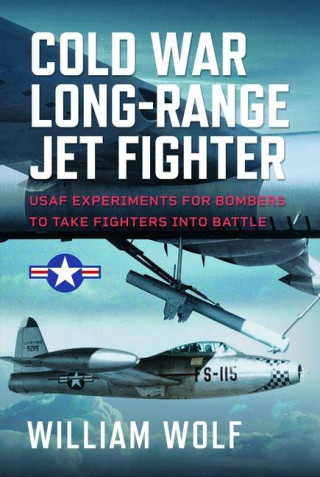
After the Second World War, the introduction of the six-engine Consolidated-Vultee B-36 Peacemaker bomber, capable of intercontinental ranges of 5,000 miles or more, reignited the long-standing problem of fighter escort. Early-gen ... celý popis


- Jazyk:
 Angličtina
 - Vazba: Pevná
- Počet stran: 320
Nakladatelství: Pen & Sword Books Ltd, 2026
- Více informací o knize


Mohlo by se vám také líbit
-

Murdoku
319 Kč -

Threshing Day (Wing and Claw Collection)
400 Kč -

Berserk Deluxe Volume 1
860 Kč -

Threshing Day (Limited Deluxe Edition)
473 Kč -

Berserk Deluxe Volume 2
917 Kč -

White Nights
89 Kč -

Moonwalk
231 Kč -

The Odyssey
320 Kč -

Berserk Deluxe Volume 3
779 Kč -

Kid's Box New Generation Level 2 Activity Book with Digital Pack British English
288 Kč -

Dancing The Dream
482 Kč -

The Score
232 Kč -

Murdoku Volume 2: Back in Time
309 Kč -

Kid's Box New Generation Level 2 Pupil's Book with eBook British English
376 Kč -

Onyx Storm (Deluxe Limited Edition) (The Empyrean, 3)
550 Kč -

Jujutsu Kaisen, Vol. 26
225 Kč -

The Mistake
222 Kč -

Kid's Box New Generation Level 1 Activity Book with Digital Pack British English
288 Kč -

Kid's Box New Generation Level 3 Activity Book with Digital Pack British English
288 Kč -

Lord of Mysteries, Vol. 3: The Clown, Part III
354 Kč -

Lord of Mysteries, Vol. 1: The Clown, Part I
349 Kč
Darujte tuto knihu ještě dnes
- Objednejte knihu a zvolte Zaslat jako dárek.
- Obratem obdržíte darovací poukaz na knihu, který můžete ihned předat obdarovanému.
- Knihu zašleme na adresu obdarovaného, o nic se nestaráte.
Informovat o naskladnění knihy
Zadejte do formuláře e-mailovou adresu a jakmile knihu naskladníme, zašleme vám o tom zprávu. Pohlídáme vše za vás.
Více informací o knize Cold War Long-Range Jet Fighter Program
Nákupem získáte 72 bodů
 Anotace knihy
After the Second World War, the introduction of the six-engine Consolidated-Vultee B-36 Peacemaker bomber, capable of intercontinental ranges of 5,000 miles or more, reignited the long-standing problem of fighter escort. Early-generation US jet fighters consumed enormous amounts of fuel and lacked the endurance to accompany the B-36 over extended distances. Designing a jet fighter with enough fuel capacity for such missions would result in an aircraft far too large and unwieldy to engage smaller, more agile enemy interceptors effectively. In response, during the early Cold War, the United States Air Force explored two experimental methods to extend fighter range. The first was wingtip-to-wingtip towing, in which a fighter would attach itself to the bomber’s wing for fuel support. The second involved carrying a fighter inside the bomber’s bomb bay on a trapeze mechanism, allowing it to be launched and later recovered in flight. Because the B-36 faced developmental delays, the widely available Boeing B-29 Superfortress initially served as the test platform. Boeing ETB-29A bombers were paired with Republic EF-84D Thunderjet fighters, which practiced attaching and detaching from the B-29 wingtips. Following these early trials, the concept of the bomb-bay-mounted ‘parasite’ fighter resurfaced with the diminutive, jet-powered XP-85 Goblin. Designed exclusively as a parasite aircraft, the Goblin could launch from the B-36 to intercept enemy aircraft and later dock again in midair. Despite promising test flights, docking challenges and the Goblin’s underwhelming performance relative to enemy jets led to cancellation. In 1952–53, the FICON (FIghter CONveyor) program tested carrying an RF-84F/K Thunderflash inside the B-36’s trapeze-equipped bomb bay. While escort missions were initially envisioned, the program shifted toward tactical reconnaissance and strike missions. The B-36 would deliver the faster, more agile fighter near a target for reconnaissance or nuclear strike, then recover it afterward. The success of the U-2 spy plane and midair refueling ultimately rendered parasite aircraft experiments obsolete. Packed with over 150 photographs, this book is the first to examine this extraordinary and unusual chapter in Cold War aviation history, highlighting some of the most inventive and unconventional experiments ever attempted.
Parametry knihy
715 Kč
- Plný název: Cold War Long-Range Jet Fighter Program
- Podnázev: USAF Experiments for Bombers to Take Fighters into Battle
- Autor: William Wolf
- Jazyk: Angličtina
- Vazba: Pevná
- Počet stran: 320
- EAN: 9781036196080
- ID: 52451533
- Nakladatelství: Pen & Sword Books Ltd
- Rozměry: 234 × 156 mm
- Datum vydání: 30. September 2026
Osobní odběr Praha, Brno a 48476 dalších
Copyright ©2008-26 nejlevnejsi-knihy.cz Všechna práva vyhrazenaSoukromíCookies

 Vrácení do měsíce
 571 999 099 (8-15.30h)