Kód: 02732564
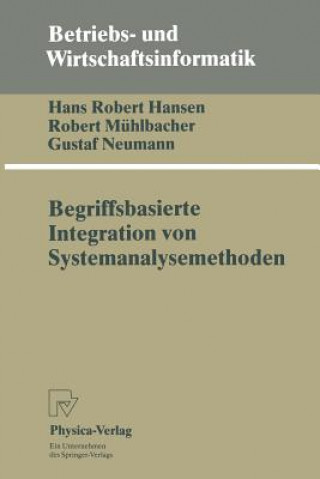
Begriffsbasierte Integration von Systemanalysemethoden
Autor Hans R. Hansen, Robert Mühlbacher, Gustaf Neumann
As more and more information is being computerized, it is becoming harder and harder to share. When everything was on paper, people could read reports written by other people working in the same profession. But when everything is ... celý popis


- Jazyk:
 Němčina
 - Vazba: Brožovaná
- Počet stran: 436
Nakladatelství: Springer-Verlag Berlin and Heidelberg GmbH & Co. KG, 1992
- Více informací o knize


Mohlo by se vám také líbit
-

All Quiet on the Western Front
226 Kč -

Láss egyre több csodát! - Állj meg, vedd észre a természet rejtett pillanatait!
352 Kč -

Porsche 968
756 Kč -

The Power of Strangers
419 Kč -

Mandala. Black premium. Colouring book antistress
285 Kč -

Dosť dobrý život
326 Kč -

Soviet Field Fortifications 1941-45
413 Kč -

Meine Taufe
249 Kč -

Earthquake Hazard and Risk
3734 Kč -

Anish Kapoor
5319 Kč -

Form and Intertextuality in Prophetic and Apocalyptic Literature
3074 Kč -

Weight of Sand
491 Kč -

God's Legacy of Love - Jesus
524 Kč -

Síntesis de magemita para aplicaciones biomédicas
863 Kč -

Solid Edge 2022 Basics and Beyond (Colored)
1056 Kč -

Transmission Du Vih Et Cavit Buccale
844 Kč -

Extreme Transformation Temple-Edition
565 Kč -

An Introduction to Welding Inspection
631 Kč -

Dead Right Returning
299 Kč -

Hunting Reminiscences (History of Hunting Series - Drag Hunting & Terriers)
502 Kč -

Narrative of What Passed at Killalla, in the County of Mayo, and the Parts Adjacent, During the French Invasion in the Summer of 1798. By an Eyewitnes
728 Kč -

Energy 2000-2020: World Prospects and Regional Stresses
1250 Kč -

Das Liebesleben des Sanskritvolkes
1035 Kč -

Reviews in Fluorescence 2007
3734 Kč -

Grandma's Rhythm and Rhymes
299 Kč -

Apprentice Still
235 Kč -

Dezentrale Warenübergabesysteme im E-Commerce
1208 Kč -

Minutes of Proceedings of the Institution of Civil Engineers, Volume 1
924 Kč -

Powerboat Maintenance Manual
1049 Kč -

Conflict and Tradeoffs in Decision Making
1637 Kč -

Mark Twain and Orion Clemens
827 Kč -

Heaven and Earth Unveiled: European Treasures from the Tanenbaum Collection
1074 Kč -

Integrating Complementary Medicine into Healing
5780 Kč -

Management of Agricultural Sector in Amravati District- A Survey
1786 Kč -

HR for SMEs: 3-steps to building your Human Resources foundation
299 Kč
Darujte tuto knihu ještě dnes
- Objednejte knihu a zvolte Zaslat jako dárek.
- Obratem obdržíte darovací poukaz na knihu, který můžete ihned předat obdarovanému.
- Knihu zašleme na adresu obdarovaného, o nic se nestaráte.
Více informací o knize Begriffsbasierte Integration von Systemanalysemethoden
Nákupem získáte 128 bodů
 Anotace knihy
As more and more information is being computerized, it is becoming harder and harder to share. When everything was on paper, people could read reports written by other people working in the same profession. But when everything is in the computer, it cannot be read without software that is compatible with the software that produced it. For highly structured information in databases and knowledge bases, the problem is getting worse. Even with identical software, the information cannot be used without a precise specification of its structure and meaning. Further progress in sharing and integrating information depends on formal methods for specifying meaning. This book reports on a project that addresses that problem: it adopts a formal language for specifying meaning as the central focus for systems analysis, design, and development. The formalism is conceptual graphs - a system of logic with a graphical representation that has a direct mapping to and from natural languages. As part of the project, the authors have studied a variety of notations and metho dologies that are being used for database design and systems analysis. They show how conceptual graphs can be used as a unifying language that can be translated to and from the other notations. Unlike older systems of logic, such as predicate calculus, conceptual graphs are a highly readable form of logic that clarifies rather than obscures the underlying relationships.
Parametry knihy
1284 Kč
- Plný název: Begriffsbasierte Integration von Systemanalysemethoden
- Autor: Hans R. Hansen, Robert Mühlbacher, Gustaf Neumann
- Jazyk: Němčina
- Vazba: Brožovaná
- Počet stran: 436
- EAN: 9783790806533
- ISBN: 3790806536
- ID: 02732564
- Nakladatelství: Springer-Verlag Berlin and Heidelberg GmbH & Co. KG
- Hmotnost: 706 g
- Rozměry: 235 × 155 × 25 mm
- Datum vydání: 15. December 1992
Oblíbené z jiného soudku
-

Grammatik aktiv - Deutsch als Fremdsprache - 2. aktualisierte Ausgabe - A1-B1
560 Kč -

Hitster - Rock
617 Kč -

KLEINE PRINZ
111 Kč -

Momo
221 Kč -

Grammatik aktiv - Deutsch als Fremdsprache - B2/C1
488 Kč -

Grammatik aktiv - Deutsch als Fremdsprache - 2. aktualisierte Ausgabe - B1+
254 Kč -

Die Schule der magischen Tiere 1
181 Kč -

Emil und die Detektive
289 Kč -

Fourth Wing Puzzle - Dragons
389 Kč -

Die kleine Raupe Nimmersatt
136 Kč -

Mit Erfolg zum Goethe-Zertifikat C1 - Testbuch
568 Kč -

Herr der Diebe
249 Kč -

Vorstadtkrokodile
178 Kč -

365 Gute-Nacht-Geschichten. Vorlesebuch für Kinder ab 3 Jahren
168 Kč -

Harry Potter und der Stein der Weisen (Harry Potter 1)
221 Kč -

Menschen A1 - Deutsch als Fremdsprache / Kursbuch
459 Kč -

Deutsch intensiv Wortschatz B2
435 Kč -

Heckmeck am Bratwurmeck
344 Kč -

Momente A2 - Kursbuch plus interaktive Version - Deutsch als Fremdsprache
459 Kč -

Momente A2, m. 1 Buch, m. 1 Beilage
459 Kč -

Mein sprechendes Soundbuch - Erste Wörter
379 Kč -

Beste Freunde PLUS A1.2, Kursbuch plus interaktive Version Deutsch für Jugendliche
290 Kč -

Beste Freunde PLUS A1.2, Arbeitsbuch - Interaktive Version
290 Kč -

Himalayan Habitat
442 Kč -

Menschen - Deutsch als Fremdsprache. Menschen A2. Kursbuch
459 Kč -

Anne Frank Tagebuch
265 Kč -

Murdoku
287 Kč -

Rico, Oskar und die Tieferschatten
200 Kč -

Projekt C1 neu. Testbuch
662 Kč -

Tschick
286 Kč -

Lippels Traum 1
168 Kč -

Deutsch intensiv Wortschatz C1
419 Kč -

Beste Freunde PLUS A1.1, m. 1 Buch, m. 1 Beilage
290 Kč -

Netzwerk neu A1 - Hybride Ausgabe allango
595 Kč -

Die Deutsch-Helden Grammatik 3. Klasse
177 Kč -

Momente A1. Kursbuch plus interaktive Version
459 Kč -

Schritte international Neu 1
428 Kč -

Wir Kinder vom Bahnhof Zoo
221 Kč -

Das Austauschkind
204 Kč -

Der Findefuchs - Wie der kleine Fuchs ein Mutter bekam
178 Kč -

Menschen im Beruf - Medizin
580 Kč -

punto im Display (FIX12)
188 Kč -

Career Suicide
350 Kč -

Beste Freunde PLUS A1.1. Arbeitsbuch plus interaktive Version
290 Kč -

Mini Heckmeck am Bratwurmeck (in Metalldöschen)
163 Kč -

Die Bücherdiebin
221 Kč -

Klett Die Deutsch-Helden: Lesen und verstehen 3. Klasse
177 Kč -

Die Wilden Hühner 1
188 Kč -

Hitster - Soundtracks (Erweiterung)
300 Kč
Osobní odběr Praha, Brno a 47979 dalších
Copyright ©2008-26 nejlevnejsi-knihy.cz Všechna práva vyhrazenaSoukromíCookies

 Vrácení do měsíce
 571 999 099 (8-15.30h)