Kód: 50496522
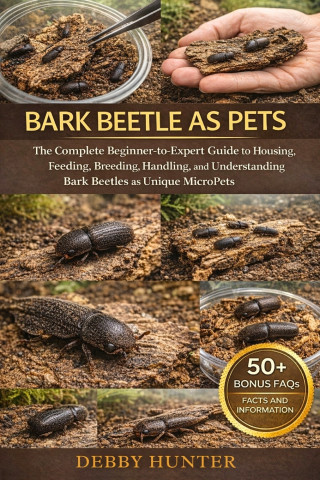
BARK BEETLE AS PETS
Autor DEBBY HUNTER
INTRODUCTION Understanding Bark BeetlesUnderstanding bark beetles begins with recognizing that these tiny insects, often overlooked in the natural world, possess some of the most intricate behaviors, survival strategies, and life ... celý popis


- Jazyk:
 Angličtina
 - Vazba: Brožovaná
- Počet stran: 266
Nakladatelství: Independently published, 2026
- Více informací o knize


Mohlo by se vám také líbit
-

Moonwalk
270 Kč -

The Deal
248 Kč -

The Score
248 Kč -

The Mistake
227 Kč -

Jujutsu Kaisen, Vol. 30
240 Kč -

Witch Hat Atelier: Grimoire Edition 1
777 Kč -

Invincible Compendium Volume 2
1168 Kč -

Invincible Compendium Volume 1
1108 Kč -

Berserk Deluxe Volume 1
779 Kč -

Berserk Deluxe Volume 2
863 Kč -

Invincible Compendium Volume 3
1108 Kč -

Heated Rivalry
227 Kč -

Witch Hat Atelier Manga Box Set 1
1226 Kč -

The Goal
321 Kč -

Jujutsu Kaisen, Vol. 26
240 Kč -

Jujutsu Kaisen, Vol. 25
222 Kč -

Jujutsu Kaisen, Vol. 29
225 Kč -

Lord of Mysteries, Vol. 3: The Clown, Part III
355 Kč -

Murdoku
385 Kč -

Moonwalk: A Memoir
525 Kč -

King of Gluttony
229 Kč
Darujte tuto knihu ještě dnes
- Objednejte knihu a zvolte Zaslat jako dárek.
- Obratem obdržíte darovací poukaz na knihu, který můžete ihned předat obdarovanému.
- Knihu zašleme na adresu obdarovaného, o nic se nestaráte.
Více informací o knize BARK BEETLE AS PETS
Nákupem získáte 40 bodů
 Anotace knihy
INTRODUCTION
Understanding Bark Beetles
Understanding bark beetles begins with recognizing that these tiny insects, often overlooked in the natural world, possess some of the most intricate behaviors, survival strategies, and life patterns found among woodassociated species. When people first hear the term "bark beetle," they often imagine destructive pests tunneling beneath tree bark, and while many species in the wild do contribute to forest decline, this does not define their entire existence. In a controlled, responsible captive setting where a keeper provides the right wood, habitat, and conditions, bark beetles become fascinating organisms to observe. They demonstrate quiet but complex rhythms of living-feeding, burrowing, communicating, reproducing, and navigating their environment with instinctive precision. Understanding them as pets requires a deep look at their structure, senses, needs, and natural behaviors so that their captive life remains safe, ethical, and enriching.
Biology & Physical Structure
Bark beetles belong to the family Curculionidae, subfamily Scolytinae, a large group containing thousands of species. Despite their small size-many no longer than a grain of rice-their bodies are highly specialized for survival under the bark of host trees. They have cylindrical, compact forms that allow them to tunnel through narrow galleries with minimal friction. Their mandibles are strong relative to body size, designed for cutting through the phloem and inner bark layers. The antennae are clubbed at the end, a distinctive feature that assists in detecting pheromones released by other beetles. Their wing covers (elytra) are often deeply grooved, giving texture that helps identify different species. Understanding their structure helps a keeper appreciate how wellbuilt they are for subterranean life and why their care requires substrates and wood choices that mimic these conditions.
Natural Habitat & Ecological Role
In the wild, bark beetles inhabit forests across the world-from temperate pine stands to tropical hardwood regions. Their entire life cycle is tied to trees, especially weakened, dying, or freshly fallen ones. They burrow beneath the bark where moisture levels are stable and predators are limited. Although they are sometimes associated with forest destruction, their ecological role is more complex. Bark beetles contribute to nutrient cycling by helping break down dead or compromised trees. They create tunnels that allow fungi, microbes, and other wooddwelling insects to enter the decomposing wood. In captivity, understanding this natural role allows a keeper to replicate the microhabitat: proper wood types, moisture, airflow, and space for tunneling.
Life Cycle Overview
The bark beetle's life cycle includes egg, larva, pupa, and adult stages, each requiring specific conditions. Females excavate a gallery beneath suitable bark and deposit eggs along its sides. The larvae hatch and begin their own feeding tunnels, moving outward from the maternal gallery. Larvae are white, softbodied grubs with powerful mouthparts, spending most of their time feeding and growing within the protective wood environment. Once mature, they carve a chamber where they pupate and eventually emerge as adults fully equipped to begin new tunnels. Understanding the life cycle is essential for captive care because each stage demands different moisture levels, wood firmness, and environmental stability. A keeper must ensure wood is neither too dry nor too wet and that disturbances are minimal during larval and pupal development.
Behavior & Communication
Bark beetles communicate primarily through chemical signals known as pheromones.
Parametry knihy
401 Kč
- Plný název: BARK BEETLE AS PETS
- Podnázev: The Complete BeginnertoExpert Guide to Housing, Feeding, Breeding, Handling, and Understanding Bark Beetles as Unique MicroPets
- Autor: DEBBY HUNTER
- Jazyk: Angličtina
- Vazba: Brožovaná
- Počet stran: 266
- EAN: 9798242411531
- ID: 50496522
- Nakladatelství: Independently published
- Hmotnost: 362 g
- Rozměry: 229 × 152 × 14 mm
- Datum vydání: 07. January 2026
Osobní odběr Praha, Brno a 47410 dalších
Copyright ©2008-26 nejlevnejsi-knihy.cz Všechna práva vyhrazenaSoukromíCookies

 Vrácení do měsíce
 571 999 099 (8-15.30h)