Kód: 06816525
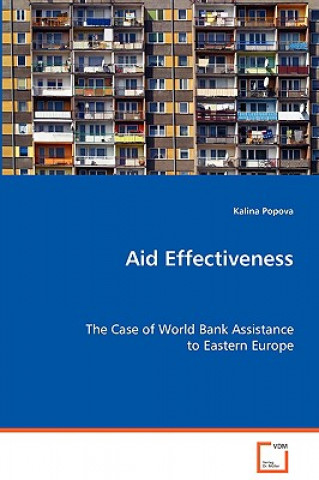
Aid Effectiveness
Autor Kalina Popova
Since the success of the Marshall Plan in theeconomic recovery of Western Europe after WWIIforeign aid has been an important tool of foreignpolicy. Yet there are increasing doubts about theeffectiveness of the aid effort. Critics ... celý popis


- Jazyk:
 Angličtina
 - Vazba: Brožovaná
- Počet stran: 172
Nakladatelství: VDM Verlag Dr. Mueller E.K., 2008
- Více informací o knize


Mohlo by se vám také líbit
-

Bus Driver Who Wanted To Be God & Other Stories
288 Kč -

Není cesty zpět
166 Kč -

Toilet Training and the Autism Spectrum (ASD)
719 Kč -

Carte Angélus tableau de Millet, lot de 20 ex - F58A
334 Kč -

Hope Now
773 Kč -

Slávni muži o ženách
446 Kč -

Bad Box
359 Kč -

Zandernatis: Destination
279 Kč -

My Cruel Prince
268 Kč -

Demon in the wood
577 Kč -

Psychedelic Coloring Book
250 Kč -

Zákon o návykových látkách
405 Kč -

Religion of Thinness
341 Kč -

Juventud
257 Kč -

Works of G. P. R. J., Revised and Corrected by the Author. with an Introductory Preface.
604 Kč -

Jahrbuch Fur Wirtschaftsprufung, Interne Revision Und Unternehmensberatung 2011
1308 Kč -

Puccini's Ghosts
285 Kč -

Catching the Rain
424 Kč -

All in One Piece
320 Kč -

Basic GIS Coordinates
4967 Kč -

From Post-Maoism to Post-Marxism
4101 Kč -

Against Apion
489 Kč -

Acts of the Apostles Translated Out of The Original Greek
511 Kč -

Dunwich Horror
249 Kč -

A Text-Book of Physiological Chemistry
777 Kč -

On the Sufferings of the Northern Counties of England ... from the Invasions of the Scots ... Between the Years 1314 and 1319.
354 Kč -

Pathway Analysis and Optimization in Metabolic Engineering
3581 Kč -

Invitro Propagation of Banana and Plantain Cultivars
1185 Kč -

Spectacle of Isolation in Horror Films
1619 Kč -

Die Zukunft Der Altenpflege
1143 Kč -

Jim Jarmusch
1702 Kč -

Fenian Ideal and Irish Nationalism, 1882-1916
3302 Kč -

Roseland Farm Adventures
316 Kč -

Selling Electronic Media
2140 Kč -

Dictatorship and Politics
1092 Kč
Darujte tuto knihu ještě dnes
- Objednejte knihu a zvolte Zaslat jako dárek.
- Obratem obdržíte darovací poukaz na knihu, který můžete ihned předat obdarovanému.
- Knihu zašleme na adresu obdarovaného, o nic se nestaráte.
Více informací o knize Aid Effectiveness
Nákupem získáte 163 bodů
 Anotace knihy
Since the success of the Marshall Plan in theeconomic recovery of Western Europe after WWIIforeign aid has been an important tool of foreignpolicy. Yet there are increasing doubts about theeffectiveness of the aid effort. Critics argue thataid is targeted to wasteful regimes and to countrieswhere the environment is not conducive to growth.This book examines aid effectiveness by asking whatdetermines which countries receive aid and how muchand what considerations dominate the donors' and therecipients' decision processes. The focus is onWorld Bank lending to Eastern Europe and thedonor-recipient relations are presented in aprincipal-agent framework. Both donors andrecipients choose to enter into an aid relationshipand the motivations behind these decisions haveimplications for the effectiveness of aid. Thetheoretical hypotheses are tested in an empiricalmodel and two case studies. The analysis shows thatWorldBank involvement has contributed to economicgrowth in Eastern Europe, but both the Bank andrecipient countries face constraints that limit theirability to meet their commitments and this in turnlimits the effectiveness of aid.
Parametry knihy
Zařazení knihy Knihy v angličtině Economics, finance, business & management Economics
1632 Kč
- Plný název: Aid Effectiveness
- Podnázev: The Case of World Bank Assistance to Eastern Europe
- Autor: Kalina Popova
- Jazyk: Angličtina
- Vazba: Brožovaná
- Počet stran: 172
- EAN: 9783639072440
- ISBN: 3639072448
- ID: 06816525
- Nakladatelství: VDM Verlag Dr. Mueller E.K.
- Hmotnost: 236 g
- Rozměry: 229 × 152 × 9 mm
- Datum vydání: 03. September 2008
Oblíbené z jiného soudku
-

Why Nations Fail
295 Kč -

Principles for Dealing with the Changing World Order
562 Kč -

Liar's Poker
302 Kč -

Economics: The User's Guide
306 Kč -

J R
489 Kč -

Undercover Economist Strikes Back
292 Kč -

Economics Rules - The Rights and Wrongs of the Dismal Science
229 Kč -
Economics In One Lesson
359 Kč -

Freakonomics
174 Kč -

Economic Facts and Fallacies
334 Kč -

Predictably Irrational
334 Kč -

(Mis)Behaviour of Markets
292 Kč -

Phishing for Phools
349 Kč -

Breakthrough Copywriter
444 Kč -

Misbehavior of Markets
515 Kč -

Principles of Economics
1290 Kč -

Irrational Exuberance
380 Kč -

Misbehaving - The Making of Behavioral Economics
296 Kč -

Capitalism, Socialism, and Democracy
334 Kč -

Armchair Economist
248 Kč -

Analysis of Charles P. Kindleberger's Manias, Panics, and Crashes
239 Kč -

Essential Mathematics for Economic Analysis
1879 Kč -

Schaum's Outline of Principles of Economics
738 Kč -

Hypomanic Edge
419 Kč -

Economic Naturalist
379 Kč -

Freakonomics
566 Kč -

Entropy Law and the Economic Process
1158 Kč -

Narratives of the Poor in Eighteenth-Century England Vol 1
3396 Kč -

Models of Bounded Rationality
1285 Kč -

Institutional Economics
1358 Kč -

Return of The Economic Naturalist
652 Kč -

Limits of the City
407 Kč -

Is Entrepreneurship Dead?
816 Kč -

Art of Statistics
306 Kč -

Debt, 10th Anniversary Edition
568 Kč -

Price of Inequality
204 Kč -

How I Made One Million Dollars Last Year Trading Commodities
801 Kč -

Misbehaving - The Making of Behavioral Economics
568 Kč -

Rational Optimist
262 Kč -

Who Gets What - and Why
271 Kč -

Little Book of Economics, Revised and Updated - How the Economy Works in the Real World
459 Kč -

Think Like a Freak
279 Kč -

Richest Man in Babylon
630 Kč -

Economics Study Guide: Oxford IB Diploma Programme
1038 Kč -

ITIL4 A POCKET GUIDE
444 Kč -

Applied Economics
972 Kč -

Cartoon Introduction to Economics
335 Kč -

Principles of Economics
337 Kč -

The Corporate Startup: How Established Companies Can Develop Successful Innovation Ecosystems
672 Kč
Osobní odběr Praha, Brno a 48146 dalších
Copyright ©2008-26 nejlevnejsi-knihy.cz Všechna práva vyhrazenaSoukromíCookies

 Vrácení do měsíce
 571 999 099 (8-15.30h)