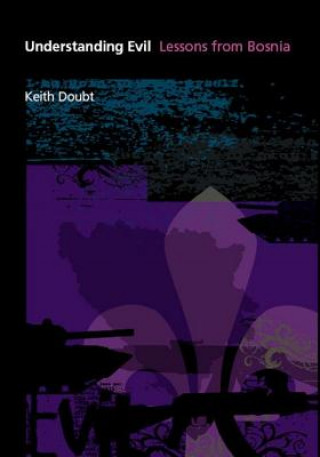
Kód: 04940802
Understanding Evil
Autor Keith D. Doubt
Understanding Evil seeks to articulate the evil that happened in Bosnia within the context of war crimes and crimes against humanity. Its analysis centers on the question of whether it is possible to understand evil as action. Sin ... celý popis


- Jazyk:
 Angličtina
 - Vazba: Pevná
- Počet stran: 184
Nakladatelství: Fordham University Press, 2006
- Více informací o knize


Mohlo by se vám také líbit
-

The Women's Guide to Hormonal Harmony: How to Rebalance Your Hormones, Master Your Metabolism, and Become the Boss of Your Own Body.
490 Kč -

The Poison Daughter
563 Kč -

Celtic Cable Crochet
475 Kč -

Ladybird Readers Level 4 - Racing with Scuderia Ferrari (ELT Graded Reader)
218 Kč -

Skutočný príbeh grófa Mórica Beňovského
461 Kč -

Snowy Bear
169 Kč -

Never Game
325 Kč -

Animals Visual Encyclopedia
643 Kč -

Lapidary of Wond'rous Stones
190 Kč -

Television Development
1379 Kč -

Textbook Of Clinical Ophthalmology, A: A Practical Guide To Disorders Of The Eyes And Their Management (3rd Edition)
2891 Kč -

How Will Our Children Survive
319 Kč -

Comprehension Monitoring in First and Second Language Reading
1209 Kč -

The Beast Trials: Meadow's Beginning
267 Kč -

Case for Adding Battle Management to Basic Air Force Doctrine
380 Kč -

Trait Clinique Des Maladies Du Coeur...
707 Kč -

Paměti obecního Mikuláše
75 Kč -

MY TRIP TO EUROPE
707 Kč -

Pressing Reset
274 Kč -

Fog for 5G and IoT
2971 Kč -
Libido illimited Freud apolitique ?
671 Kč -

The Progressive Primary Arithmetic ...
380 Kč -

Dreams 1-2-3
334 Kč -

Syrian Social Nationalist Party
729 Kč -

Microfluidics
2441 Kč -

Nuovo e vecchio mondo. Vita e parole di una pioniera del femminismo
392 Kč -

History of the Joint Chiefs of Staff: The Joint Chiefs of Staff and National Policy 1965-1968
339 Kč -

Briefwechsel und Tagebucher des Fursten Hermann von Puckler-Muskau
671 Kč
Dárkový poukaz: Radost zaručena
- Darujte poukaz v libovolné hodnotě a my se postaráme o zbytek.
- Poukaz se vztahuje na celou naši nabídku.
- Elektronický poukaz vytisknete z e-mailu a můžete ihned darovat.
- Platnost poukazu je 12 měsíců od data vystavení.
Více informací o knize Understanding Evil
Nákupem získáte 232 bodů
 Anotace knihy
Understanding Evil seeks to articulate the evil that happened in Bosnia within the context of war crimes and crimes against humanity. Its analysis centers on the question of whether it is possible to understand evil as action. Since the foundations of the social are found in human action, evil's assault on these foundations results in the demise of the social. While evil simulates the outer form of action, ultimately evil belies itself as action. Can someone act with an evil end? Socrates says no, no one willingly does evil. Although, with a mixture of reason and empiricism, the author tries hard to overcome the Socratic position - searching for evil's agency, purpose, means, conditions, and ethos - in the end, the search fails. The author concludes by accepting the Socratic position: action whose end is evil is unthinkable. This tack provides an alternative to recent theorizing about evil by philosophers such as Richard Bernstein and Jeffrey Alexander. The book understands evil via a neologism - as sociocide, the murdering of society. In Bosnia, not only were families destroyed, but their homes as well. Not only were bridges, libraries, schools, mosques, and churches demolished, but towns and cities were obliterated. Bosnian Muslims were murdered behind the mindless rhetoric of ethnic cleansing, and their history and collective memory were viciously attacked. In the first case, the social violence is called domicide, in the second, urbicide, and in the third, genocide. In Bosnia, however, war took on a truly twisted orientation. Not only were social structures and institutions attacked, but society itself became the target. The book develops the significance of sociocide as the consequence of evil in order to understand the suffering and tragedy of people and communities in Bosnia.
Parametry knihy
Zařazení knihy Knihy v angličtině Society & social sciences Warfare & defence Other warfare & defence issues
2322 Kč
- Plný název: Understanding Evil
- Podnázev: Lessons from Bosnia
- Autor: Keith D. Doubt
- Jazyk: Angličtina
- Vazba: Pevná
- Počet stran: 184
- EAN: 9780823227006
- ISBN: 0823227006
- ID: 04940802
- Nakladatelství: Fordham University Press
- Hmotnost: 366 g
- Rozměry: 160 × 237 × 19 mm
- Datum vydání: 15. December 2006
Oblíbené z jiného soudku
-

Tactical Combat Casualty Care and Wound Treatment
352 Kč -

Modern Mercenary
518 Kč -

War at the Speed of Light
495 Kč -

Bataan Death March
431 Kč -

Tribe
227 Kč -

Five Years to Freedom
198 Kč -

Unbroken
306 Kč -
Mitrokhin Archive II
445 Kč -

Mengele
350 Kč -

Merchant of Death
324 Kč -

Just and Unjust Wars
515 Kč -

Blackwater
388 Kč -

After Stalingrad
326 Kč -

Israeli Elite Units Since 1948
390 Kč -
Art Therapy with Military Veterans
950 Kč -

Real Tenko: Extraordinary True Stories of Women Prisoners of the Japanese
300 Kč -
Ninja Skills
380 Kč -

Blackwater
273 Kč -

Negotiating with North Korea
5413 Kč -

SS Peiper: Battle Commander SS Leibstandarte Adolf Hitler
292 Kč -

Shadow World
380 Kč -

Academy of the Sword
1973 Kč -

Corporate Warriors
349 Kč -

Russian 'Hybrid Warfare'
1371 Kč -

Apartheid Guns and Money
854 Kč -

German Railroads, Jewish Souls
517 Kč -

Anatomy of the Holocaust
517 Kč -

Stalag Luft III
559 Kč -

Soldier of Fortune Guide to How to Become a Mercenary
278 Kč -

Responsibility of Intellectuals
657 Kč -

Milosevic Trial
1247 Kč -

They Would Never Hurt A Fly
519 Kč -

Lost Lions of Judah
480 Kč -

My Friend The Mercenary
314 Kč -

Homeland Denied
479 Kč -

Honor Was Mine
284 Kč -

Camp Men
1024 Kč -

As Good As Dead
482 Kč -

Old School
1051 Kč -

Brief History of Mutiny
688 Kč -

One Long Night
408 Kč -
Race
826 Kč -

Posttraumatic Stress Disorder and Related Diseases in Combat Veterans
2533 Kč -

Belsen and its Liberation
361 Kč -

Right to a Fair Trial in International Law
8699 Kč -

UNIT 731
456 Kč -

Co. Aytch, or, A Side Show of the Big Show and Other Sketche
341 Kč -

American Goddess at the Rape of Nanking
604 Kč -

Cold War Secret Nuclear Bunkers
559 Kč
Osobní odběr Praha, Brno a 46922 dalších
Copyright ©2008-26 nejlevnejsi-knihy.cz Všechna práva vyhrazenaSoukromíCookies

 Vrácení do měsíce
 571 999 099 (8-15.30h)