Kód: 01205222
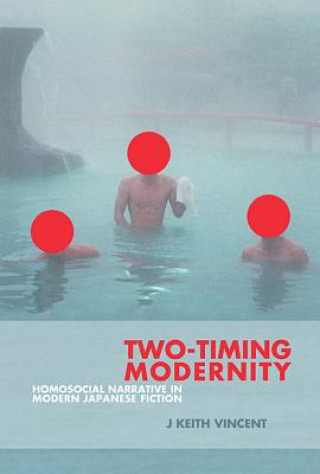
Two-Timing Modernity
Autor J Keith Vincent
Until the late nineteenth century, Japan could boast of an elaborate cultural tradition surrounding the love and desire that men felt for other men. By the first years of the twentieth century, however, as heterosexuality became a ... celý popis


- Jazyk:
 Angličtina
 - Vazba: Pevná
- Počet stran: 248
Nakladatelství: Harvard University, Asia Center, 2012
- Více informací o knize


Mohlo by se vám také líbit
-

Tiger Lily
211 Kč -

New Testament in the Original Greek
577 Kč -
Hathor and Thoth: Two Key Figures of the Ancient Egyptian Religion
4075 Kč -

Dorothy Day
336 Kč -

Obal se záložkou Z2702 Růžový XL
695 Kč -

Dernier Amour: Les Batailles de la Vie
584 Kč -

Wireless Sensor Networks
1352 Kč -

Natural Religion
1077 Kč -

Nansens Nordpolfahrt
711 Kč -

Stinky
242 Kč -

Le cahier d'Ilona - Séyès, 96p, A5 - Petits c urs
252 Kč -

escolha pela Fisica
3715 Kč -

Ormanda Eglence
370 Kč -

L'Art de Lever Les Plans, Analyse Raisonnee Et Demonstration Pratique Des Formules Et Des Operations
423 Kč
Dárkový poukaz: Radost zaručena
- Darujte poukaz v libovolné hodnotě a my se postaráme o zbytek.
- Poukaz se vztahuje na celou naši nabídku.
- Elektronický poukaz vytisknete z e-mailu a můžete ihned darovat.
- Platnost poukazu je 12 měsíců od data vystavení.
Více informací o knize Two-Timing Modernity
Nákupem získáte 129 bodů
 Anotace knihy
Until the late nineteenth century, Japan could boast of an elaborate cultural tradition surrounding the love and desire that men felt for other men. By the first years of the twentieth century, however, as heterosexuality became associated with an enlightened modernity, love between men was increasingly branded as "feudal" or immature. The resulting rupture in what has been called the "male homosocial continuum" constitutes one of the most significant markers of Japan's entrance into modernity. And yet, just as early Japanese modernity often seemed haunted by remnants of the premodern past, the nation's newly heteronormative culture was unable and perhaps unwilling to expunge completely the recent memory of a male homosocial past now read as perverse. Two-Timing Modernity integrates queer, feminist, and narratological approaches to show how key works by Japanese male authors--Mori Ogai, Natsume Soseki, Hamao Shiro, and Mishima Yukio--encompassed both a straight future and a queer past by employing new narrative techniques to stage tensions between two forms of temporality: the forward-looking time of modernization and normative development, and the "perverse" time of nostalgia, recursion, and repetition.
Parametry knihy
Zařazení knihy Knihy v angličtině Literature & literary studies Literature: history & criticism Literary studies: general
1288 Kč
- Plný název: Two-Timing Modernity
- Autor: J Keith Vincent
- Jazyk: Angličtina
- Vazba: Pevná
- Počet stran: 248
- EAN: 9780674067127
- ISBN: 0674067126
- ID: 01205222
- Nakladatelství: Harvard University, Asia Center
- Hmotnost: 490 g
- Rozměry: 237 × 158 × 23 mm
- Datum vydání: 19. November 2012
Oblíbené z jiného soudku
-

The Picture of Dorian Gray
147 Kč -

SEOUL University Korean 1B Workbook (QR), m. 1 Audio
752 Kč -

Villette
226 Kč -
Poetics
237 Kč -

Three Theban Plays
276 Kč -

Moveable Feast
194 Kč -

Memoirs of a Dutiful Daughter
284 Kč -
If Not, Winter: Fragments Of Sappho
379 Kč -

North and South
191 Kč -

Don Quixote de la Mancha
178 Kč -

The Karamazov Brothers
236 Kč -

Saga of Tanya the Evil, Vol. 3
242 Kč -

Mysteries of Udolpho
253 Kč -

Sir Gawain and The Green Knight
189 Kč -
Scarlet Letter
132 Kč -

Literature and Evil
248 Kč -
Orphic Hymns
717 Kč -

Kim
132 Kč -

ABC of Reading
297 Kč -

Faust, Part I
205 Kč -

Wide Sargasso Sea
224 Kč -

Zofloya or The Moor
236 Kč -

Germinal
174 Kč -

Tenant of Wildfell Hall
194 Kč -

Selected Journals of L. M. Montgomery: Volume I: 1889-1910
727 Kč -

Learn! KOREAN With TinyTAN | 2-Book-Set | With Motipen | Korean Learning for Beginners With BTS Voices | Korean Keyboard Stickers | Flash Cards, m. 1
2132 Kč -

Gulliver's Travels
147 Kč -

Robinson Crusoe
147 Kč -

Varieties of Religious Experience
256 Kč -

Collected Poems: Dylan Thomas
248 Kč -

David Copperfield
162 Kč -

Golden Bough
324 Kč -

Complete Poetry
186 Kč -

War Stories and Poems
225 Kč -

Situation and the Story
303 Kč -

Joseph Andrews and Shamela
178 Kč -

Odyssey
219 Kč -

Complete Poems of Hart Crane
372 Kč -

Fabliaux
561 Kč -

Allegory of Love
552 Kč -

Penguin Classics Book
629 Kč -

Short Account of the Destruction of the Indies
282 Kč -

Study Guide for Euripides's Medea
271 Kč -

Franz Kafka
428 Kč -

Things Hidden Since the Foundation of the World
729 Kč -

It's Been a Good Life
555 Kč -

Selected Poetry
224 Kč -

Bloody Chamber: York Notes Advanced
210 Kč -

Study Guide for Henrik Ibsen's A Doll's House
271 Kč
Osobní odběr Praha, Brno a 47910 dalších
Copyright ©2008-26 nejlevnejsi-knihy.cz Všechna práva vyhrazenaSoukromíCookies

 Vrácení do měsíce
 571 999 099 (8-15.30h)