Kód: 08243533
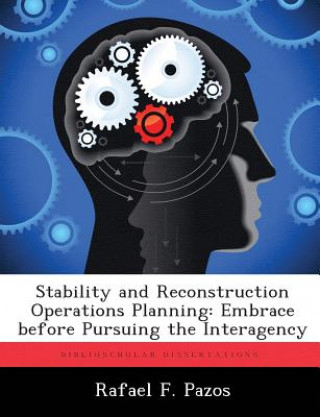
Stability and Reconstruction Operations Planning
Autor Rafael F Pazos
The execution of the post-hostilities phase of Operation Iraqi Freedom has prompted many to ask did why the U.S. military plan so poorly for stability and reconstruction operations (SRO)? Many studies have suggested that the lack ... celý popis


- Jazyk:
 Angličtina
 - Vazba: Brožovaná
- Počet stran: 60
Nakladatelství: Biblioscholar, 2012
- Více informací o knize


Mohlo by se vám také líbit
-

Alice A. Bailey, Vida e Legado
475 Kč -

The Secret Bliss of Calliope Ipswich
935 Kč -
The Johannine Writings
615 Kč -

Pollard V. U S U.S. Supreme Court Transcript of Record with Supporting Pleadings
475 Kč -
Old Madame: And Other Tragedies
728 Kč -

The Cellular Cosmogony: Or The Earth A Concave Sphere (1898)
968 Kč -

Destruction of A Vain Woman
629 Kč -

inter.zin
484 Kč -

Le marcheur
751 Kč -
Linear Continuous-Time Systems
5446 Kč -

His Second Wife. a Novel.
521 Kč -

Multimodale Schmerztherapie bei chronischen Kopfschmerzen
1069 Kč -

Situación actual y potencial futuro del turismo en Maharashtra
1560 Kč -

Brumeterre 3 - La Cobaye
360 Kč -
Quantitative Research Methods in Political Science
2637 Kč -

Optics and Nonlinear Optics of Liquid Cr
1595 Kč -

Pentecostal Movement
309 Kč -

Eighteenth-Century British Erotica, Part I vol 4
4835 Kč -

Wahl des Erzherzogs Leopold Wilhelm zum Bischof von Halberstadt
413 Kč -

Boy Who Wanted Sex, Fame, Money, Power and Drugs
207 Kč -

Unite Morale Dans l'Universite
559 Kč
Dárkový poukaz: Radost zaručena
- Darujte poukaz v libovolné hodnotě a my se postaráme o zbytek.
- Poukaz se vztahuje na celou naši nabídku.
- Elektronický poukaz vytisknete z e-mailu a můžete ihned darovat.
- Platnost poukazu je 12 měsíců od data vystavení.
Více informací o knize Stability and Reconstruction Operations Planning
Nákupem získáte 38 bodů
 Anotace knihy
The execution of the post-hostilities phase of Operation Iraqi Freedom has prompted many to ask did why the U.S. military plan so poorly for stability and reconstruction operations (SRO)? Many studies have suggested that the lack of interagency coordination within the U.S. government was the cause of poor SRO planning and execution. However, detailed analysis of the nature of military operations, the military's responsibilities, and the limited capacity of agencies within the U.S. government point to a different reason; a reluctance on the part of the military to consider SRO a core competency. Therefore, in the near term the solutions to improving the ability of the military to plan and execute SRO are to be found inside the military, not through improvements in interagency coordination. To reach the conclusion that the military ought to focus internally rather than pursue improvements to interagency coordination requires the recognition that the military's ability to plan and perform SRO tasks consists of several interrelated dimensions. The first dimension requires the definition of SRO as a basis for developing a list of associated SRO tasks. The second dimension is the current process used to plan SRO and the assignment of responsibility for SRO tasks. Investigating the second dimension reveals the potential contributions from the interagency, specifically, the potential contributions from organizational initiatives like the JIACG and the S/CRS. The last dimension consists of the universe of organizations that have the capability to conduct SRO tasks. The analysis of this dimension reveals the requirement for military forces to conduct SRO tasks. Ultimately, the analysis shows that SRO and combat are closely related. Therefore, military plans should address both from the onset instead of sequentially. Additionally, planners should focus on the transition to civilian control rather than the end of combat operations. This is so because the military is likely the
Parametry knihy
Zařazení knihy Knihy v angličtině Society & social sciences Education
380 Kč
- Plný název: Stability and Reconstruction Operations Planning
- Podnázev: Embrace Before Pursuing the Interagency
- Autor: Rafael F Pazos
- Jazyk: Angličtina
- Vazba: Brožovaná
- Počet stran: 60
- EAN: 9781288322220
- ISBN: 9781288322220
- ID: 08243533
- Nakladatelství: Biblioscholar
- Hmotnost: 127 g
- Rozměry: 246 × 189 × 3 mm
- Datum vydání: 21. November 2012
Oblíbené z jiného soudku
-
Pearson Edexcel International GCSE (9-1) English Language B Student Book
1359 Kč -

Oet Pharmacy Prep: Speaking Sub-Test
530 Kč -
Oxford IB Diploma Programme: IB Theory of Knowledge Course Book
1578 Kč -
Cambridge IGCSE (R) & O Level Complete Physics: Student Book Fourth Edition
962 Kč -
Imagine If...
276 Kč -
Oxford International Primary Maths Second Edition: Student Book 5
765 Kč -

Cambridge IGCSE (R) & O Level Complete Chemistry: Student Book Fourth Edition
962 Kč -

OET Preparation
214 Kč -

Maria Montessori's Erdkinder
979 Kč -
KS3 Maths 10-Minute Weekly Workouts - Year 7
197 Kč -
Speed and Accuracy: Multiplication
132 Kč -
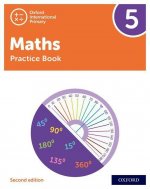
Oxford International Primary Maths Second Edition: Practice Book 5
359 Kč -
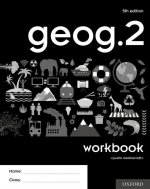
geog.2 Workbook
284 Kč -

My Book of Measurement: Length
147 Kč -
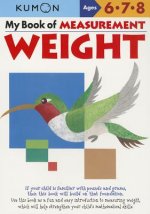
My Book of Measurement: Weight
147 Kč -

Deutsch Ferienhefte - 2. Klasse - Volksschule
235 Kč -

Guerrilla Warfare Tactics in Urban Environments
407 Kč -

iPrimary Building Blocks: Spelling, Punctuation, Grammar and Handwriting Year 1
423 Kč -
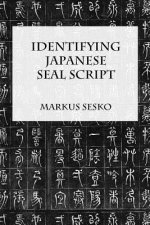
Identifying Japanese Seal Script
790 Kč -
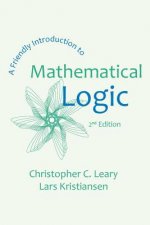
Friendly Introduction to Mathematical Logic
724 Kč -

Curse of Capistrano
350 Kč -
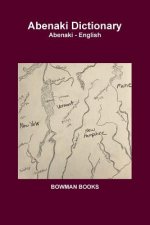
Abenaki Dictionary
402 Kč -
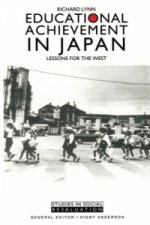
Educational Achievement in Japan
1399 Kč -

Teaching Young Singers
227 Kč -

Einkorn
412 Kč -
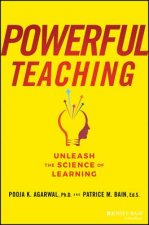
Powerful Teaching: Unleash the Science of Learning
595 Kč -

Business Partner B2 Workbook
462 Kč -
Oxford International Primary Maths Second Edition: Practice Book 2
440 Kč -

MOWIE PO POLSKU DWICZENIA POZIOM B1 I B2
382 Kč -

Cambridge IGCSE (R) & O Level Complete Biology: Student Book Fourth Edition
962 Kč -
Blue Book of Grammar and Punctuation: An Easy- to-Use Guide with Clear Rules, Real-World Examples , and Reproducible Quizzes, Twelfth Edition
359 Kč -

Business Partner B1 Workbook
451 Kč -
Oxford IB Study Guides: Economics for the IB Diploma
1041 Kč -

Deep Healing and Transformation
960 Kč -

Read Write Inc. Phonics: Red Ditty Book Bag Books (Mixed Pack of 10)
1850 Kč -
Oxford International Primary Maths Second Edition: Practice Book 1
299 Kč -
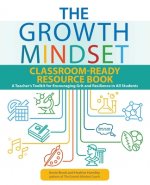
Growth Mindset Classroom-ready Resource Book
391 Kč -

Freedom Writers Diary Teacher's Guide
434 Kč -

Numicon: Numicon Pupil Book 4
417 Kč -
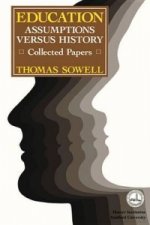
Education
247 Kč -
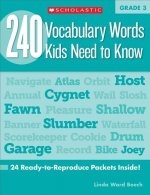
240 Vocabulary Words Kids Need to Know: Grade 3
242 Kč -
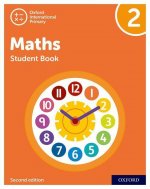
Oxford International Primary Maths Second Edition: Student Book 2
765 Kč -

VINES & VINIFICATION
1056 Kč -
They Don't Teach This at School
455 Kč -
Euclidean Geometry
629 Kč -
Positive Discipline Tools for Teachers
336 Kč -
(ISC) SSCP SG & SSCP Practice Test Kit, 3e
1430 Kč -
Power of Making Thinking Visible - Practices to Engage and Empower All Learners
521 Kč -

Teach Reading With Orton-gillingham
476 Kč
Osobní odběr Praha, Brno a 46611 dalších
Copyright ©2008-26 nejlevnejsi-knihy.cz Všechna práva vyhrazenaSoukromíCookies

 Vrácení do měsíce
 571 999 099 (8-15.30h)