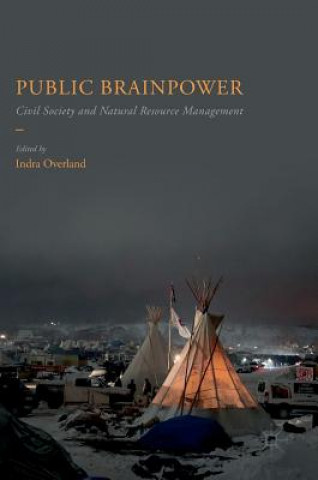
Kód: 16310431
Public Brainpower
Autor Indra Overland
This book examines how civil society, public debate and freedom of speech affect natural resource governance. Drawing on the theories of Robert Dahl, Jurgen Habermas and Robert Putnam, the book introduces the concept of 'public br ... celý popis


- Jazyk:
 Angličtina
 - Vazba: Pevná
- Počet stran: 407
Nakladatelství: Springer International Publishing AG, 2017
- Více informací o knize


Mohlo by se vám také líbit
-
Russian Gypsy Fortune Telling Cards
589 Kč -

Julian Tuwim. Wybór wierszy. Klasyka Mistrzów
126 Kč -

Rómeo z epochy socialistického realizmu
188 Kč -

EXPERIENCIA Y POBREZA
548 Kč -

Second Chances
288 Kč -

JEW OF SEVILLE
425 Kč -

Between Thought and the Treetops
556 Kč -

Physiologie des Menschen und der Saugetiere
792 Kč -

His Ownself: A Semi-Memoir
355 Kč -

Matrikel der Unversitat Heidelberg
813 Kč -

Morphisms and Categories
5651 Kč -

Intelligent investieren mit Zertifikaten
814 Kč -
What Is Open: Accelerating Answers for Football's Most Important Game Planning & Play Calling Question
629 Kč -

Barfussele
265 Kč
Dárkový poukaz: Radost zaručena
- Darujte poukaz v libovolné hodnotě a my se postaráme o zbytek.
- Poukaz se vztahuje na celou naši nabídku.
- Elektronický poukaz vytisknete z e-mailu a můžete ihned darovat.
- Platnost poukazu je 12 měsíců od data vystavení.
Více informací o knize Public Brainpower
Nákupem získáte 171 bodů
 Anotace knihy
This book examines how civil society, public debate and freedom of speech affect natural resource governance. Drawing on the theories of Robert Dahl, Jurgen Habermas and Robert Putnam, the book introduces the concept of 'public brainpower', proposing that good institutions require: fertile public debate involving many and varied contributors to provide a broad base for conceiving new institutions; checks and balances on existing institutions; and the continuous dynamic evolution of institutions as the needs of society change. The book explores the strength of these ideas through case studies of 18 oil and gas-producing countries: Algeria, Angola, Azerbaijan, Canada, Colombia, Egypt, Iraq, Kazakhstan, Libya, Netherlands, Nigeria, Norway, Qatar, Russia, Saudi, UAE, UK and Venezuela. The concluding chapter includes 10 tenets on how states can maximize their public brainpower, and a ranking of 33 resource-rich countries and the degree to which they succeed in doing so. Chapters 'Introduction', 'Norway: Public Debate and the Management of Petroleum Resources and Revenues', 'Kazakhstan: Civil Society and Natural-Resource Policy in Kazakhstan', and 'Russia: Public Debate and the Petroleum Sector' of this book are available open access under a CC BY 4.0 license at link.springer.com.
Parametry knihy
Zařazení knihy Knihy v angličtině Society & social sciences Sociology & anthropology Anthropology
1708 Kč
- Plný název: Public Brainpower
- Autor: Indra Overland
- Jazyk: Angličtina
- Vazba: Pevná
- Počet stran: 407
- EAN: 9783319606262
- ISBN: 3319606263
- ID: 16310431
- Nakladatelství: Springer International Publishing AG
- Hmotnost: 6518 g
- Rozměry: 210 × 148 × 29 mm
- Datum vydání: 08. November 2017
Oblíbené z jiného soudku
-
Revolt Against the Modern World
489 Kč -

Trickster Makes This World
291 Kč -

Combatting Cult Mind Control
422 Kč -

Utopia Of Rules
317 Kč -
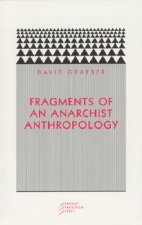
Fragments of an Anarchist Anthropology
276 Kč -

Indian History of British Columbia
358 Kč -

Consider The Lobster
276 Kč -

How Forests Think
709 Kč -

Designs for the Pluriverse
639 Kč -
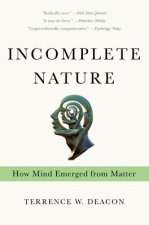
Incomplete Nature
795 Kč -
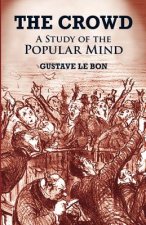
Crowd
209 Kč -
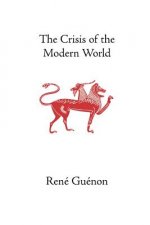
Crisis of the Modern World
422 Kč -
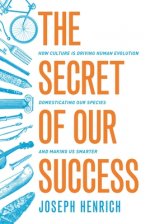
Secret of Our Success
442 Kč -
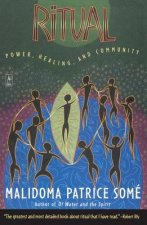
Ritual
275 Kč -
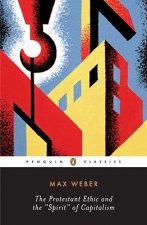
Protestant Ethic and Other Writings
374 Kč -

Kill All Normies - Online culture wars from 4chan and Tumblr to Trump and the alt-right
266 Kč -
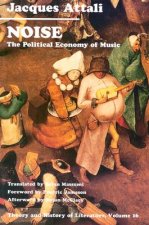
Noise
669 Kč -

The Fate of Africa
636 Kč -

Cognition in the Wild
1426 Kč -

Peoplewatching
408 Kč -

On Saudi Arabia
358 Kč -

Up from Eden
427 Kč -

Human Devolution
714 Kč -
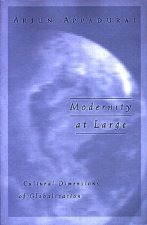
Modernity At Large
559 Kč -

Cultural Histories of the Material World
669 Kč -

Landscapes of Fear
638 Kč -

Genesis of Symbolic Thought
813 Kč -

Heritage
1431 Kč -
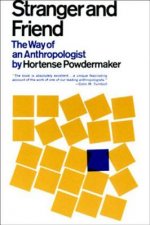
Stranger and Friend
454 Kč -

Ecological Futures
1307 Kč -

Dreaming
825 Kč -

Swastika
539 Kč -

Chocolate in Mesoamerica
948 Kč -

Exercised
276 Kč -

Catching Fire
276 Kč -

Think Like an Anthropologist
291 Kč -

Gift
308 Kč -
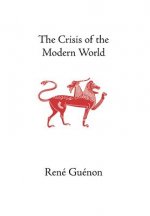
Crisis of the Modern World
650 Kč -
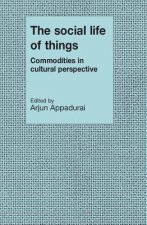
Social Life of Things
795 Kč -

Continuum Concept
276 Kč -

Spirit Catches You and You Fall Down
319 Kč -

Direct Action: An Ethnography
489 Kč -

Origin of Our Species
248 Kč -

Logic of Practice
667 Kč -

Dance Ethnography and Global Perspectives
2438 Kč -

Ruin of Kasch
291 Kč -

Chrysanthemum and the Sword
341 Kč -

Silent Language
296 Kč -
Evolution of the Human Head
1451 Kč
Osobní odběr Praha, Brno a 47771 dalších
Copyright ©2008-26 nejlevnejsi-knihy.cz Všechna práva vyhrazenaSoukromíCookies

 Vrácení do měsíce
 571 999 099 (8-15.30h)