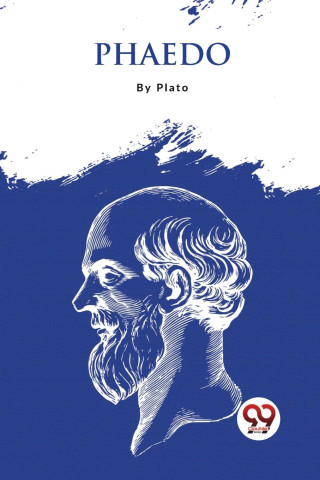
Kód: 42991674
Phaedo
Autor Plato
Along with the Republic and the Symposium, Plato's Phaedo is one of the three important works of ancient Greek philosophy. The discussion is given from the viewpoint of Phaedo of Elis, a pupil of Socrates who was there when he die ... celý popis


- Jazyk:
 Angličtina
 - Vazba: Brožovaná
- Počet stran: 110
Nakladatelství: DOUBLE 9 BOOKSLLP, 2023
- Více informací o knize


Mohlo by se vám také líbit
-

Moonwalk
272 Kč -

The Score
337 Kč -

The Deal
283 Kč -

The Mistake
283 Kč -

Jujutsu Kaisen, Vol. 30
240 Kč -

Witch Hat Atelier: Grimoire Edition 1
777 Kč -

Berserk Deluxe Volume 1
805 Kč -
Invincible Compendium Volume 2
1168 Kč -

Invincible Compendium Volume 1
1108 Kč -

The Goal
321 Kč -

Berserk Deluxe Volume 2
863 Kč -

Witch Hat Atelier Manga Box Set 1
1268 Kč -

Heated Rivalry
227 Kč -

Lord of Mysteries, Vol. 3: The Clown, Part III
355 Kč -

Jujutsu Kaisen, Vol. 25
240 Kč -

Moonwalk: A Memoir
525 Kč -

Jujutsu Kaisen, Vol. 26
240 Kč -
Murdoku
358 Kč -

Jujutsu Kaisen, Vol. 29
240 Kč -

Berserk Deluxe Volume 3
805 Kč -

Veil Volume 1
292 Kč
Dárkový poukaz: Radost zaručena
- Darujte poukaz v libovolné hodnotě a my se postaráme o zbytek.
- Poukaz se vztahuje na celou naši nabídku.
- Elektronický poukaz vytisknete z e-mailu a můžete ihned darovat.
- Platnost poukazu je 12 měsíců od data vystavení.
Více informací o knize Phaedo
Nákupem získáte 36 bodů
 Anotace knihy
Along with the Republic and the Symposium, Plato's Phaedo is one of the three important works of ancient Greek philosophy. The discussion is given from the viewpoint of Phaedo of Elis, a pupil of Socrates who was there when he died. The debate from that day is related by Phaedo to the Pythagorean philosopher Echecrates. The Cyclical Argument, also known as the Opposites Argument, argues that since Forms are timeless and unchangeable and since the soul continuously sustains life, it must not expire and is thus ineluctably "imperishable." The soul must be the indestructible opposite of the body since the latter is mortal and prone to physical death. Plato then offers the comparison of cold and fire. According to the Theory of Recollection, humans are born with some non-empirical information, which implies that the soul existed before birth to store that knowledge. Another explanation of the notion may be found in Plato's Meno, albeit Socrates makes less strong claims in Meno than he does in Phaedo. The Affinity Argument demonstrates how things that are unseen, eternal, and incorporeal differ from those that are visible, mortal, and corporeal. Since the soul is a component of the Form of Life by nature, it is immortal and cannot pass away.
Parametry knihy
Zařazení knihy Knihy v němčině Belletristik Erzählende Literatur Hauptwerk vor 1945
359 Kč
- Plný název: Phaedo
- Autor: Plato
- Jazyk: Angličtina
- Vazba: Brožovaná
- Počet stran: 110
- EAN: 9789357275781
- ISBN: 9357275789
- ID: 42991674
- Nakladatelství: DOUBLE 9 BOOKSLLP
- Hmotnost: 173 g
- Rozměry: 229 × 152 × 6 mm
- Datum vydání: 01. January 2023
Osobní odběr Praha, Brno a 47529 dalších
Copyright ©2008-26 nejlevnejsi-knihy.cz Všechna práva vyhrazenaSoukromíCookies

 Vrácení do měsíce
 571 999 099 (8-15.30h)