Kód: 52370106
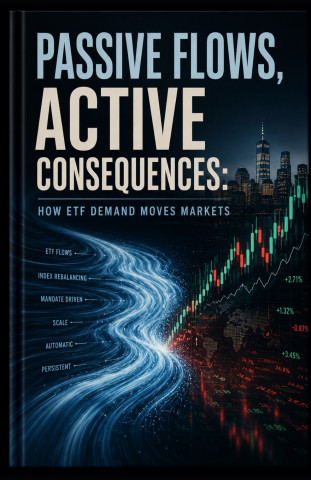
Passive Flows, Active Consequences
Autor Tony Hicks
Passive Flows, Active Consequences: How ETF Demand Moves Markets explores how exchange-traded funds (ETFs) and passive investing transformed modern financial markets from systems driven primarily by human judgment into ecosystems ... celý popis


- Jazyk:
 Angličtina
 - Vazba: Brožovaná
- Počet stran: 322
Nakladatelství: Independently published, 2026
- Více informací o knize


Mohlo by se vám také líbit
-

Moonwalk
261 Kč -

The Score
248 Kč -

The Deal
285 Kč -

The Mistake
285 Kč -

Jujutsu Kaisen, Vol. 30
240 Kč -

Witch Hat Atelier: Grimoire Edition 1
777 Kč -

Invincible Compendium Volume 1
1108 Kč -

Invincible Compendium Volume 2
1168 Kč -

Berserk Deluxe Volume 1
805 Kč -

The Goal
321 Kč -

Berserk Deluxe Volume 2
863 Kč -

Witch Hat Atelier Manga Box Set 1
1268 Kč -

Heated Rivalry
227 Kč -

Jujutsu Kaisen, Vol. 25
240 Kč -

Jujutsu Kaisen, Vol. 26
240 Kč -

Lord of Mysteries, Vol. 3: The Clown, Part III
355 Kč -

Invincible Compendium Volume 3
1108 Kč -

Jujutsu Kaisen, Vol. 29
240 Kč -

Moonwalk: A Memoir
525 Kč -

Murdoku
374 Kč -

Berserk Deluxe Volume 3
805 Kč
Dárkový poukaz: Radost zaručena
- Darujte poukaz v libovolné hodnotě a my se postaráme o zbytek.
- Poukaz se vztahuje na celou naši nabídku.
- Elektronický poukaz vytisknete z e-mailu a můžete ihned darovat.
- Platnost poukazu je 12 měsíců od data vystavení.
Informovat o naskladnění knihy
Zadejte do formuláře e-mailovou adresu a jakmile knihu naskladníme, zašleme vám o tom zprávu. Pohlídáme vše za vás.
Více informací o knize Passive Flows, Active Consequences
Nákupem získáte 40 bodů
 Anotace knihy
Passive Flows, Active Consequences: How ETF Demand Moves Markets explores how exchange-traded funds (ETFs) and passive investing transformed modern financial markets from systems driven primarily by human judgment into ecosystems increasingly shaped by automated capital flows. The book explains how ETFs democratized investing by lowering costs, expanding access, simplifying diversification, and enabling millions of ordinary investors to participate in global markets. It examines the mechanics behind passive investing, including market-cap weighting, ETF arbitrage, liquidity creation, and the rise of index-based investing. The book also explores how passive inflows influence price discovery, concentration risk, volatility, and market behavior, particularly as mega-cap technology companies dominate indexes and attract ever-larger allocations through self-reinforcing feedback loops.
The book analyzes the structural consequences of ETF dominance across markets, corporations, and investor psychology. It explains how passive investing reshaped price discovery, increased correlations between assets, amplified momentum, and altered the behavior of both retail and institutional investors. The rise of thematic ETFs, AI-driven investing, and algorithmic trading accelerated reflexive market dynamics where flows increasingly drive prices, narratives, and investor sentiment. The book also examines how ETFs performed during major crises-including the Flash Crash, the 2020 pandemic panic, and bond market liquidity disruptions-revealing both the strengths and vulnerabilities of modern passive systems. It explores the impact of passive ownership on corporate governance, executive incentives, stock buybacks, and the concentration of power among a handful of dominant asset managers.
Ultimately, the book argues that passive investing changed far more than portfolio construction-it transformed the structure of capitalism itself. Financial markets now depend heavily on automated flows, retirement systems, central bank policy, and institutional ownership concentration. While ETFs delivered enormous benefits through efficiency, accessibility, and low-cost investing, they also introduced new systemic risks involving liquidity, concentration, fragility, and reduced active price discovery. The book concludes that the future of capitalism may depend on maintaining a balance between passive efficiency and active market discipline as artificial intelligence, algorithmic systems, and increasingly automated financial ecosystems continue reshaping global markets.
Parametry knihy
403 Kč
- Plný název: Passive Flows, Active Consequences
- Podnázev: How ETF Demand Moves Markets
- Autor: Tony Hicks
- Jazyk: Angličtina
- Vazba: Brožovaná
- Počet stran: 322
- EAN: 9798195808105
- ID: 52370106
- Nakladatelství: Independently published
- Hmotnost: 376 g
- Rozměry: 216 × 140 × 17 mm
- Datum vydání: 06. May 2026
Osobní odběr Praha, Brno a 47531 dalších
Copyright ©2008-26 nejlevnejsi-knihy.cz Všechna práva vyhrazenaSoukromíCookies

 Vrácení do měsíce
 571 999 099 (8-15.30h)