Kód: 04871647
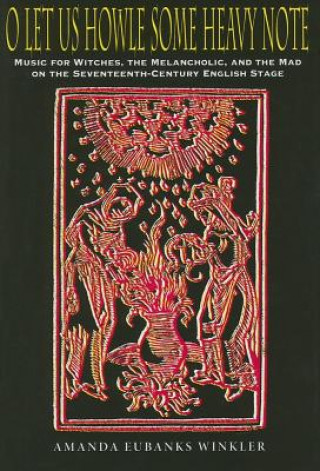
O Let Us Howle Some Heavy Note
Autor Amanda Eubanks Winkler
In the 17th century, harmonious sounds were thought to represent the well-ordered body of the obedient subject, and, by extension, the well-ordered state; conversely, discordant, unpleasant music represented both those who caused ... celý popis


- Jazyk:
 Angličtina
 - Vazba: Pevná
- Počet stran: 248
Nakladatelství: Indiana University Press, 2006
- Více informací o knize


Mohlo by se vám také líbit
-

Die kleine Maus sucht einen Freund
234 Kč -

Emmanuelle 1: La lección del hombre
355 Kč -

Secret
489 Kč -

Magical Cross Stitch
384 Kč -

History of the Standard Oil Company (2 Volumes in 1)
857 Kč -

A Shadow in Moscow: A Cold War Novel
370 Kč -
The Love Album
203 Kč -

Hospodářské a sociální postavení sklářských dělníků na Jablonecku
105 Kč -

Das ultimative Deep Purple Kompendium
477 Kč -

Easystart: The Fireboy Book and CD Pack
251 Kč -

Fail Better: How Teachers can Help Students Overcome Failure, Perfectionism, Procrastination, Impostor Syndrome and Test Anxiety
5510 Kč -

Ich gehe gern in die Kita
599 Kč -

Milk
1175 Kč -

Richard Symonds's Diary of the Marches of the Royal Army
1150 Kč -

Core Laboratory Technologies in Clinical Immunology
2401 Kč -
Advances in X-Ray Analysis
1182 Kč -

Oraculo manual y arte de prudencia
243 Kč -

Und im Zweifel für dich selbst
384 Kč -

Outdoor Girls at Bluff Point Or a Wreck and a Rescue
409 Kč -
Die Schweiz im neunzehnten Jahrhundert
676 Kč -

Der Akademiegedanke zwischen utopischem Entwurf und barocker Projektmacherei.
1168 Kč -

Rock Gardens - How to Plan and Plant Them
634 Kč -

Georgia Dutch
922 Kč -

Collection of Selected Poetry, Volume Two M-Z
359 Kč -

Complementary and Alternative Treatments for Anxiety
515 Kč -
The Works Of Lord Byron; Volume 1
837 Kč -

Le Tresor de l'Histoire de France Reduit Par Tiltres Et Lieux Communs, Divise En Deux Parties
857 Kč -

Convective Flow Boiling
1482 Kč -

Constructing America's War Culture
3068 Kč -
Easter Island: The Rapanui Speech And The Peopling Of Southeast Polynesia (1912)
772 Kč -

Gehölzschnitt nach den Gesetzen der Natur
1419 Kč -

Für eine Stilkritik von drei kongolesischen Werken
1257 Kč -

Language Memory Cards - Transportation - English-spanish
335 Kč -

Écoulements de fluides complexes dans une cuve agitée
1135 Kč -

Perfect Phrases for Icebreakers: Hundreds of Ready-to-Use Phrases to Set the Stage for Productive Conversations, Meetings, and Events
355 Kč
Dárkový poukaz: Radost zaručena
- Darujte poukaz v libovolné hodnotě a my se postaráme o zbytek.
- Poukaz se vztahuje na celou naši nabídku.
- Elektronický poukaz vytisknete z e-mailu a můžete ihned darovat.
- Platnost poukazu je 12 měsíců od data vystavení.
Více informací o knize O Let Us Howle Some Heavy Note
Nákupem získáte 90 bodů
 Anotace knihy
In the 17th century, harmonious sounds were thought to represent the well-ordered body of the obedient subject, and, by extension, the well-ordered state; conversely, discordant, unpleasant music represented both those who caused disorder (murderers, drunkards, witches, traitors) and those who suffered from bodily disorders (melancholics, madmen, and madwomen). While these theoretical correspondences seem straightforward, in theatrical practice the musical portrayals of disorderly characters were multivalent and often ambiguous. "O Let Us Howle Some Heavy Note" focuses on the various ways that theatrical music represented disorderly subjects - those who presented either a direct or metaphorical threat to the health of the English kingdom in 17th-century England. Using theatre music to examine narratives of social history, Winkler demonstrates how music re-inscribed and often resisted conservative, political, religious, gender, and social ideologies. Amanda Eubanks Winkler is an Assistant Professor in the Department of Fine Arts at Syracuse University, specializing in early music. Her articles and reviews have appeared in "Cambridge Opera Journal", "Notes", and "Journal of Seventeenth-Century Music". She is the author of "Music for Macbeth" published by A-R Editions.
Parametry knihy
Zařazení knihy Knihy v angličtině The arts Music Music: styles & genres
903 Kč
- Plný název: O Let Us Howle Some Heavy Note
- Autor: Amanda Eubanks Winkler
- Jazyk: Angličtina
- Vazba: Pevná
- Počet stran: 248
- EAN: 9780253348050
- ISBN: 0253348056
- ID: 04871647
- Nakladatelství: Indiana University Press
- Hmotnost: 476 g
- Rozměry: 235 × 155 × 23 mm
- Datum vydání: 01. November 2006
Oblíbené z jiného soudku
-

Moonwalk
270 Kč -

Dancing The Dream
517 Kč -

Michael Jackson
467 Kč -

Just Kids
276 Kč -

Michael Jackson
272 Kč -

My Friend Michael
407 Kč -

M Train
293 Kč -

I'm with the Band
289 Kč -

Queen Unseen - My Life with the Greatest Rock Band of the 20th Century: Revised and with Added Material
248 Kč -
Michael Jackson
510 Kč -

The Long Hard Road Out Of Hell
301 Kč -

Real Frank Zappa Book
365 Kč -

Our Band Could Be Your Life
412 Kč -

Rip it Up and Start Again
335 Kč -

Jason Molina
502 Kč -

Michael Jackson
667 Kč -

Official Truth, 101 Proof
325 Kč -

Lifting Shadows The Authorized Biography of Dream Theater
465 Kč -

Library of Piano Classics
525 Kč -

Everybody Loves Our Town
314 Kč -
Jazz Theory & Workbook
411 Kč -

Lemmy
248 Kč -

Loving Amy
276 Kč -

Burning Britain
489 Kč -

Amy, My Daughter
292 Kč -

Dream Brother
347 Kč -

Best of Judas Priest
561 Kč -

Miles Davis
475 Kč -

Odetta's One Grain of Sand
300 Kč -

Tori Amos's Boys for Pele
277 Kč -

Piano Time Jazz Book 2
334 Kč -

Renaissance Recorder Anthology Vol. 1
571 Kč -

To Be, or Not . . . to Bop
425 Kč -

Science of the Singing Voice
1166 Kč -

In the Studio with Michael Jackson
792 Kč -

Isaac Albeniz
3635 Kč -
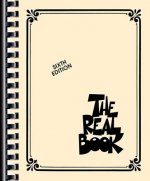
Real Book
858 Kč -
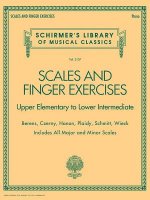
Scales and Finger Exercises
236 Kč -

I Am Ozzy
276 Kč -

Jazz Theory Book
1221 Kč -
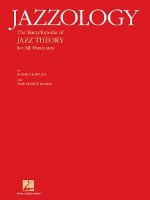
Jazzology
646 Kč -

Michael Jackson King of Pop 1958-2009
337 Kč -

Cured
285 Kč -

Kiss and Make-Up
306 Kč -
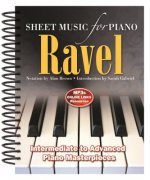
Ravel: Sheet Music for Piano
361 Kč -

Elvis and Me
186 Kč -

Lords Of Chaos - 2nd Edition
394 Kč -

Standing in the Shadows of Motown
645 Kč -

A Perfect Union of Contrary Things
373 Kč
Osobní odběr Praha, Brno a 46829 dalších
Copyright ©2008-26 nejlevnejsi-knihy.cz Všechna práva vyhrazenaSoukromíCookies

 Vrácení do měsíce
 571 999 099 (8-15.30h)