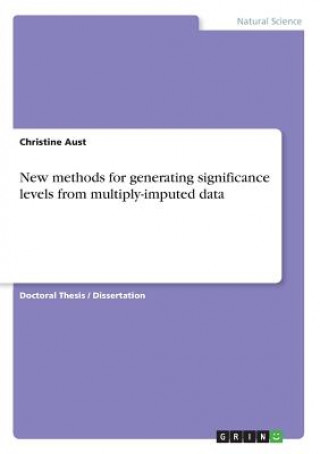
Kód: 19372660
New methods for generating significance levels from multiply-imputed data
Autor Christine Aust
Doctoral Thesis / Dissertation from the year 2010 in the subject Statistics, grade: summa cum laude, University of Bamberg (Sozial- und Wirtschaftswissenschaften), language: English, abstract: Missing data are an ubiquitous proble ... celý popis


- Jazyk:
 Angličtina
 - Vazba: Brožovaná
- Počet stran: 108
Nakladatelství: Grin Publishing, 2018
- Více informací o knize


Mohlo by se vám také líbit
-

Money Works: The Guide to Financial Literacy
568 Kč -

LA MUJER DEL CAMAROTE 10
275 Kč -

AT THE EDGE OF SURRENDER
500 Kč -

Corporate Ownership and Control
1816 Kč -

LA MEVA TRAVESSIA DELS PIRINEUS
714 Kč -

Yemenia
450 Kč -

Locked-In Love: How two weeks in chastity can end the barter system, renew courtship and make a better husband.
196 Kč -

Anne de Avonlea - Vol. 2 da serie Anne de Green Gables
683 Kč -

Mainz - 1.000 Teile (Puzzle)
761 Kč -

Holocaust Education and the Semiotics of Othering in Israeli Schoolbooks
1358 Kč -

The Power of Parting
479 Kč -

Point-in-Time vs. Through-the-Cycle
976 Kč -

Englischer Wortschatz Politik und Wirtschaft
613 Kč -

Songs of Work and Protest
912 Kč -

Coupons For Children
142 Kč -

Honduras - 1.000 Teile (Puzzle)
761 Kč -

Impatto a livello aziendale dell'affiliazione a cluster regionali
1014 Kč -

Clive and his Bags
158 Kč -

Rule Learning in Second Language
1666 Kč -

Dove in the Eagle's Nest
554 Kč -

Argumentation
2732 Kč -

Understanding Psychological Assessment
5413 Kč -

Duet
683 Kč -

The Evolution of Worlds
707 Kč -

Marcof le Malouin
610 Kč -

A to Z Book of Birds, An ABC for Young Bird Lovers
685 Kč -

Sirach, Scrolls, and Sages: Proceedings of a Second International Symposium on the Hebrew of the Dead Sea Scrolls, Ben Sira, and
7016 Kč -

One or Three? The Witnesses and Me
238 Kč -

Jean Paul's Sammtliche Werke, Band 20, Flegeljahre. Eine Biographie
2732 Kč -

Reinhold Niebuhr
1680 Kč -

Allocution Au Service Funebre Celebre Dans Sa Cathedrale, Le 9 Septembre 1856, Prise de Sebastopol
293 Kč -

Battle Beyond Earth
372 Kč -

Stát a církev
292 Kč -

Making of the European Union
2646 Kč -

Nation In Waiting
5651 Kč -

Documentación en lengua extranjera, distinta del inglés, para el comercio internacional : certificado de profesionalidad de marketing y compraventa Ii
576 Kč -

25th Texas Symposium on Relativistic Astrophysics (Texas 2010)
3287 Kč -

British Education Control Officer in Occupied Germany, 1945-1949
5651 Kč -

IMPROMPTUS MOMENTS MUSICAUX PIANO
513 Kč -

LA ANTIGUA ROMA
411 Kč -

Deadly Conversation
339 Kč -

"Le temps d'un week-end"
323 Kč
Dárkový poukaz: Radost zaručena
- Darujte poukaz v libovolné hodnotě a my se postaráme o zbytek.
- Poukaz se vztahuje na celou naši nabídku.
- Elektronický poukaz vytisknete z e-mailu a můžete ihned darovat.
- Platnost poukazu je 12 měsíců od data vystavení.
Více informací o knize New methods for generating significance levels from multiply-imputed data
Nákupem získáte 98 bodů
 Anotace knihy
Doctoral Thesis / Dissertation from the year 2010 in the subject Statistics, grade: summa cum laude, University of Bamberg (Sozial- und Wirtschaftswissenschaften), language: English, abstract: Missing data are an ubiquitous problem in statistical analyses that has become an important research field in applied statistics. A highly useful technique to handle missing values in many settings is multiple imputation, that was first proposed by Rubin (1977, 1978) and extended in Rubin (1987). Due to the ongoing improvement in computer power in the last 10 years, multiple imputation has become a well known and often used tool in statistical analyses. However, there still exists a problem in generally obtaining significance levels from multiply-imputed data, because the application of multiple imputation requires normally distributed or t-distributed complete-data estimators. Today there are basically three methods that extend the suggestions given in Rubin (1987). First, Li, Raghunathan, and Rubin (1991) proposed a procedure, where significance levels are created by computing a modified Wald-test statistic that is then referred to an F-distribution. This procedure is essentially calibrated and the loss of power due to a finite number of imputations is quite modest in cases likely to occur in practice. But this procedure requires access to the completed-data estimates and their variance-covariance matrices, that may not be available in practice with standard software. Second, Meng and Rubin (1992) proposed a complete-data two-stage-likelihood-ratio-test-based procedure that in large samples is equivalent to the previous one. This procedure requires access to the code for the calculation of the log-likelihood-ratio statistics. Common statistical software does not provide access to the code in their standard analyses routines. Third, Li, Meng, Raghunathan, and Rubin (1991) developed an improved version of a method in Rubin (1987) that only requires the chi-square-statistics from a usual complete-data Wald-test. This method is only approximately calibrated and has a substantial loss of power compared to the previous two. To sum, there exist several procedures to generate significance levels in general from multiply-imputed data, but none of them has satisfactory applicability due to the facts mentioned above. Since many statistical analyses are based on hypothesis tests, especially on the Wald-test in regression analyses, it is very important to find a method that retains the advantages and overcomes the disadvantages of the existing procedures. Developing such a method was the aim of the present thesis.
Parametry knihy
Zařazení knihy Knihy v angličtině Mathematics & science Mathematics Probability & statistics
975 Kč
- Plný název: New methods for generating significance levels from multiply-imputed data
- Autor: Christine Aust
- Jazyk: Angličtina
- Vazba: Brožovaná
- Počet stran: 108
- EAN: 9783668674202
- ISBN: 3668674205
- ID: 19372660
- Nakladatelství: Grin Publishing
- Hmotnost: 167 g
- Rozměry: 210 × 148 × 7 mm
- Rok vydání: 2018
Oblíbené z jiného soudku
-

Naked Statistics
302 Kč -

Cambridge International AS & A Level Mathematics Probability and Statistics 1 Student's Book
751 Kč -

How to Lie with Statistics
240 Kč -

Statistical Thermodynamics
178 Kč -

Fifty Challenging Problems in Probability with Solutions
208 Kč -

Manga Guide To Statistics
412 Kč -

Probability Theory
191 Kč -

Statistics Done Wrong
399 Kč -
Schaum's Outline of Probability and Statistics
458 Kč -
Statistics: A Very Short Introduction
225 Kč -

Foundations of the Theory of Probability: Second English
249 Kč -

First Course in Probability, Global Edition
2178 Kč -
An Introduction to Statistical Learning
2780 Kč -

Probability Theory
608 Kč -

Continued Fractions
162 Kč -

Probability: A Very Short Introduction
225 Kč -

Probability and Computing
1566 Kč -
Probability and Statistics with R
3635 Kč -

Analysis of Biological Data
2320 Kč -

Laws of the Game
1368 Kč -
Explanation in Causal Inference
4431 Kč -

How to Lie with Statistics
291 Kč -
Statistics For Dummies, 2nd Edition
412 Kč -
Elements of Statistical Learning
2075 Kč -

Manga Guide To Regression Analysis
420 Kč -

Theory That Would Not Die
319 Kč -

Collected Works of C.G. Jung
458 Kč -

Statistics Workbook For Dummies, 2nd Edition with Online Practice
412 Kč -
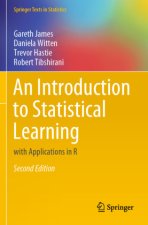
Introduction to Statistical Learning
1384 Kč -

Introduction to Probability, Second Edition
2342 Kč -
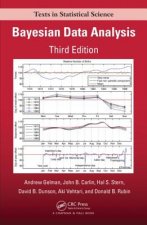
Bayesian Data Analysis
2656 Kč -

Foundations of the Theory of Probability
227 Kč -

Introductory Econometrics for Finance
1682 Kč -

Probability Theory
3299 Kč -
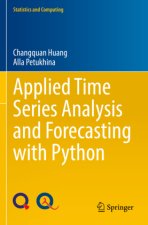
Applied Time Series Analysis and Forecasting with Python
1843 Kč -

Foundations of Modern Probability
2303 Kč -

Understanding Probability
1688 Kč -

Statistical Physics
2013 Kč -

Probability Essentials
1614 Kč -
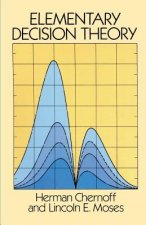
Elementary Decision Theory
380 Kč -

First Look At Rigorous Probability Theory, A (2nd Edition)
790 Kč -

Unfinished Game
539 Kč -
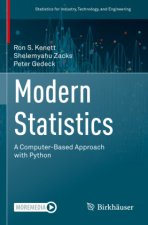
Modern Statistics
1843 Kč -
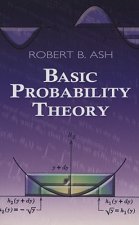
Basic Probability Theory
380 Kč -
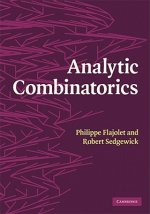
Analytic Combinatorics
2658 Kč -

Philosophy and Probability
1223 Kč -

Practice of Statistics for Business and Economics
2273 Kč -

Multivariate Analysis of Ecological Data with ade4
2073 Kč -

Bayesian Analysis with Python
1229 Kč
Osobní odběr Praha, Brno a 47546 dalších
Copyright ©2008-26 nejlevnejsi-knihy.cz Všechna práva vyhrazenaSoukromíCookies

 Vrácení do měsíce
 571 999 099 (8-15.30h)