Kód: 04939675
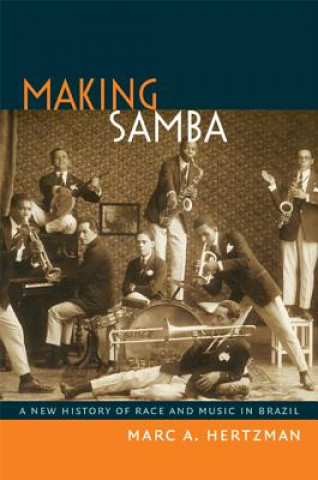
Making Samba
Autor Marc A. Hertzman
In November 1916, a young Afro-Brazilian musician named Donga registered sheet music for the song "Pelo telephone" ("On the Telephone") at the National Library in Rio de Janeiro. This apparently simple act - claiming ownership of ... celý popis


- Jazyk:
 Angličtina
 - Vazba: Pevná
- Počet stran: 392
Nakladatelství: Duke University Press, 2013
- Více informací o knize

3227 Kč
Dostupnost:
50 % šance Máme informaci, že by titul mohl být dostupný. Na základě vaší objednávky se ho pokusíme do 6 týdnů zajistit.
Prohledáme celý svět
Mohlo by se vám také líbit
-

Real-Time Relationships: The Logic of Love
351 Kč -

NRSV Catholic Bible
445 Kč -

Psychology for Dancers
1238 Kč -

Český jazyk 3 (učebnice) - nová řada
109 Kč -

Les engins blindés à roues
864 Kč -
People of Ancient Egypt
770 Kč -

Bacterial Artificial Chromosomes
2303 Kč -

Electric Idol Tom 2
239 Kč -

Dose-Finding Designs for Early-Phase Cancer Clinical Trials
1417 Kč -

Asbestos and Mesothelioma
3062 Kč -

Solo Leveling Roman Taschenbuchausgabe 08
289 Kč -

Resíduos da indústria moveleira da cidade de Pinhalzinho - SC
1115 Kč -
Solar Spectrum
2357 Kč -

The Definitions, Postulates, Axioms, And Enunciations Of The Propositions Of The First Six, And The Eleventh And Twelfth Books Of Euclid's Elements Of
576 Kč -

East and Central European History Writing in Exile 1939-1989
4260 Kč -

Reise Know-How Tedesco - parola per parola (Deutsch als Fremdsprache, italienische Ausgabe)
206 Kč -

Travels to the Source of the Missouri River and Across the American Continent to the Pacific Ocean
881 Kč -
DEAR LIAR
400 Kč -

The Silence of Ghosts
554 Kč -
L'économie à l'heure du numérique
336 Kč -

Atlas
504 Kč
Dárkový poukaz: Radost zaručena
- Darujte poukaz v libovolné hodnotě a my se postaráme o zbytek.
- Poukaz se vztahuje na celou naši nabídku.
- Elektronický poukaz vytisknete z e-mailu a můžete ihned darovat.
- Platnost poukazu je 12 měsíců od data vystavení.
Informovat o naskladnění knihy
Zadejte do formuláře e-mailovou adresu a jakmile knihu naskladníme, zašleme vám o tom zprávu. Pohlídáme vše za vás.
Více informací o knize Making Samba
Nákupem získáte 323 bodů
 Anotace knihy
In November 1916, a young Afro-Brazilian musician named Donga registered sheet music for the song "Pelo telephone" ("On the Telephone") at the National Library in Rio de Janeiro. This apparently simple act - claiming ownership of a musical composition - set in motion a series of events that would shake Brazil's cultural landscape. Before the debut of "Pelo telephone," samba was a somewhat obscure term, but by the late 1920s, the wildly popular song had helped to make it synonymous with Brazilian national music. The success of "Pelo telephone" embroiled Donga in controversy. A group of musicians claimed that he had stolen their work, and a prominent journalist accused him of selling out his people in pursuit of profit and fame. Within this single episode are many of the concerns that animate Making Samba, including intellectual property claims, the Brazilian state, popular music, race, gender, national identity, and the history of Afro-Brazilians in Rio de Janeiro. By tracing the careers of Rio's pioneering black musicians from the late nineteenth century until the 1970s, Marc A. Hertzman revises the histories of samba and of Brazilian national culture.
Parametry knihy
Zařazení knihy Knihy v angličtině The arts Music Music: styles & genres
3227 Kč
- Plný název: Making Samba
- Podnázev: A New History of Race and Music in Brazil
- Autor: Marc A. Hertzman
- Jazyk: Angličtina
- Vazba: Pevná
- Počet stran: 392
- EAN: 9780822354154
- ISBN: 0822354152
- ID: 04939675
- Nakladatelství: Duke University Press
- Hmotnost: 685 g
- Rozměry: 235 × 156 × 23 mm
- Datum vydání: 16. April 2013
Oblíbené z jiného soudku
-

Moonwalk
283 Kč -

Michael Jackson
501 Kč -

Just Kids
279 Kč -

Elvis and Me
186 Kč -

My Friend Michael
407 Kč -

Michael Jackson King of Pop 1958-2009
337 Kč -
Real Book
907 Kč -

Lords Of Chaos - 2nd Edition
394 Kč -

In the Studio with Michael Jackson
841 Kč -

Standing in the Shadows of Motown
645 Kč -

A Perfect Union of Contrary Things
333 Kč -

Inside Out
358 Kč -

Can I Say
226 Kč -
What Does This Button Do?
292 Kč -

Ocean of Sound
272 Kč -

Grunge is Dead
380 Kč -

Ring of the Nibelung
490 Kč -

Lonely Boy
292 Kč -
Unleashed: The Story of Tool
341 Kč -

Lester Young
579 Kč -

Rush
573 Kč -

Comfortably Numb
365 Kč -

Nine Inch Nails' Pretty Hate Machine
258 Kč -

Japrocksampler
362 Kč -
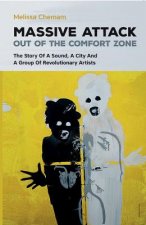
Massive Attack
336 Kč -

Evening in the Palace of Reason
246 Kč -

World of the Castrati
531 Kč -

Shut Up and Give Me the Mic
350 Kč -
Composition, Printing and Performance
2147 Kč -

Stephen Fry's Incomplete and Utter History of Classical Music
365 Kč -

Jazz Sax Scales Levels/Grades 1-5
309 Kč -

Jazz Sax Aural Tests & Quick Studies Levels/Grades 1-3
362 Kč -

Bruce Springsteen's Born in the USA
256 Kč -
Pachelbel: Canon in D
215 Kč -

Justin Bieber
335 Kč -

Deep Purple Family Year By Year:
454 Kč -

George Winston Piano Solos - Pno
458 Kč -

M Train
293 Kč -

Scales and Finger Exercises
236 Kč -

Miles: The Autobiography
450 Kč -

Michael Jackson
272 Kč -
Ravel: Sheet Music for Piano
361 Kč -

88 Piano Classics For Beginners
287 Kč -

Yann Tiersen - Piano Works
638 Kč -

Twentieth-Century Harmony
1221 Kč -

Complete Preludes, Nocturnes & Waltzes
685 Kč -

Nibelungenlied
256 Kč -

Retromania
358 Kč -

Rachmaninov: Sheet Music for Piano
361 Kč
Osobní odběr Praha, Brno a 46632 dalších
Copyright ©2008-26 nejlevnejsi-knihy.cz Všechna práva vyhrazenaSoukromíCookies

 Vrácení do měsíce
 571 999 099 (8-15.30h)