Kód: 01778376
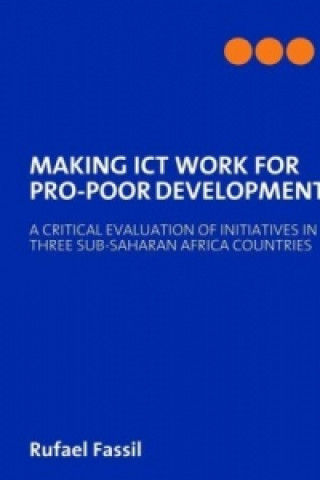
MAKING ICT WORK FOR PRO-POOR DEVELOPMENT
Autor Rufael Fassil
This book is a revised version of a Ph.D. dissertation in which the author presents the results of a comprehensive evaluation of ICT4D initiatives in three Sub Saharan Africa countries. Its starting-point is the apparent failure o ... celý popis


- Jazyk:
 Angličtina
 - Vazba: Pevná
- Počet stran: 236
Nakladatelství: Books on Demand, 2009
- Více informací o knize


Mohlo by se vám také líbit
-

Attack on Titan: Colossal Edition 6
854 Kč -

Learn to Draw in 5 Weeks: A Beginner's Workbook for All Ages
271 Kč -

Secret Founding of America
457 Kč -

The Modern Cafe, 1e
676 Kč -

Who's Afraid of Gender?
490 Kč -

Moje zvířátka Látkové leporelo
157 Kč -

Můj přítel Edison - O přátelství dvou největších mužů své doby
285 Kč -

Nebojte se klasiky! 19 Žesťové nástroje aneb Jak troubí potrubí
164 Kč -

WAS IST WAS Quiz Körper
189 Kč -

The Little Book of Hot Sauce: A Passionate Salute to the World's Fiery Condiment
174 Kč -

African Plants
532 Kč -

Cambridge Primary Path Level 3 Flashcards
1457 Kč -

Lost World. Zaginiony świat. Angielski. Powieść dla młodzieży z ćwiczeniami
113 Kč -

Mudra, le secret sacré
883 Kč -

How to Draw Cute Woodland Friends
242 Kč -

Tahle kniha je o tobě
248 Kč -

Steirische Harmonika-Seine Schönsten Stückeln
364 Kč -

Les Semeuses
774 Kč -

English-German Medical Dictionary and Phrasebook
339 Kč -

Zum Glück gibt's Wunder
254 Kč -

Nasty Sudoku Book for the Alpha Female with 300+ Very Easy Puzzles
341 Kč -

Exploring Through Design
721 Kč -

Selected Stories
573 Kč -

Agente Secreto X9
853 Kč -

In Dreissig Jahren Um Die Welt
2233 Kč -

Disability and Impairment in Early China
4835 Kč -

Alternaria resistant brassica transgenic plant development
1208 Kč -

Shakespeare Performance Studies
1110 Kč -

Giant Moray Eel
286 Kč -

Wilhelm Busch Als Dichter, Kunstler, Psychologe Und Philosoph (1912)
1120 Kč -

Blumen und ihre Bewohner
648 Kč -

Managing Teacher Appraisal and Performance
1914 Kč -

Synthesis of Thiadiazole & Dithiazole Derivatives: A Review
1208 Kč -

Self and Identity in Adolescent Foreign Language Learning
3936 Kč -

Short Stories for Students
5639 Kč -

The Law Of Life: A Novel (1914)
772 Kč -

A Phenomenal Woman: Shining from Within
340 Kč -
Inexact and Separate Science of Economics
2214 Kč -

Religion and Conflict Resolution
5435 Kč -

Death of the Traditional Real Estate Agent
444 Kč -

Handbook on the Physics and Chemistry of Rare Earths
6202 Kč -

Getting to Know A Ragdoll: the Introduction
562 Kč -

Mommy's Big Helper
423 Kč -

The Red Canoe
359 Kč -

Listen with Your Eyes
401 Kč -

Annual Magazine Subject-Index
946 Kč -

Impact of Industrial Effluent on Soil Quality in Haripur
1059 Kč -

Circle It, Seal and Sea Lion Facts, Word Search, Puzzle Book
311 Kč -

I Want to Be a Dentist
318 Kč
Dárkový poukaz: Radost zaručena
- Darujte poukaz v libovolné hodnotě a my se postaráme o zbytek.
- Poukaz se vztahuje na celou naši nabídku.
- Elektronický poukaz vytisknete z e-mailu a můžete ihned darovat.
- Platnost poukazu je 12 měsíců od data vystavení.
Více informací o knize MAKING ICT WORK FOR PRO-POOR DEVELOPMENT
Nákupem získáte 86 bodů
 Anotace knihy
This book is a revised version of a Ph.D. dissertation in which the author presents the results of a comprehensive evaluation of ICT4D initiatives in three Sub Saharan Africa countries. Its starting-point is the apparent failure of ICT4D initiatives in Sub Saharan Africa to deliver for human development goals. As a result, there has been a growing demand for more rigorous empirical evidence about the ways in which individuals and communities exploit access to and use of ICT, and the impact they have on the livelihoods of marginalized communities in rural and urban areas. The lack of empirical evidence in this area inhibits effective analysis of the factors enabling or constraining ICT4D initiatives outcomes and means that scarce development resources may be ineffectively deployed or opportunities for effective pro-poor initiatives are being missed, and it is one of the key aims of this book to explore the key critical success factors for making ICT work for pro-poor development in Sub Saharan Africa.Using a comprehensive quantitative and qualitative design, this evaluation study examined the promise of ICT to deliver for human development goals at the macro, meso and micro-level over a decade (1995-2006) in Ethiopia, Kenya and South Africa. The exploration was carried out using new hybrid evaluation framework called a Capability Oriented Logical Framework Approach (CO-LFA) that was developed by the author. This framework places, in contrast to the current discourse around the digital divide , pro-poor sustainable development and not technology at the centre of the analysis.Findings from the study clearly conform the central hypothesis that access to and use of ICT in Sub-Saharan Africa often fail to meet pro-poor development goals, because they are impaired by deficiencies in the enabling environment that are systematically embedded in the broader socio-economic context of the targeted communities. The author draws conclusions that may have implications for making ICT work for pro-poor development, in terms of assumptions, approaches and outcomes.
Parametry knihy
863 Kč
- Plný název: MAKING ICT WORK FOR PRO-POOR DEVELOPMENT
- Podnázev: A CRITICAL EVALUATION OF INITIATIVES IN THREE SUB-SAHARAN AFRICA COUNTRIES
- Autor: Rufael Fassil
- Jazyk: Angličtina
- Vazba: Pevná
- Počet stran: 236
- EAN: 9783833495885
- ID: 01778376
- Nakladatelství: Books on Demand
- Hmotnost: 500 g
- Rozměry: 220 × 155 × 18 mm
- Rok vydání: 2009
Oblíbené z jiného soudku
-

Moonwalk
317 Kč -

Berserk Deluxe Volume 1
861 Kč -

The Score
243 Kč -

Murdoku
306 Kč -

Threshing Day (Wing and Claw Collection)
439 Kč -

The Mistake
243 Kč -

Berserk Deluxe Volume 2
941 Kč -

The Deal
262 Kč -

Jujutsu Kaisen, Vol. 30
220 Kč -

Dancing The Dream
517 Kč -

Berserk Deluxe Volume 3
781 Kč -

White Nights
95 Kč -

Threshing Day (Limited Deluxe Edition)
488 Kč -

The Goal
253 Kč -

Kid's Box New Generation Level 2 Activity Book with Digital Pack British English
265 Kč -

Jujutsu Kaisen, Vol. 26
240 Kč -

Onyx Storm (Deluxe Limited Edition) (The Empyrean, 3)
525 Kč -

Berserk Deluxe Volume 5
781 Kč -

Murdoku Volume 2: Back in Time
329 Kč -

Chainsaw Man, Vol. 21
240 Kč -

The Count of Monte Cristo
253 Kč -

Witch Hat Atelier: Grimoire Edition 2
854 Kč -

Lord of Mysteries, Vol. 1: The Clown, Part I
373 Kč -

Invincible Compendium Volume 3
1123 Kč -

Lord of Mysteries, Vol. 3: The Clown, Part III
373 Kč -

Jujutsu Kaisen, Vol. 29
225 Kč -

Witch Hat Atelier: Grimoire Edition 1
854 Kč -

The Odyssey
318 Kč -

Berserk Deluxe Volume 4
853 Kč -

Restitution
243 Kč -

Six of Crows: A Darker Shore: Letters from Ketterdam
417 Kč -

Kid's Box New Generation Level 2 Pupil's Book with eBook British English
432 Kč -

The Legacy
266 Kč -

The Courage To Be Disliked
244 Kč -

JoJo's Bizarre Adventure: Part 7--Steel Ball Run, Vol. 7
443 Kč -

Heartstopper Volume 6
354 Kč -

Kid's Box New Generation Level 3 Activity Book with Digital Pack British English
265 Kč -

Jujutsu Kaisen, Vol. 1
240 Kč -

Invincible Compendium Volume 2
1121 Kč -

Yesteryear
335 Kč -

Fourth Wing
572 Kč -

Iron Flame
536 Kč -

Kid's Box New Generation Level 1 Activity Book with Digital Pack British English
265 Kč -

Onyx Storm
243 Kč -

Jujutsu Kaisen, Vol. 25
220 Kč -

Heated Rivalry
243 Kč -

Veil Volume 1
342 Kč -

Moonwalk: A Memoir
573 Kč -

East of Eden
306 Kč
Osobní odběr Praha, Brno a 47926 dalších
Copyright ©2008-26 nejlevnejsi-knihy.cz Všechna práva vyhrazenaSoukromíCookies

 Vrácení do měsíce
 571 999 099 (8-15.30h)