Kód: 21390192
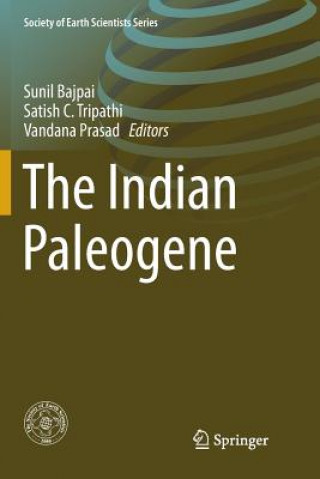
Indian Paleogene
Autor Sunil Bajpai, Vandana Prasad, Satish C. Tripathi
This unique book provides a concise account of Indian Paleogene and presents a unified view of the Paleogene sequences of India. The Paleogene, comprising the early part of the Cenozoic Era, was the most dynamic period in the Eart ... celý popis


- Jazyk:
 Angličtina
 - Vazba: Brožovaná
- Počet stran: 327
Nakladatelství: Springer Nature Switzerland AG, 2019
- Více informací o knize


Mohlo by se vám také líbit
-

Short History of Fantasy
454 Kč -

Global Crisis
652 Kč -

Set Diář A5, A6 a šanon A4 Hnědý
3364 Kč -

Princess of Mars (Facsimile Edition)
403 Kč -

Ultimate Vietnamese Cookbook
319 Kč -

You Say You Want a Revolution?
1230 Kč -

Advances in Information Technology
1182 Kč -

LA LEVITACION
475 Kč -

Uso della laserterapia a basso livello in ortopedia
893 Kč -

Finding the Route 40 Phantom
259 Kč -

European-East Asian Borders in Translation
1417 Kč -
Barracas del litoral mediterráneo : catálogo de Valencia y su entorno
1090 Kč -

From School to Work
2644 Kč -

Much Ado About Nothing
217 Kč -

Choix de Fables de la Fontaine, Traduites En Vers Basques (Ed.1848)
524 Kč -

Les fondements de l'architecture d'entreprise
460 Kč -

Roze is de vijand
511 Kč -

Lupetto ha paura del buio. Amico lupo
254 Kč -
Post-Mortem Depression: and other maladies of English
237 Kč -
![Le Livre de L'Agriculture D'Ibn Al-Awam: Kit AB Al-Fil A A. Traduit de L'Arabe Par J[ean] J[acques] CL Ement-Mullet, Volume 1...](https://media.libris.to/jacket/18411605t.jpg "Le Livre de L'Agriculture D'Ibn Al-Awam: Kit AB Al-Fil A A. Traduit de L'Arabe Par J[ean] J[acques] CL Ement-Mullet, Volume 1...")
Le Livre de L'Agriculture D'Ibn Al-Awam: Kit AB Al-Fil A A. Traduit de L'Arabe Par J[ean] J[acques] CL Ement-Mullet, Volume 1...
794 Kč -

Inflammation
2357 Kč -

Contribution a l''etude de l''endommagement Des Geomateriaux
997 Kč -

Entornos virtuales para la exploracion y busqueda de informacion
1804 Kč -

World's War
264 Kč -

Der "Koerber-Plan"
2233 Kč -

Household Vulnerability and Resilience to Economic Shocks
5651 Kč -

The Hypnotist's Guide to Profitable Self-Hypnosis Workshops: Inspiring Individual Initiative
547 Kč -

Le jeu de l'entraide - Des cles pour un dialogue creatif et constructif
610 Kč
Dárkový poukaz: Radost zaručena
- Darujte poukaz v libovolné hodnotě a my se postaráme o zbytek.
- Poukaz se vztahuje na celou naši nabídku.
- Elektronický poukaz vytisknete z e-mailu a můžete ihned darovat.
- Platnost poukazu je 12 měsíců od data vystavení.
Více informací o knize Indian Paleogene
Nákupem získáte 330 bodů
 Anotace knihy
This unique book provides a concise account of Indian Paleogene and presents a unified view of the Paleogene sequences of India. The Paleogene, comprising the early part of the Cenozoic Era, was the most dynamic period in the Earth's history with profound changes in the biosphere and geosphere. The period spans ~42 million years, beginning from post- K/T mass extinction event at ~65 Ma and ending at ~23 Ma, when the first Antarctic ice sheet appeared in the Southern Hemisphere. The early Paleogene (Paleocene-Eocene) has been considered a globally warm period, superimposed on which were several transient hyperthermal events of extreme warmth. Of these, the Palaeocene Eocene Thermal Maxima (PETM) boundary interval is the most prominent extreme warming episode, lasting 200 Ka. PETM is characterized by 2-6 global negative carbon isotope excursion. The event coincided with the Benthic Extinction Event (BEE) in deep sea and Larger Foraminifera Turnover (LFT) in shallow seas. Rapid ~60-80 warming of high latitudinal regions led to major faunal and floral turnovers in continental, shallow-marine and deep-marine areas. The emergence and dispersal of mammals with modern characteristics, including Artiodactyls, Perissodactyls and Primates (APP), and the evolution and expansion of tropical vegetation are some of the significant features of the Paleogene warm world.In the Indian subcontinent, the beginning and end of the Paleogene was marked by various events that shaped the various physiographic features of the Indian subcontinent. The subcontinent lay within the equatorial zone during the earliest part of the Paleogene. Carbonaceous shale, coal and lignite deposits of early Eocene age (~55.5-52 Ma) on the western and north-eastern margins of the Indian subcontinent are rich in fossils and provide information on climate as well as the evolution and paleobiogeography of tropical biota. Indian Paleogene deposits in the India-Asia collision zone also provide information pertaining to the paleogeography and timing of collision. Indian Paleogene rocks are exposed in the Himalayan and Arakan mountains; Assam and the shelf basins of Kutch-Saurashtra, Western Rajasthan; Tiruchirappalli-Pondicherry and Andaman and, though aerially limited, these rocks bear geological evidence of immense importance.
Parametry knihy
Zařazení knihy Knihy v angličtině Earth sciences, geography, environment, planning Earth sciences Geology & the lithosphere
3297 Kč
- Plný název: Indian Paleogene
- Autor: Sunil Bajpai, Vandana Prasad, Satish C. Tripathi
- Jazyk: Angličtina
- Vazba: Brožovaná
- Počet stran: 327
- EAN: 9783030084561
- ISBN: 3030084566
- ID: 21390192
- Nakladatelství: Springer Nature Switzerland AG
- Hmotnost: 522 g
- Rozměry: 235 × 155 × 19 mm
- Datum vydání: 01. February 2019
Oblíbené z jiného soudku
-

Story of Earth
319 Kč -

H2O
314 Kč -

Rocks Don't Lie
545 Kč -

Mineralogy
2495 Kč -
Introducing Geology
816 Kč -

Geology of the Alps
1472 Kč -

Stone in Architecture
5177 Kč -
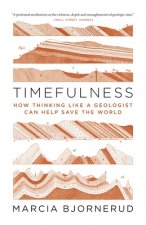
Timefulness
287 Kč -

Structural Geology
1932 Kč -

Annals of the Former World
482 Kč -

Mycorrhizal Planet
691 Kč -
S & S Guide to Rocks and Minerals
412 Kč -

Plate Tectonics: A Very Short Introduction
225 Kč -

Paleoclimate
884 Kč -

Fundamentals of Soil Ecology
2298 Kč -
Earth Materials
1578 Kč -

Worlds Before Adam
1255 Kč -

Pictorial Atlas of Soil and Seed Fungi
6724 Kč -
Isotopes: A Very Short Introduction
225 Kč -

Forensic Geotechnical and Foundation Engineering, Second Edition
3945 Kč -

Life and Death of Planet Earth
350 Kč -

Windows into the Earth
972 Kč -

Changing Earth
2857 Kč -

Geology For Dummies
390 Kč -

Anthropocene: A Very Short Introduction
225 Kč -
Lost World of Fossil Lake
785 Kč -

Geology: A Very Short Introduction
225 Kč -
Glaciation: A Very Short Introduction
225 Kč -

Rocks: A Very Short Introduction
225 Kč -

Brief History of Geology
882 Kč -

Historical Geology
4487 Kč -

Past Time: Geology in European and American Art
930 Kč -

Making of Europe
1375 Kč -
Understanding Earth
2436 Kč -
Timefulness
1218 Kč -
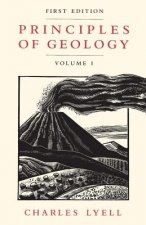
Principles of Geology, Volume 1
1218 Kč -
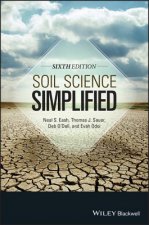
Soil Science Simplified 6e
2146 Kč -

Reading the Rocks
319 Kč -
Geological Field Techniques
965 Kč -
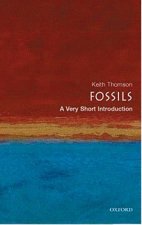
Fossils: A Very Short Introduction
225 Kč -

Mineral Resources, Economics and the Environment
2435 Kč -

Landscapes and Geomorphology: A Very Short Introduction
225 Kč -

Quaternary Paleoenvironments - Submerged Landscapes of the European Continental Shelf.
2533 Kč -
Global Geomorphology
2280 Kč -

Rocks and Minerals in Thin Section
1310 Kč -

True Truffle (Tuber spp.) in the World
5758 Kč -

Ore Deposit Geology
2105 Kč -

Fundamentals of Structural Geology
2185 Kč -
Pleistocene
5236 Kč
Osobní odběr Praha, Brno a 47771 dalších
Copyright ©2008-26 nejlevnejsi-knihy.cz Všechna práva vyhrazenaSoukromíCookies

 Vrácení do měsíce
 571 999 099 (8-15.30h)