Kód: 01281300
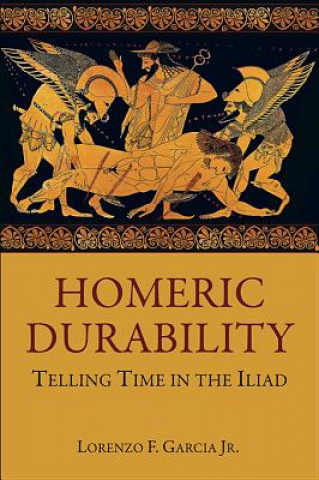
Homeric Durability
Autor Lorenzo F Garcia
The Iliad defines its poetic goal as preserving the kleos aphthiton, "fame unwithered," (IX.413) of its hero, Achilles. But how are we to understand the status of the "unwithered" in the Iliad? In Homeric Durability, Lorenzo F. G ... celý popis


- Jazyk:
 Angličtina
 - Vazba: Brožovaná
- Počet stran: 330
Nakladatelství: Harvard University, Center for Hellenic Studies, 2013
- Více informací o knize


Mohlo by se vám také líbit
-
You Gentiles
464 Kč -

Moleskine Expanded Large Ruled Hardcover Notebook
662 Kč -

There Are Things I Can't Tell You
256 Kč -

Lyric Pieces: Early Intermediate Level
183 Kč -

Cambridge History of the Second World War: Volume 2, Politics and Ideology
1447 Kč -

Angličtina na cesty
85 Kč -

Die Würde des Menschen ist antastbar
330 Kč -

LA PLANETE DES SINGES
187 Kč -

Do They Think You're Stupid?
220 Kč -

Arts of the Sailor
598 Kč -

Francouzský román mezi dvěma světovými válkami
136 Kč -

Inspired Home
897 Kč -
Gods of Ancient Greece
863 Kč -

Oshi no ko - tome 10 collector
328 Kč -

The Ethics of Remote Warfare
2644 Kč -

Justizministerialblatt fur den Freistaat Bayern
529 Kč -

CREATIVES MIND
479 Kč -

Die Prinzipien der Gerechtigkeit und ihre Konstruktion nach John Rawls. Urzustand und Herleitung
369 Kč -

Anglizismen in der Werbung. Eine empirische Studie
975 Kč -

Cocinero/a del Servicio Andaluz de Salud (SAS). Temario común y test
914 Kč -

Curse of the Spanish Gold: part 2 of Magdalene and the Secrets of Thunder Loch
176 Kč -

papa
878 Kč -

Der Kreuzweg unseres Herrn und Heilandes
241 Kč -

Dithmarschen
348 Kč -

Theology Explained and Defended: In a Series of Sermons. Volume 4 of 5
707 Kč -

Week's Preparation Toward a Worthy Receiving of the Lord's Supper After the Warning of the Church for the Celebration of the Holy Communion. ... the F
728 Kč -
Homeopathy: The Science of Therapeutics
968 Kč -

CAMELOT
764 Kč -
Ense?ar espa?ol en la actualidad: contribuciones didácticas
532 Kč -

Gebürtig
306 Kč -

Commodore Josiah Tattnall
808 Kč -
Panoramica sulle tiazine - Sintesi e applicazioni biologiche
549 Kč -

Wie bewertet man mundliche Leistungen der Schuler richtig? Schulleistungen objektiv, reliabel und valide messen
814 Kč -
End of the Dream and Other Stories
756 Kč -

Die Wirtschaftswissenschaft nach dem Kriege.
3322 Kč -
Sudebnaya psihiatriya. Tezisy lekcij. Uchebnoe posobie
512 Kč -
New English Praise
500 Kč -
Genealogies of Genius
1355 Kč -

Environnement de Collaboration Et M moire Organisationnelle
1602 Kč -
Routledge Handbook of Japanese Security
5842 Kč -

Wauconda
558 Kč -

Nietzsche's Free Spirit Works
3078 Kč -

Twice A Warrior
479 Kč -
Au pays des lys noirs Souvenirs de jeunesse et d'age mur
307 Kč -

Leben ohne zu arbeiten
410 Kč -

Kinder und Jugendliche mit Migrationshintergrund
973 Kč -

British West Indies The Postcard Collection
479 Kč -

AuNo Body's Perfect"
572 Kč -

Doubloons
720 Kč -

Divine Comedy
315 Kč -

Courts of Genocide
5651 Kč -

Instant Google Drive Starter
512 Kč -

The Fact Of Christ: A Series Of Lectures
619 Kč -

Unconscious in Shakespeare's Plays
1353 Kč -

Kleines ABC des Odenwaldes
232 Kč -

Super Turbo Saves the Day!
161 Kč -

100 Days to a Younger Brain
428 Kč -

Microfinance on Empowering Women Entrepreneurs in Tanzania
996 Kč -

Drought Stress Tolerance in Plants, Vol 2
4707 Kč -

Grundzüge der Gewerbepolitik.
907 Kč -

25 to Life: The Jack Bertolino Series Book 5
362 Kč -

Microencapsulación de aceites esenciales:
1237 Kč -

C. Plinii Caecilii Secundi Epistolarum Libri Decem Et Panegyricus: Ad Optimorium Librorum Fidem Accurate Editi (1829)
815 Kč -

1000 Serial Killer Facts
272 Kč -

No Quarter: Dominium - Volume 5
143 Kč -

Corporate Director's Guidebook
1022 Kč -

Aging and Old-age Style in Gunter Grass, Ruth Kluger, Christ
3302 Kč -

Impact de l'approche REFLECT sur l'autonomisation des bénéficiaires
1014 Kč -

Linking the Natural Environment and the Economy: Essays from the Eco-Eco Group
4707 Kč -

Notice Sur Notre-Dame de Saint-Acheul, Ancienne Cathedrale d'Amiens
336 Kč
Dárkový poukaz: Radost zaručena
- Darujte poukaz v libovolné hodnotě a my se postaráme o zbytek.
- Poukaz se vztahuje na celou naši nabídku.
- Elektronický poukaz vytisknete z e-mailu a můžete ihned darovat.
- Platnost poukazu je 12 měsíců od data vystavení.
Více informací o knize Homeric Durability
Nákupem získáte 63 bodů
 Anotace knihy
The Iliad defines its poetic goal as preserving the kleos aphthiton, "fame unwithered," (IX.413) of its hero, Achilles. But how are we to understand the status of the "unwithered" in the Iliad? In Homeric Durability, Lorenzo F. Garcia, Jr., investigates the concept of time and temporality in Homeric epic by studying the semantics of "durability" and "decay": namely, the ability of an entity to withstand the effects of time, and its eventual disintegration. Such objects--the ships of the Achaeans, the bodies of the dead, the walls of the Greeks and Trojans, and the tombs of the dead--all exist within time and possess a demonstrable "durability." Even the gods themselves are temporal beings. Through a framework informed by phenomenology, psychology, and psychopathology, Garcia examines the temporal experience of Homer's gods and argues that in moments of pain, sorrow, and shame, Homeric gods come to experience human temporality. If the gods themselves are defined by human temporal experience, Garcia argues, the epic tradition cannot but imagine its own temporal durability as limited: hence, one should understand kleos aphthiton as fame which has not yet decayed, rather than fame which will not decay.
Parametry knihy
Zařazení knihy Knihy v angličtině Literature & literary studies Literature: history & criticism Literary studies: general
629 Kč
- Plný název: Homeric Durability
- Autor: Lorenzo F Garcia
- Jazyk: Angličtina
- Vazba: Brožovaná
- Počet stran: 330
- EAN: 9780674073234
- ISBN: 0674073231
- ID: 01281300
- Nakladatelství: Harvard University, Center for Hellenic Studies
- Hmotnost: 536 g
- Rozměry: 229 × 152 × 20 mm
- Datum vydání: 08. April 2013
Oblíbené z jiného soudku
-

How to Read a Book
253 Kč -

The Picture of Dorian Gray
148 Kč -

Weird and the Eerie
204 Kč -

Moveable Feast
255 Kč -

The Karamazov Brothers
236 Kč -
Birth of Tragedy
225 Kč -
If Not, Winter: Fragments Of Sappho
379 Kč -
Plainwater
319 Kč -

Sir Gawain and The Green Knight
194 Kč -
Mabinogion
392 Kč -

Slow Violence and the Environmentalism of the Poor
618 Kč -
Odyssey
802 Kč -

Situation and the Story
303 Kč -

History of English Literature
1079 Kč -
Count of Monte Cristo
240 Kč -

Bacchae
197 Kč -

Great God Pan and Other Horror Stories
230 Kč -

Mabinogion
233 Kč -

ABC of Reading
289 Kč -
Dead Souls
234 Kč -

Moments Of Being
291 Kč -

Flatland
225 Kč -
First Days Of The Year
470 Kč -
Golden Ass
261 Kč -
Poems of Catullus
240 Kč -

Last of the Mohicans
218 Kč -
Miserable Miracle
333 Kč -

Musil Diaries
487 Kč -

Ecology without Nature
707 Kč -

Two Novels
360 Kč -

Narrow Road to the Interior
366 Kč -
Pocket Mirror for Heroes
289 Kč -

Walking in the Shade
324 Kč -
Phaedra and Other Plays
317 Kč -

Notes from Underground
375 Kč -

On Writers and Writing
291 Kč -

Research Methods for English Studies
1066 Kč -

Clarissa, or the History of A Young Lady
490 Kč -

Merry Recluse
308 Kč -

Henry Miller on Writing
308 Kč -

Greek Particles
3898 Kč -

Beowulf (ca. 1000)
525 Kč -

Life and Opinions of the Tomcat Murr
310 Kč -

SEOUL University Korean 1B Workbook (QR), m. 1 Audio
752 Kč -

The Iliad
106 Kč -

Zofloya or The Moor
230 Kč -

North and South
194 Kč -

SEOUL University Korean 1B Student's Book (QR), m. 1 Audio
1106 Kč -
Don Quixote de la Mancha
178 Kč
Osobní odběr Praha, Brno a 48147 dalších
Copyright ©2008-26 nejlevnejsi-knihy.cz Všechna práva vyhrazenaSoukromíCookies

 Vrácení do měsíce
 571 999 099 (8-15.30h)