Kód: 53432844
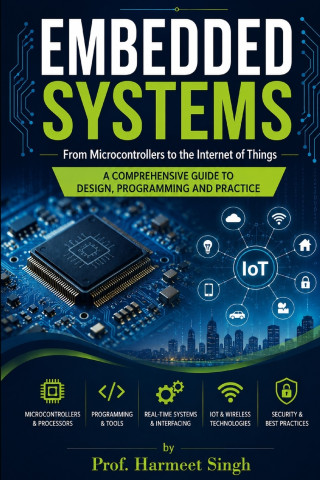
EMBEDDED SYSTEMS
Autor Harmeet Singh
Embedded systems are the quiet workhorses of the modern world. They are the tens of billions of small computers hidden inside the products we use every day - far more numerous than the laptops and servers that usually come to mind ... celý popis


- Jazyk:
 Angličtina
 - Vazba: Brožovaná
- Počet stran: 240
Nakladatelství: Independently published, 2026
- Více informací o knize


Mohlo by se vám také líbit
-

Berserk Deluxe Volume 1
886 Kč -

Murdoku
319 Kč -

Threshing Day (Wing and Claw Collection)
430 Kč -

Moonwalk
237 Kč -

The Score
238 Kč -

Berserk Deluxe Volume 2
916 Kč -

Dancing The Dream
526 Kč -

Threshing Day (Limited Deluxe Edition)
510 Kč -

White Nights
89 Kč -

Berserk Deluxe Volume 3
778 Kč -

The Mistake
228 Kč -

The Odyssey
319 Kč -

Kid's Box New Generation Level 2 Activity Book with Digital Pack British English
251 Kč -

Murdoku Volume 2: Back in Time
309 Kč -

The Deal
237 Kč -

Onyx Storm (Deluxe Limited Edition) (The Empyrean, 3)
525 Kč -

Jujutsu Kaisen, Vol. 30
225 Kč -

Jujutsu Kaisen, Vol. 26
225 Kč -

Kid's Box New Generation Level 2 Pupil's Book with eBook British English
409 Kč -

Lord of Mysteries, Vol. 1: The Clown, Part I
350 Kč -

Kid's Box New Generation Level 3 Activity Book with Digital Pack British English
251 Kč
Dárkový poukaz: Radost zaručena
- Darujte poukaz v libovolné hodnotě a my se postaráme o zbytek.
- Poukaz se vztahuje na celou naši nabídku.
- Elektronický poukaz vytisknete z e-mailu a můžete ihned darovat.
- Platnost poukazu je 12 měsíců od data vystavení.
Více informací o knize EMBEDDED SYSTEMS
Nákupem získáte 49 bodů
 Anotace knihy
Embedded systems are the quiet workhorses of the modern world. They are the tens of billions of small computers hidden inside the products we use every day - far more numerous than the laptops and servers that usually come to mind when we say the word computer. Yet the discipline of building them is too often scattered across electrical engineering, computer science and control theory, leaving newcomers without a single coherent path from first principles to working systems. This book is my attempt to provide that path.
The material grew out of many years of teaching embedded systems to undergraduate and postgraduate students, and out of the questions those students asked most persistently: Why does the code have to be structured this way? What is actually happening on the wire when two chips talk? How do I make the system respond in time, every time? I have tried to answer such questions plainly, building each idea on the ones before it, and grounding every abstraction in the physical reality of voltages, clocks and pins.
The book is organised to be read from front to back, though experienced readers may dip in where they wish. The early chapters establish what embedded systems are and how their processors and memory work. The middle chapters descend to the interfaces that connect a chip to the outside world - general-purpose pins, serial buses, converters, sensors and actuators - and then rise again to the software techniques that tame concurrency and timing: interrupts, timers, and real-time operating systems. The later chapters address power, the design and debugging process, the Internet of Things, and security, and then a sequence of advanced topics - digital signal processing, displays and interfaces, programmable logic, machine learning at the edge, bootloaders and firmware architecture, reliability and safety, automotive and industrial systems, embedded Linux, and robotics. Throughout, worked examples, tables, and diagrams reinforce the text, and each chapter ends with review questions and exercises. The final chapter presents complete projects that weave the threads together.
A word on prerequisites. I assume familiarity with basic digital logic and with the C programming language at the level of a first course. Where deeper background is helpful, the text supplies it. No specific microcontroller is required to follow the ideas, though readers with a low-cost development board on their desk will learn faster by trying things out. Embedded systems is ultimately a practical craft, and there is no substitute for making an LED blink, watching a bus with a logic analyser, and chasing down a timing bug at two in the morning.
I am grateful to the students whose curiosity shaped this material, to colleagues who reviewed drafts, and to the open engineering community whose documentation and tools make it possible to learn this field at all. Any errors that remain are my own. I hope this book helps you see the invisible machines around you a little more clearly, and gives you the confidence to build your own.
Parametry knihy
485 Kč
- Plný název: EMBEDDED SYSTEMS
- Podnázev: From Microcontrollers to the Internet of Things
- Autor: Harmeet Singh
- Jazyk: Angličtina
- Vazba: Brožovaná
- Počet stran: 240
- EAN: 9798190312027
- ID: 53432844
- Nakladatelství: Independently published
- Hmotnost: 328 g
- Rozměry: 229 × 152 × 13 mm
- Datum vydání: 02. August 2026
Osobní odběr Praha, Brno a 48211 dalších
Copyright ©2008-26 nejlevnejsi-knihy.cz Všechna práva vyhrazenaSoukromíCookies

 Vrácení do měsíce
 571 999 099 (8-15.30h)