Kód: 36337244
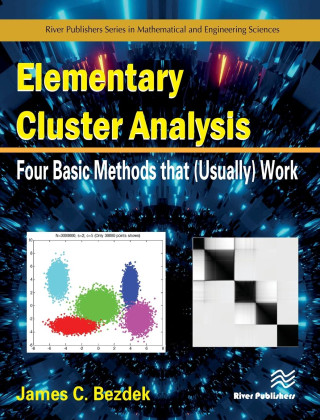
Elementary Cluster Analysis: Four Basic Methods that (Usually) Work
Autor Bezdek, James C. (University of Melbourne (visiting senior fellow), Australia)
The availability of packaged clustering programs means that anyone with data can easily do cluster analysis on it. But many users of this technology don't fully appreciate its many hidden dangers. In today's world of "grab and go ... celý popis


- Jazyk:
 Angličtina
 - Vazba: Pevná
- Počet stran: 550
Nakladatelství: River Publishers, 2022
- Více informací o knize


Mohlo by se vám také líbit
-

Tour in Scotland; MDCCLXIX. Fifth Edition.
638 Kč -

Homewood
558 Kč
Dárkový poukaz: Radost zaručena
- Darujte poukaz v libovolné hodnotě a my se postaráme o zbytek.
- Poukaz se vztahuje na celou naši nabídku.
- Elektronický poukaz vytisknete z e-mailu a můžete ihned darovat.
- Platnost poukazu je 12 měsíců od data vystavení.
Více informací o knize Elementary Cluster Analysis: Four Basic Methods that (Usually) Work
Nákupem získáte 364 bodů
 Anotace knihy
The availability of packaged clustering programs means that anyone with data can easily do cluster analysis on it. But many users of this technology don't fully appreciate its many hidden dangers. In today's world of "grab and go algorithms," part of my motivation for writing this book is to provide users with a set of cautionary tales about cluster analysis, for it is very much an art as well as a science, and it is easy to stumble if you don't understand its pitfalls. Indeed, it is easy to trip over them even if you do! The parenthetical word usually in the title is very important, because all clustering algorithms can and do fail from time to time.
Modern cluster analysis has become so technically intricate that it is often hard for the beginner or the non-specialist to appreciate and understand its many hidden dangers. Here's how Yogi Berra put it, and he was right:
In theory there's no difference between theory and practice. In practice, there is ~Yogi Berra
This book is a step backwards, to four classical methods for clustering in small, static data sets that have all withstood the tests of time. The youngest of the four methods is now almost 50 years old:
Gaussian Mixture Decomposition (GMD, 1898)
SAHN Clustering (principally single linkage (SL, 1909))
Hard c-means (HCM, 1956, also widely known as (aka) "k-means")
Fuzzy c-means (FCM, 1973, reduces to HCM in a certain limit)
The dates are the first known writing (to me, anyway) about these four models. I am (with apologies to Marvel Comics) very comfortable in calling HCM, FCM, GMD and SL the Fantastic Four.
Cluster analysis is a vast topic. The overall picture in clustering is quite overwhelming, so any attempt to swim at the deep end of the pool in even a very specialized subfield requires a lot of training. But we all start out at the shallow end (or at least that's where we should start!), and this book is aimed squarely at teaching toddlers not to be afraid of the water. There is no section of this book that, if explored in real depth, cannot be expanded into its own volume. So, if your needs are for an in-depth treatment of all the latest developments in any topic in this volume, the best I can do - what I will try to do anyway - is lead you to the pool, and show you where to jump in.
Parametry knihy
3635 Kč
- Plný název: Elementary Cluster Analysis: Four Basic Methods that (Usually) Work
- Autor: Bezdek, James C. (University of Melbourne (visiting senior fellow), Australia)
- Jazyk: Angličtina
- Vazba: Pevná
- Počet stran: 550
- EAN: 9788770224253
- ISBN: 8770224250
- ID: 36337244
- Nakladatelství: River Publishers
- Hmotnost: 1319 g
- Rozměry: 254 × 203 × 32 mm
- Datum vydání: 28. February 2022
Oblíbené z jiného soudku
-

Moonwalk
243 Kč -

The Score
323 Kč -

The Deal
275 Kč -

The Mistake
248 Kč -

Jujutsu Kaisen, Vol. 30
233 Kč -

Witch Hat Atelier: Grimoire Edition 1
777 Kč -

Invincible Compendium Volume 2
1024 Kč -

Berserk Deluxe Volume 1
781 Kč -

The Goal
312 Kč -

Berserk Deluxe Volume 2
837 Kč -

Invincible Compendium Volume 1
1305 Kč -

Witch Hat Atelier Manga Box Set 1
1241 Kč -

Lord of Mysteries, Vol. 3: The Clown, Part III
338 Kč -

Murdoku
380 Kč -

Moonwalk: A Memoir
517 Kč -

Heated Rivalry
227 Kč -

Jujutsu Kaisen, Vol. 25
221 Kč -

Legacy
249 Kč -

Berserk Deluxe Volume 3
781 Kč -

Veil Volume 1
292 Kč -

White Nights
89 Kč -

JoJo's Bizarre Adventure: Part 7--Steel Ball Run, Vol. 7
427 Kč -

Jujutsu Kaisen, Vol. 29
240 Kč -

Jujutsu Kaisen, Vol. 26
225 Kč -

Invincible Compendium Volume 3
1108 Kč -

The Deal
334 Kč -

The Long Game
227 Kč -

Dancing The Dream
522 Kč -

Berserk Deluxe Volume 5
779 Kč -

Invincible Volume 1
252 Kč -

Starside (Deluxe Limited Edition)
582 Kč -

Yesteryear
359 Kč -

Berserk Deluxe Volume 4
854 Kč -

Jujutsu Kaisen, Vol. 28
199 Kč -

The Summer Hikaru Died, Vol. 7
272 Kč -

King of Gluttony
229 Kč -

Jojo's Bizarre Adventure: Part 7--Steel Ball Run, Vol. 1
442 Kč -

Boys Omnibus Vol. 1 TPB
689 Kč -

Chainsaw Man, Vol. 21
225 Kč -

The Ballad of Falling Dragons
275 Kč -

Project Hail Mary
219 Kč -

The Mistake
334 Kč -

Veil Volume 2
292 Kč -

The Score
334 Kč -

Murdoku
319 Kč -

Lord of Mysteries, Vol. 1: The Clown, Part I
335 Kč -

Jojo's Bizarre Adventure: Part 7--Steel Ball Run, Vol. 2
457 Kč -

The Courage To Be Disliked
227 Kč -

Jujutsu Kaisen, Vol. 1
238 Kč
Osobní odběr Praha, Brno a 46566 dalších
Copyright ©2008-26 nejlevnejsi-knihy.cz Všechna práva vyhrazenaSoukromíCookies

 Vrácení do měsíce
 571 999 099 (8-15.30h)