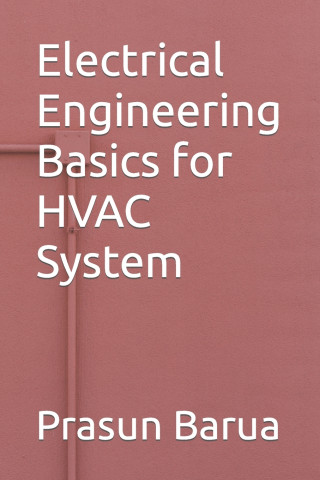
Kód: 51006091
Electrical Engineering Basics for HVAC System
Autor Prasun Barua
Welcome to Electrical Engineering Basics for HVAC System! This is a nonfiction science book which covers fundamentals of electrical engineering that HVAC engineers and other mechanical engineers would find beneficial in their dail ... celý popis


- Jazyk:
 Angličtina
 - Vazba: Brožovaná
- Počet stran: 114
Nakladatelství: Independently published, 2023
- Více informací o knize


Mohlo by se vám také líbit
-

Moonwalk
270 Kč -

The Score
248 Kč -

The Deal
248 Kč -

The Mistake
248 Kč -

Jujutsu Kaisen, Vol. 30
233 Kč -

Witch Hat Atelier: Grimoire Edition 1
777 Kč -

Invincible Compendium Volume 2
1123 Kč -

Berserk Deluxe Volume 1
804 Kč -

The Goal
321 Kč -

Berserk Deluxe Volume 2
862 Kč -

Invincible Compendium Volume 1
1108 Kč -

Witch Hat Atelier Manga Box Set 1
1241 Kč -

Heated Rivalry
227 Kč -

Moonwalk: A Memoir
565 Kč -

Murdoku
380 Kč -

Lord of Mysteries, Vol. 3: The Clown, Part III
355 Kč -

Jujutsu Kaisen, Vol. 25
240 Kč -

White Nights
89 Kč -

Veil Volume 1
352 Kč -

Jujutsu Kaisen, Vol. 26
240 Kč -

Legacy
238 Kč
Dárkový poukaz: Radost zaručena
- Darujte poukaz v libovolné hodnotě a my se postaráme o zbytek.
- Poukaz se vztahuje na celou naši nabídku.
- Elektronický poukaz vytisknete z e-mailu a můžete ihned darovat.
- Platnost poukazu je 12 měsíců od data vystavení.
Více informací o knize Electrical Engineering Basics for HVAC System
Nákupem získáte 65 bodů
 Anotace knihy
Welcome to Electrical Engineering Basics for HVAC System! This is a nonfiction science book which covers fundamentals of electrical engineering that HVAC engineers and other mechanical engineers would find beneficial in their daily work. A heating, ventilation, and air-conditioning (HVAC) system is a simple system of heating and cooling exchangers that use water or refrigerant as the medium (direct expansion system). Pumps transport warm or cooled water to exchangers. The warmed or cooled air produced by the exchangers is subsequently moved to the occupied building interiors via fans. As a result, heating and cooling occur in two stages. They are as follows: water stage and air stage. Water is the most efficient and cost-effective medium for cooling (through a chiller) or heating (via a boiler). Because it may be cooled or heated through coils, air is the medium for heat exchange in the building. Fans are utilized in HVAC systems for air circulation and ventilation. Cooling is performed through the use of chillers to provide chilled water for large buildings or direct expansion cooling devices such as packaged air conditioners for small structures. In the heating system, boilers are most commonly used to provide hot water for heating, but electric heaters are also widely utilized for zonal reheat. Pumps are used to circulate hot water, chilled water, and condenser water. Heat rejection is accomplished by the use of cooling towers. The cooling tower fan and pumps consume the most energy. Non-electrical engineers may find power distribution systems and equipment needed to power HVAC machines, motors, and other auxiliaries to be difficult. This is the first edition of the book. Thanks for reading the book.
Parametry knihy
651 Kč
- Plný název: Electrical Engineering Basics for HVAC System
- Autor: Prasun Barua
- Jazyk: Angličtina
- Vazba: Brožovaná
- Počet stran: 114
- EAN: 9798395555649
- ID: 51006091
- Nakladatelství: Independently published
- Hmotnost: 165 g
- Rozměry: 229 × 152 × 6 mm
- Datum vydání: 22. May 2023
Osobní odběr Praha, Brno a 46876 dalších
Copyright ©2008-26 nejlevnejsi-knihy.cz Všechna práva vyhrazenaSoukromíCookies

 Vrácení do měsíce
 571 999 099 (8-15.30h)