Kód: 45257602
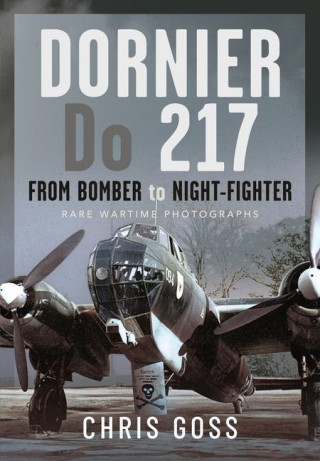
Dornier Do 217
Autor Goss, Chris
Entering service in early 1941, the Dornier Do 217 was designed as an improved version of the ‘Flying Pencil’, the Do 17 bomber. The Do 217E-1 twin radial-engine bomber first flew in October 1940, the same month that the productio ... celý popis


- Jazyk:
 Němčina
- Vazba: Pevná
- Počet stran: 288
Nakladatelství: Pen & Sword Books Ltd, 2024
- Více informací o knize


Mohlo by se vám také líbit
-
Me 262 Units in Combat
416 Kč -

Luftwaffe Night Fighter Aces 1940-43
519 Kč -

Tiger Battalion 507
569 Kč -

NGÜ Lukas Evangelium
64 Kč -

Luftwaffe Training Aircraft
469 Kč -

Okinawa 1945
416 Kč -

Schweinerei
276 Kč -

Reggiane Fighters
902 Kč -

Fiat Fighters
951 Kč -

Leselöwen Lesetraining 1. Klasse - Das geheimnisvolle Drachenei
162 Kč -

Building Electric Guitars
2282 Kč -

Zeppelin Inferno
782 Kč -

Cartagena Diaries
1142 Kč -

Philippines 1941-42
386 Kč -

Focke-Wulf Fw 190 "Long Ne": An Illustrated History of the Fw 190 D Series
586 Kč -

Die Münzen der römischen Kaiserzeit
858 Kč -

Untitled 2576
590 Kč -

Junkers Ju 388: Develment, Testing and Production of the Last Junkers High-Altitude Aircraft
1219 Kč -

Messerschmitt Bf 110/Me 210/Me 410: An Illustrated History
1136 Kč -

Solomons Air War Volume 4
806 Kč -

Stalingrad 1942-43 (3)
381 Kč -

Heinkel He 111
453 Kč -

Dornier Do 217 Units of World War 2
413 Kč -

Luftwaffe Intruder Operations Over the United Kingdom
610 Kč -

Luftwaffe Profile Series No.11: Siebel Fh 104/Si 204 and Its Variants
270 Kč -

Vom Mythos des Normalen
370 Kč -

FOCKE-WULF Fw 190
379 Kč -

Menschenkenntnis
162 Kč -

F7F Tigercat Pilot's Flight Operating Instructions
342 Kč -

Hitler's Strategic Bombing Offensive on the Eastern Front
597 Kč -

American Secret Projects 5
609 Kč -

Martin B-26 Marauder
1294 Kč -

Low-Demand Parenting: Dropping Demands, Restoring Calm, and Finding Connection with Your Uniquely Wired Child
342 Kč -

Tank Craft 45 Nashorn Self-Propelled Tank Destroyer
502 Kč -

Supermarine Spitfire
518 Kč -

Junkers Ju 88
361 Kč -

No.1-Jubiläums Edition
411 Kč -

Junkers Ju 88 and Its Variants in World War II
349 Kč -

Beaufighter
701 Kč -

Shaolin Spirit
572 Kč -

Horten Ho 229 - Spirit of Thuringia
1015 Kč -

Electric Guitar and Bass Design
591 Kč -

Operation Steinbock 1944: The Luftwaffe's Disastrous Last Blitz Over England
428 Kč -

Dornier Do 335 Pfeil a
422 Kč -

Avia/Letov C-2 v československém vojenském letectvu
671 Kč -

Karl May auf der Bühne - Band II
1301 Kč -

Luftwaffe Airfield Equipment
205 Kč -

Junkers Ju 87 Stukageschwader of North Africa and the Mediterranean
466 Kč -

Les avions Marcel Bloch
1940 Kč -

Dornier Do 17 in the Battle of Britain
753 Kč -

Lenni Langohr und Möhrchen im Kindergarten
195 Kč -

Hitster Bingo
792 Kč -

Effi Briest
130 Kč -

Spektrum Deutsch in Teilbanden
634 Kč -

Conni-Bilderbücher: Das neue große Conni-Buch
290 Kč -

RAF JAGUAR UNITS IN COMBAT
379 Kč -

Battlecruiser Repulse
715 Kč -

Operation Anthropoid, 1 DVD
249 Kč -

Flugzeug Classic Extra 21. Me 262 - An die Front!
328 Kč -

Le Focke Wulf FW 190 - 1939-1945
406 Kč -

Meine Kindergarten-Freunde (Dinosaurier)
199 Kč -

Grizzy & die Leminge - 1. Staffel
572 Kč -

Focke-Wulf Fw 200 the Luftwaffe's Long Range Maritime Bomber
453 Kč -

A Matter Of Life And Death (2015 Remaster)
458 Kč -

Batman '89
376 Kč -

Ontologie der Konstruktion
773 Kč -

Hemmung, Symptom und Angst
163 Kč -

Trötsch Bobo Siebenschläfer Schreib und wisch weg Pappenbuch Erste Lernspiele
207 Kč -

Flight Craft 12: The Junkers Ju87
408 Kč -

Der Gothaer Heinz Trescher als Pilot der Lastensegler DFS 230 und Gotha Go 242 von 1941-1945
697 Kč -

Deutsche Kriegslokomotiven
328 Kč -

LUFT-NAVIGATIONSKARTE Deutschland mit Bodenorganisation der Luftwaffe 1943 (Plano)
697 Kč -

Junkers G 38: Der sanfte Riese
706 Kč -

Mrs Potts' Mordclub und der tote Bürgermeister
269 Kč -

Advanced Linear Algebra
3513 Kč -

Kalender 2022
184 Kč -

Last of a Dyin' Breed
316 Kč -

Buddhistische Lehre und die inhaltliche Toleranz
736 Kč -

Treibjagd
509 Kč -

Dorothy Dixon und das geheimnisvolle Flugzeug
194 Kč -

Geschäftsentwicklungslehrgang: Modul 6 - Das Verkaufssystem
983 Kč -

Woerterbuch C1 Deutsch - Englisch
612 Kč -

LandXcape - Der Schatz der Freibeuter
250 Kč -

Louis Armstrong: Louis Wishes You a Cool Yule
394 Kč
Dárkový poukaz: Radost zaručena
- Darujte poukaz v libovolné hodnotě a my se postaráme o zbytek.
- Poukaz se vztahuje na celou naši nabídku.
- Elektronický poukaz vytisknete z e-mailu a můžete ihned darovat.
- Platnost poukazu je 12 měsíců od data vystavení.
Více informací o knize Dornier Do 217
Nákupem získáte 61 bodů
 Anotace knihy

Entering service in early 1941, the Dornier Do 217 was designed as an improved version of the ‘Flying Pencil’, the Do 17 bomber. The Do 217E-1 twin radial-engine bomber first flew in October 1940, the same month that the production of the Do 17 ceased. The Do 217 was initially used for conventional bombing and anti-shipping missions around the United Kingdom, including the infamous Baedeker Blitz against British provincial cities in 1942\. The Do 217 was the main German bomber in this theatre until late 1943, when it started to be replaced by the Messerschmitt Me 410 and Junkers Ju 188\. During this period, the Do 217E was improved, leading to the introduction of the Do 217K or M, the difference between the two being the engines. The Do 217 would be deployed in all of the Luftwaffe’s campaigns and fronts in the Second World War. Curiously, though, the only operational units to use the type on the Eastern Front were the night reconnaissance units, aside from which only occasionally did other Do 217 units fly missions against Stalin’s forces. With the delay in the Heinkel He 177 entering service, it was the Do 217 that became the first aircraft in history to be used to deploy precision-guided weapons in combat. This came on 21 July 1943, when Do 217s of KG 100 attacked Allied shipping in Augusta harbour, Sicily, using Fritz X radio-guided glide bombs. Then, on 25 August 1943 twelve Do 217E-5s from II./KG 100 attacked a convoy off the Spanish coast with a similar weapon to the Fritz X, the Henschel Hs 293 radio-guided glide bomb. This attack resulted in damage to three warships. In response to the intensifying Allied strategic bomber offensive, additional night fighters were needed by the Luftwaffe. The Do 217E-2 was therefore modified by fitting four MG17s and four MG-FF 20mm cannon in a solid nose. The rear firing guns, including the MG131 in the turret, were retained, as was the ability to carry bombs, creating the Do 217J-1 which was intended as a night intruder. The Do 217 also served extensively as a night fighter, with examples being fitted with Lichtenstein radar and obliquely mounted upward-firing MG151 cannon in the fuselage, the so called Schräge Musik modification. Despite the Do 217’s versatility and wide-spread deployment – all of which is explored here by the author through a remarkable set of archive images, many of which have never been seen in print before – production ceased in October 1943\. By the following year, the Do 217 had become obsolete.
Parametry knihy
611 Kč
- Plný název: Dornier Do 217
- Autor: Goss, Chris
- Jazyk: Němčina
- Vazba: Pevná
- Počet stran: 288
- EAN: 9781473883093
- ISBN: 1473883091
- ID: 45257602
- Nakladatelství: Pen & Sword Books Ltd
- Hmotnost: 912 g
- Rozměry: 246 × 172 mm
- Datum vydání: 30. July 2024
Oblíbené z jiného soudku
-

Hitster - Wacken Open Air
580 Kč -

Momente A1. Kursbuch plus interaktive Version
434 Kč -

Momente A1. Arbeitsbuch plus interaktive Version
434 Kč -

Schritte international Neu 1
405 Kč -

Momente A1.1 Kursbuch plus interaktive Version
257 Kč -

Momente A1.1 Arbeitsbuch plus interaktive Version
267 Kč -

KLEINE PRINZ
113 Kč -

Auto-Katalog 2027
267 Kč -

Momente A2 - Kursbuch plus interaktive Version - Deutsch als Fremdsprache
434 Kč -

Paul, Lisa & Co PLUS A1.1
252 Kč -

Schritte international Neu 4
405 Kč -

Beste Freunde A1.2. Arbeitsbuch
242 Kč -

Hitster - Christmas (Erweiterung)
283 Kč -

Paul, Lisa & Co PLUS A1.1.
270 Kč -

Beste Freunde A2.1. Arbeitsbuch
248 Kč -

Schritte international Neu 2. Kursbuch + Arbeitsbuch mit Audios online
405 Kč -
Die kleine Raupe Nimmersatt
141 Kč -

Menschen A1 - Deutsch als Fremdsprache / Kursbuch
434 Kč -

Motive A1-B1. Arbeitsbuch, Lektion 1-30 mit Audios online
600 Kč -

Menschen - Deutsch als Fremdsprache. Menschen A1. Arbeitsbuch, m. 2 Audio-CDs
429 Kč -

Motive - Kompaktkurs DaF
695 Kč -

Grammatik aktiv - Deutsch als Fremdsprache - 2. aktualisierte Ausgabe - B1+
267 Kč -

Grammatik aktiv - Deutsch als Fremdsprache - B2/C1
384 Kč -

Hitster - Battle of the Generations
646 Kč -

Momente A2, m. 1 Buch, m. 1 Beilage
434 Kč -

Beste Freunde PLUS A1.1. Arbeitsbuch plus interaktive Version
274 Kč -

Deutsch für clevere Kids - 5 Wörter am Tag
327 Kč -

Hallo Anna 1 neu. Deutsch für Kinder. Arbeitsbuch mi Bastelvorlagen
353 Kč -

Emil und die Detektive
271 Kč -

Buch der Weisheit Taschenbuch
562 Kč -

Deutsch intensiv Wortschatz C1
387 Kč -

Netzwerk neu A1 - Hybride Ausgabe allango
542 Kč -

Schritte international Neu 5. Kursbuch+Arbeitsbuch
405 Kč -

365 Gute-Nacht-Geschichten. Vorlesebuch für Kinder ab 3 Jahren
159 Kč -

Hitster - Rock
580 Kč -

Beste Freunde A1.1
296 Kč -

Hitster - Flying Mic
855 Kč -

Der kleine Drache Kokosnuss - Jubiläums-Schuber
492 Kč -

Baby Elf
142 Kč -

ZIMMER FREI Aktuelle Ausgabe Lehr- und Arbeitsbuch mit Audio CDs /3/
293 Kč -

Der kleine Drache Kokosnuss reist um die Welt
245 Kč -

Mit Erfolg zum Goethe-Zertifikat C1
505 Kč -

Mit Erfolg zum Goethe-Zertifikat B2 - Ubungsbuch
510 Kč -

Netzwerk neu A2.1 - Hybride Ausgabe allango
514 Kč -

Beste Freunde
260 Kč -

Daphne's Diary - Taschenkalender 2027
478 Kč -

Prüfungstraining DaF. Goethe-Zertifikat A2: Fit in Deutsch - Übungsbuch
507 Kč -

Beste Freunde - Kursbuch A1.1
260 Kč -

Beste Freunde A1.2 Kursbuch
260 Kč
Osobní odběr Praha, Brno a 48020 dalších
Copyright ©2008-26 nejlevnejsi-knihy.cz Všechna práva vyhrazenaSoukromíCookies

 Vrácení do měsíce
 571 999 099 (8-15.30h)
